
Table of Contents
- Scottsdale Screen vs Local Providers: What Sets Them Apart
- Solar Screen Installation Cost: What to Expect
- Benefits of Solar Screens for Homes in Desert Climates
- How to Choose a Screen Repair Technician
- Mesh Material Options and Durability in Extreme Heat
- Warranty and Lifetime Guarantee Comparison
- Making Your Decision: Which Provider Fits Your Needs
Last Updated: August 19, 2026
Scottsdale Screen vs Local Providers: What Sets Them Apart
When homeowners in the Phoenix and Scottsdale area face damaged screens, intense desert heat, or pest intrusions, the choice of screen provider matters significantly. The difference between a quick fix and a lasting solution often comes down to materials, installation quality, and understanding local climate challenges. This comparison breaks down what separates Sparkle Tech Sun Screens from other local providers across cost, durability, service speed, and warranty coverage.
Solar Screen Installation Cost: What to Expect
The cost of solar screen installation varies based on window count, screen size, material selection, and service speed. Understanding the DIY versus professional cost-benefit analysis is critical before evaluating professional pricing.
DIY Screen Repair and Replacement: Hidden Costs
DIY screen repair appears cheaper upfront but carries hidden costs. A single repair requires a screen repair kit ($15 to $40), spline roller tool ($20 to $50), replacement mesh ($10 to $30), and spline cord ($5 to $15), totaling $50 to $100 per screen in materials. More importantly, execution takes time: professionals complete a screen in 10 to 15 minutes, while first-time DIYers typically require 45 to 90 minutes with higher failure rates.
Standard fiberglass mesh from hardware stores lasts only 12 to 24 months in Arizona’s climate. A homeowner repairing five screens might spend $250 to $500 on materials and 5 to 8 hours of labor, only to repeat the process in two years. Over five years, repeated DIY repairs can cost $500 to $1,000 in materials plus 25 to 40 hours of labor.
Professional Installation: Pricing Structure
Sparkle Tech Sun Screens offers quick quotes with same-day pickup options.
Quality professional installation lasts four to ten years depending on material grade, versus 12 to 24 months for DIY repairs using hardware-store mesh. Competing local providers structure pricing similarly, but differ in labor costs and installation timelines. Providers offering same-week service often command a premium, but faster installation justifies the cost when dealing with summer heat or pest problems.
The True Cost-Benefit Analysis: DIY vs. Professional Over Five Years
Consider a homeowner with five damaged screens:
DIY Approach (Repeated Repairs)
- Years 1-5: Repeat repairs every 2-3 years with new materials ($100-$150 each cycle).
- Five-year total: $300-$450 in materials, 15 hours of labor, repeated failures.
Professional Installation (Single Quality Installation)
- Year 1: Professional installation with solar-grade mesh.
- Years 2-5: Screens remain functional; no replacement needed.
- Five-year total: zero hours of your time, screens still functional.
The break-even point occurs around year 2 to 3. Professional screens using quality mesh also reduce energy costs by 10% to 15% during peak cooling months, translating to $200 to $400 in annual savings for homes with significant window area.
One Common Mistake: Comparing Only Per-Window Cost
Homeowners often ignore installation complexity. Older homes with non-standard window sizes, curved frames, or unusual patio configurations cost more to screen properly. A provider willing to handle custom measurements on-site delivers better-fitting screens that last longer and perform better. Screens that don’t fit flush allow insects and dust to enter around edges, negating energy efficiency and pest protection benefits.
When DIY Makes Sense
DIY repair is practical only for temporary fixes, single small tears in otherwise good mesh, or renters comfortable with 12 to 24-month replacement cycles. For homeowners planning long-term residence and wanting screens that reduce energy costs while protecting against pests, professional installation with quality mesh justifies the upfront investment.
For current pricing tailored to your specific windows and material preferences, visit the Sparkle Tech Sun Screens pricing page to get a free quote.
Benefits of Solar Screens for Homes in Desert Climates
Solar screens reduce heat entering your home by blocking significant sunlight before it penetrates windows. This cooling effect translates directly into lower air conditioning costs during brutal summer months when outdoor temperatures regularly exceed 110 degrees. Beyond energy savings, solar screens reduce glare on televisions and computer screens, a benefit easily overlooked until experienced.
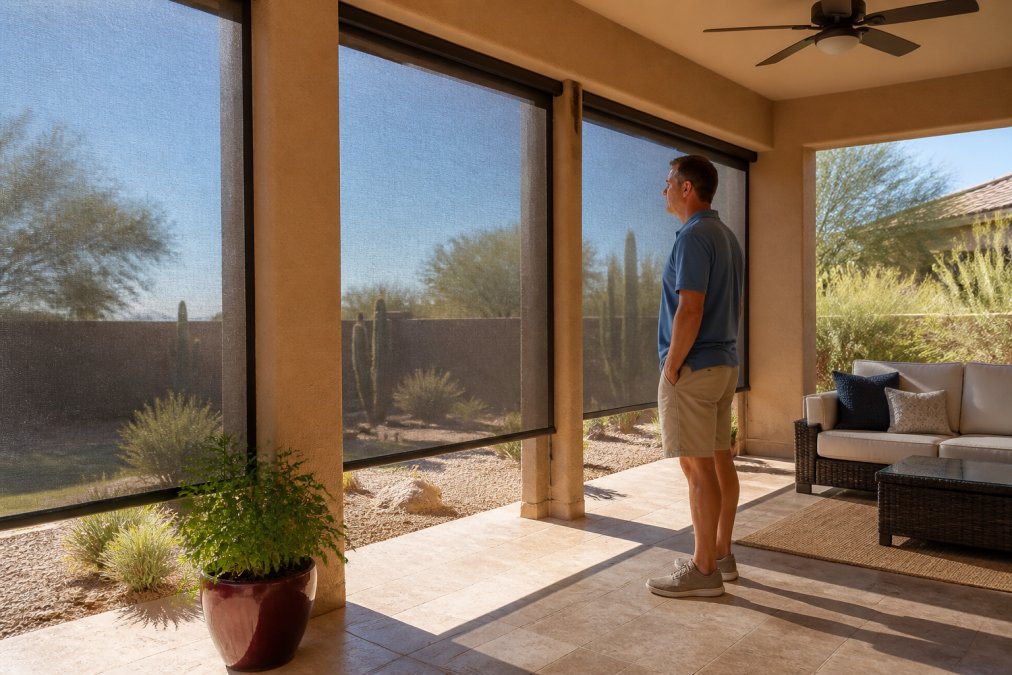
The mesh material becomes a barrier against dust and debris, which accumulate rapidly in the desert. During dust storms or high-wind events, solar screens prevent fine particles from entering your home while maintaining airflow. They also keep out mosquitoes, flies, and other pests that thrive in warm climates.
Sparkle Tech Sun Screens emphasizes weather-resistant materials built specifically for extreme Arizona conditions. Custom-fit screens sit flush against frames, eliminating gaps where insects or dust might enter. A practical insight: solar screens reduce cooling load by allowing extended window-opening during morning and evening hours when outdoor temperatures drop, rather than eliminating AC entirely.
How to Choose a Screen Repair Technician
Selecting the right technician requires evaluating three core criteria: on-site measurement, service speed, and warranty coverage.
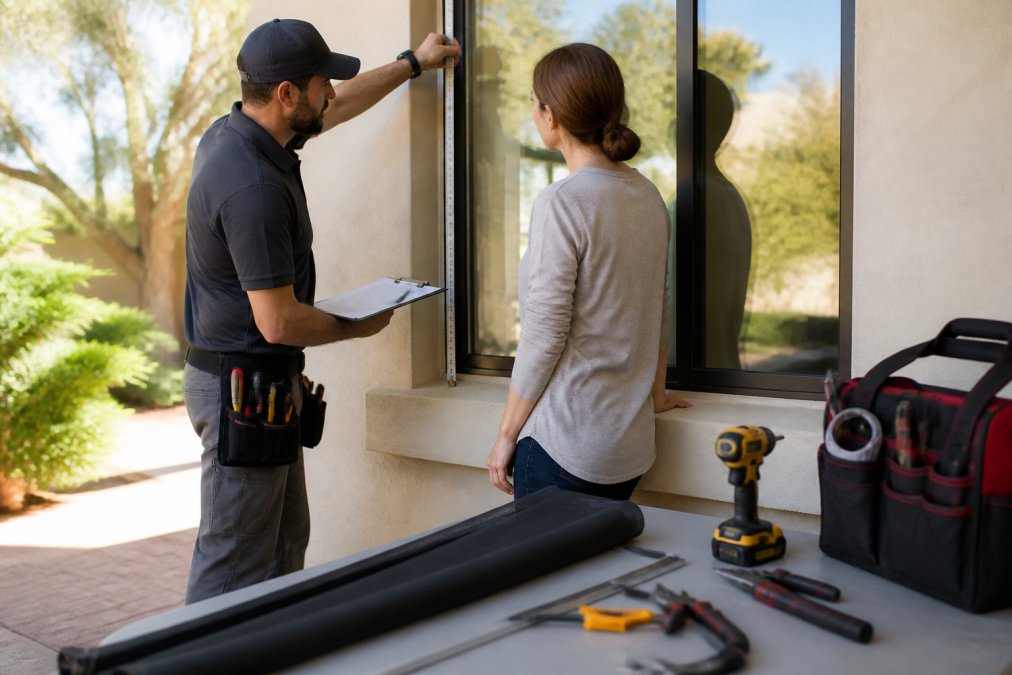
On-site measurement matters because window frames are rarely perfectly square, and older homes often have shifted frames. A technician who measures personally catches irregularities and fabricates screens that fit snugly. Providers asking for phone or photo measurements introduce high risk of poor fit, leading to rattling screens, sagging, or insects entering around edges.
Service speed differentiates providers significantly. Sparkle Tech Sun Screens offers same-week service, critical when dealing with broken screens in summer heat or pest problems. Competing local providers may require two to three weeks.
Warranty coverage reveals provider confidence. A lifetime guarantee on qualifying services signals the company stands behind material quality and installation craftsmanship. Providers offering limited warranties (one to three years) reflect lower material standards or installation quality.
Ask potential technicians about experience with non-standard window sizes, curved frames, and older homes. Hesitation signals lack of custom fabrication experience. Reputable local providers handle odd-sized windows routinely.
Mesh Material Options and Durability in Extreme Heat
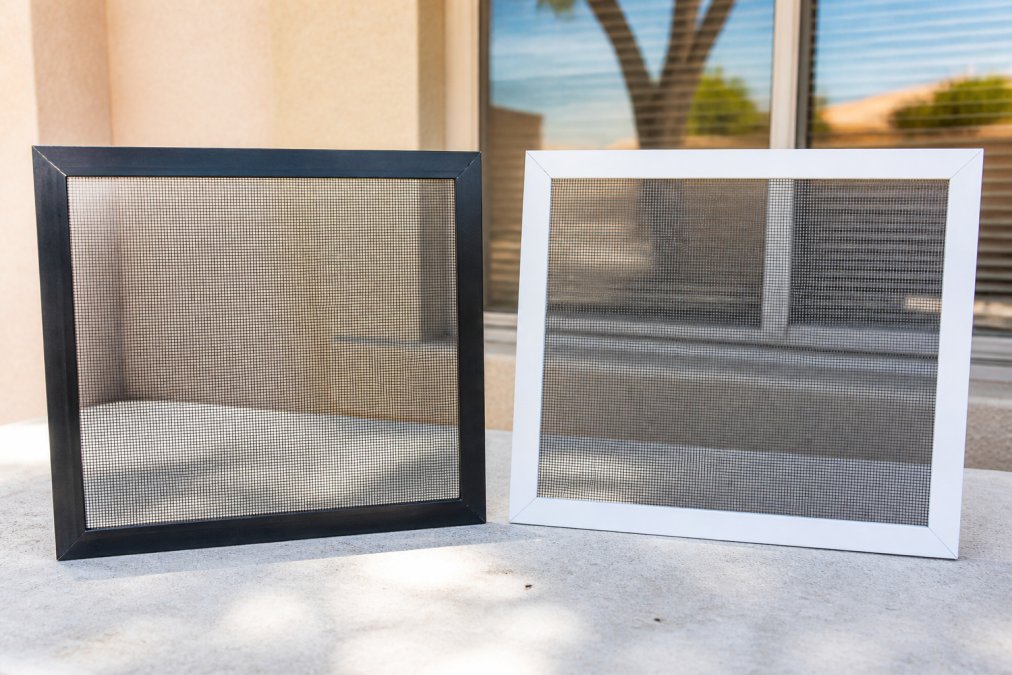
The mesh material you select determines how long screens survive Arizona’s climate. Three primary options exist: standard fiberglass, pet-resistant mesh, and solar-grade mesh.
Standard Fiberglass Mesh
Standard fiberglass mesh is most affordable but deteriorates fastest in extreme heat and UV exposure. Lacking UV inhibitors, ultraviolet radiation breaks down polymer bonds. In Arizona’s climate with 300+ days of annual sun exposure, standard fiberglass typically fails within 18 to 36 months. This option makes sense only for temporary screens or short-term ownership. Cost per window ranges from $40 to $80, but true annual cost often exceeds $30 to $40 per window per year over five years.
Pet-Resistant Mesh
Pet-resistant mesh uses tighter weave (18×16 or 20×20 strands per inch) and polyester or vinyl-coated fiberglass that resists mechanical damage and UV degradation. The coating adds UV inhibitors extending lifespan. In desert climates, pet-resistant mesh typically lasts four to six years. Cost per window runs $80 to $130, making it a practical middle ground for homeowners with pets or those planning to stay five to seven years.
Solar-Grade Mesh (Premium Tier)
Solar-grade mesh combines UV-blocking compounds directly into fiberglass fiber and often includes reflective coating bouncing solar radiation away. The mesh typically has tighter weave (20×20 or finer) and higher thread count. Solar-grade mesh blocks 65% to 90% of solar heat compared to 40% to 60% for standard fiberglass. Homeowners report 10% to 15% reduction in cooling costs during peak summer months. The material typically lasts seven to ten years or longer. Cost per window ranges from $120 to $200, but extended lifespan and energy savings offset the premium. Over ten years, solar-grade mesh often costs less per year than standard fiberglass when factoring in replacement labor and energy bill reductions.
Practical Durability Timeline for Arizona Homeowners
If you install screens today and plan to own your home for 15 years:
- Standard fiberglass: Requires replacement at years 2, 5, 8, 11, and 14. Total replacement cost typically exceeds $400 to $600 per window.
- Pet-resistant mesh: Requires replacement at years 5 and 10. Total replacement cost typically ranges from $250 to $350 per window.
- Solar-grade mesh: Likely requires replacement once at year 8 to 10, or may not require replacement at all. Total replacement cost typically ranges from $150 to $250 per window, plus energy savings of $200 to $400 annually during peak cooling months.
When evaluating quotes, ask specifically which mesh type is included and what UV stabilizers or coatings are used. Providers who can’t answer these questions are likely using commodity fiberglass.
Warranty and Lifetime Guarantee Comparison
Warranty terms reveal how manufacturers and installers view product longevity. Sparkle Tech Sun Screens backs its work with a lifetime guarantee on qualifying services, the strongest commitment a local provider can offer. This covers defects in materials and workmanship, meaning screens are replaced at no cost if they fail due to poor installation or material failure.
Competing local providers typically offer warranties ranging from one to five years. A one-year warranty provides basic defect coverage but no protection against UV degradation in Arizona’s harsh environment. A five-year warranty extends coverage but expires when you’re only one-quarter through ownership, leaving you vulnerable to replacement costs.
Read the fine print carefully. Some warranties exclude labor costs for replacement. Sparkle Tech Sun Screens’s approach to qualifying services typically includes both material and labor, the standard homeowners should expect from a premium provider.
Making Your Decision: Which Provider Fits Your Needs
Sparkle Tech Sun Screens emerges as the top choice for homeowners prioritizing durability, fast service, and long-term peace of mind. The combination of same-week service, custom-fit screens, weather-resistant materials, and lifetime guarantee addresses core homeowner concerns: cost uncertainty, installation delays, durability, and warranty limitations.
The company’s understanding of desert climate challenges, extreme heat, UV radiation, dust storms, and wind, is reflected in material selection and installation practices. On-site measurement ensures precise fit, reducing gaps that compromise energy efficiency and pest protection.
Other local providers may offer lower upfront costs or faster scheduling in specific cases, but typically sacrifice warranty strength, material quality, installation precision, or service speed. For homeowners planning long-term residence and wanting screens that reduce energy costs while protecting against pests, the premium for quality and warranty coverage pays for itself through durability and avoided replacement costs.
Protecting your home from Arizona‘s heat, dust, and pests requires screens built to withstand extreme conditions. Sparkle Tech Sun Screens delivers custom-fit window screens and patio rescreening with same-week service, weather-resistant materials designed for desert climates, and a lifetime guarantee on qualifying services. Get your free quote today and discover how professional screen solutions can reduce your cooling costs while enhancing your home’s comfort and curb appeal.
Frequently Asked Questions
What is the difference between standard insect screens and solar screens?
Standard insect screens use lightweight fiberglass mesh primarily to block insects and debris while allowing airflow. Solar screens feature denser, darker mesh specifically engineered to block 65-90% of the sun's heat and UV rays. Solar screens reduce glare significantly and lower cooling costs, making them ideal for desert climates. The trade-off is slightly reduced visibility and airflow compared to standard screens, but the energy savings and heat reduction often justify the choice for homeowners facing extreme sun exposure.
How long do professional screen installations typically last in extreme heat?
Quality professional installations using weather-resistant materials and aluminum frames typically last 10-15 years in Arizona's harsh climate. Durability depends heavily on mesh type, frame quality, and maintenance. Pet-resistant mesh may wear faster than standard fiberglass in high-traffic areas. UV degradation and thermal stress from extreme temperature swings can shorten lifespan if materials aren't specifically rated for desert conditions. Providers offering lifetime guarantees on qualifying services stand behind their material selection and installation quality, ensuring long-term performance even under intense sun and wind exposure.
Are custom sun screens worth the investment for homes in desert climates?
Custom solar screens deliver measurable returns in desert environments. They reduce solar heat gain by 60-80%, lowering air conditioning costs significantly during peak summer months. Beyond energy savings, they protect furnishings from UV damage, improve comfort by reducing glare, and enhance curb appeal. Custom-fit screens ensure proper seal and maximum effectiveness, unlike one-size-fits-all options. For homeowners planning to stay in their homes long-term, the combination of energy bill reductions, comfort improvements, and durability makes custom installation a sound investment that typically pays for itself within a few years of ownership.
Do local screen providers offer warranties on their materials and installation?
Reputable local providers typically offer warranties ranging from 5 to lifetime coverage on materials and workmanship. Lifetime guarantees on qualifying services indicate a provider's confidence in both their materials and installation quality. Warranty terms vary significantly, some cover only manufacturing defects, while others include labor and replacement. When comparing providers, ask specifically what the warranty covers, any exclusions, and whether it transfers if you sell your home. Established local contractors with strong reputations are more likely to honor warranties long-term, making warranty strength an important differentiator when choosing between providers.
This article was written using GrandRanker