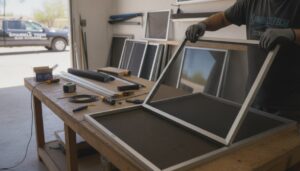


Most homeowners pay a mid-range amount to have a patio rescreened professionally, with per-square-foot installed rates typically landing in the $2–$4 range. Pool cages and two-story enclosures push higher. A small 10×10 screened porch might run a few hundred dollars; a 20×20 patio commonly costs in the low thousands at standard rates; and a large pool cage can be significantly more depending on material and frame condition. Angi reports a normal range of project costs with an average in the mid-thousands.
Before you call anyone, do three things:
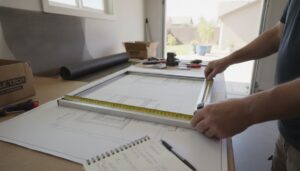
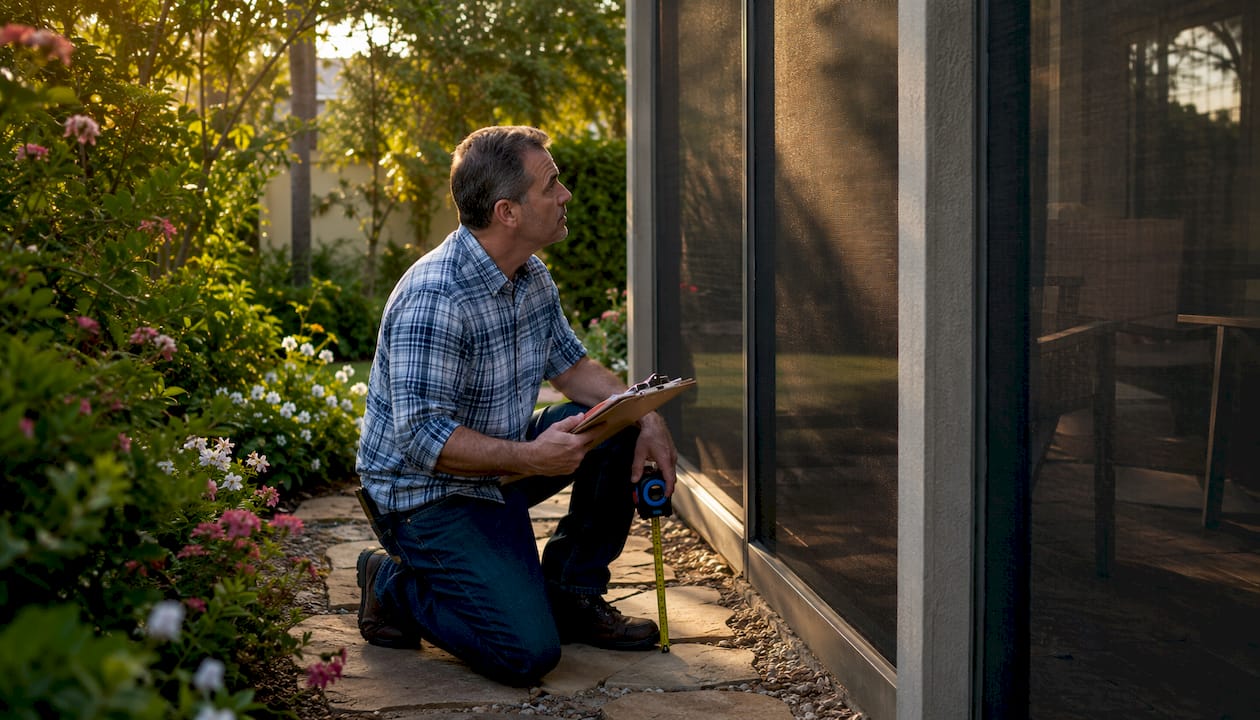
- Measure your enclosure. Length x width gives you square footage. Count the individual screen panels too, since many contractors price per panel.
- Note the frame condition. Rust, pitting, or damaged kickplates add line items that won’t appear in a basic rescreening quote.
- Get 2–3 itemized quotes. A single quote gives you no baseline. Two or three reveal whether a bid is fair or suspiciously low.
The industry rule-of-thumb is to inspect screens every 6–8 years and rescreen when most panels show brittleness, sagging, or visible holes. Waiting longer usually means paying more in the end. For homeowners in Scottsdale and the surrounding Phoenix metro, Sparkletechsunscreens offers free on-site estimates and custom screen solutions built for Arizona’s climate.
Table of Contents
- How patio rescreening costs break down by size and labor
- What actually drives your quote up or down
- Which screen material is right for your patio?
- DIY vs. hiring a pro: when each makes sense
- Hidden costs that can surprise you on the final invoice
- Sample cost calculations: see the math for real projects
- How to get accurate quotes and read contractor estimates
- How long does rescreening take, and when should you schedule it?
- Why a local professional delivers better long-term value
- Do you need a permit to rescreen a patio?
- Key Takeaways
- What installers wish you knew before the estimate
- Get a free estimate from Sparkletechsunscreens
- Selected sources and further reading
How patio rescreening costs break down by size and labor
Patio rescreening cost is almost always quoted as a combination of materials and labor, and the two line items behave differently. Materials scale with square footage and mesh type. Labor often follows a base-fee-plus-incremental structure or a flat per-panel rate.

Common contractor pricing patterns
HomeAdvisor’s data shows typical labor structures that include a base fee for initial square footage plus an incremental rate; some contractors use flat job minimums for small repairs, then per-panel pricing for full rescreens. Neither approach is wrong; they just produce different totals depending on your enclosure’s geometry.
Material costs vary per square foot depending on mesh type, per Angi’s pricing data. Standard fiberglass sits at the low end; stainless steel and specialty metals push toward the top. Labor typically adds $1–$3 per square foot on top of materials for a straightforward single-story job.
Sample project totals
| Patio size | Approx. sq ft | Low estimate | Mid estimate | High estimate |
|---|---|---|---|---|
| 10×10 | 100 sq ft | $200 | — | $500 |
| 10×20 | 200 sq ft | $400 | — | — |
| 20×20 | 400 sq ft | $800 | — | $2,000 |
| — | 864 sq ft | — | — | — |
| Small pool cage | — | $1,200 | — | — |
Estimates assume standard fiberglass mesh, sound frame, and single-story access. Regional labor rates and material upgrades will shift these numbers.
A few things these ranges do NOT include: frame repairs, door hardware replacement, disposal fees, or travel charges. Those are add-ons, and they matter.
What actually drives your quote up or down
Two projects with identical square footage can produce quotes that differ by 40% or more. Here’s what moves the needle.
- Enclosure geometry and panel count. A rectangular porch with eight uniform panels is fast to rescreen. An irregular shape with angled corners, curved sections, or a mansard roofline takes longer and wastes more material. More panels mean more spline cuts, more corner caps, and more labor time.
- Two-story or elevated access. Jobs requiring ladders or scaffolding cost 30–50% more than equivalent ground-level work. The equipment and safety time are real costs.
- Frame and hardware condition. A rusty aluminum frame, corroded fasteners, or a damaged kickplate won’t be fixed as part of a basic rescreen. Contractors either exclude those repairs or quote them separately. If your frame is pitted or bent, budget an extra $100–$400 for frame work before the new screen goes in.
- Local labor rates. A screener in Phoenix or Scottsdale prices differently than one in rural Alabama. High-cost metro areas and coastal markets with salt-air corrosion concerns push rates toward the upper end of any national range.
- Material choice. Standard fiberglass is the cheapest option. Pet-resistant mesh, no-see-um mesh, and solar screen fabric all cost more per square foot and take slightly longer to install correctly.
Pro Tip: Before your estimate appointment, photograph every panel from both sides. A contractor who can see the damage in advance gives you a more accurate quote and spends less time on-site doing the initial assessment.
Which screen material is right for your patio?
Material choice is where most homeowners either save money or spend it wisely. The difference between fiberglass and pet-resistant vinyl-coated polyester isn’t just price; it’s how long the screen lasts and whether you’re replacing it again in three years.
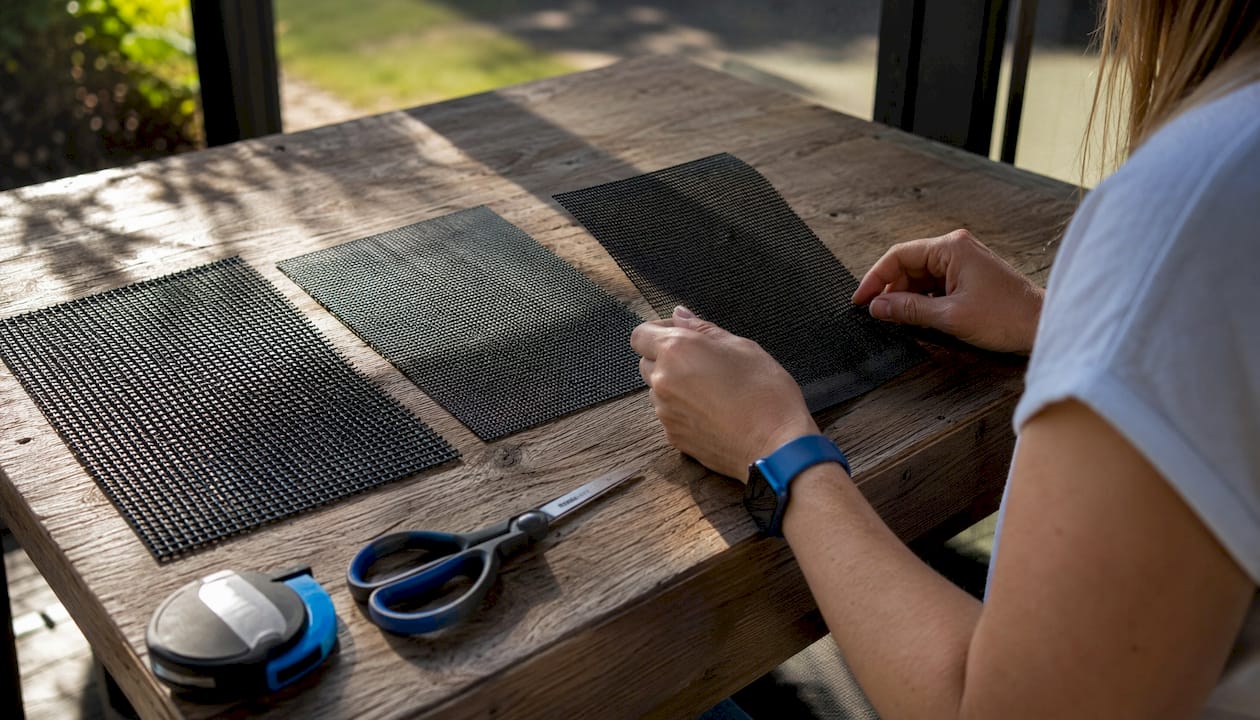
| Material | Material cost (per sq ft) | Expected lifespan | Visual clarity | UV/solar performance | Pet resistance | Best for |
|---|---|---|---|---|---|---|
| Fiberglass | $0.25–$0.50 | 7–10 years | Good | Low | Low | Budget rescreens, low-traffic patios |
| Aluminum | $0.35–$0.70 | 10–15 years | Good | Low–moderate | Moderate | Coastal areas, corrosion resistance |
| No-see-um mesh | (typically above fiberglass) | 7–10 years | Reduced | Low | Low | Insect-heavy climates |
| Solar screen | (often near upper end of metal range) | 10–15 years | Reduced (by design) | High | Low | Sun-heavy climates, energy savings |
| Pet-resistant mesh | $0.50–$1.50 | 10–15 years | Good | Low | High | Households with dogs or cats |
| Stainless steel | $1–$1.25 | 15–20 years | Good | Moderate | High | High-end installs, coastal |
| Copper/brass | Up to $2.50 | 20+ years | Good | Moderate | High | Luxury/architectural applications |
Material costs are for mesh only; installed price adds labor on top.
Pet-resistant mesh typically costs significantly more than standard fiberglass mesh. For a household with a large dog, that premium usually pays for itself within the first year of not patching torn panels every few months.
Solar screens deserve a separate mention for Arizona homeowners. They block a meaningful portion of solar heat gain, which translates directly to lower cooling costs during summer months. The trade-off is reduced outward visibility, which some homeowners dislike. If you want the energy benefit without losing the view entirely, a lighter-density solar fabric (around 80% shade factor rather than 90%) balances both.
DIY vs. hiring a pro: when each makes sense
DIY rescreening is genuinely reasonable for small, simple jobs. It becomes a liability for anything larger or more complex.
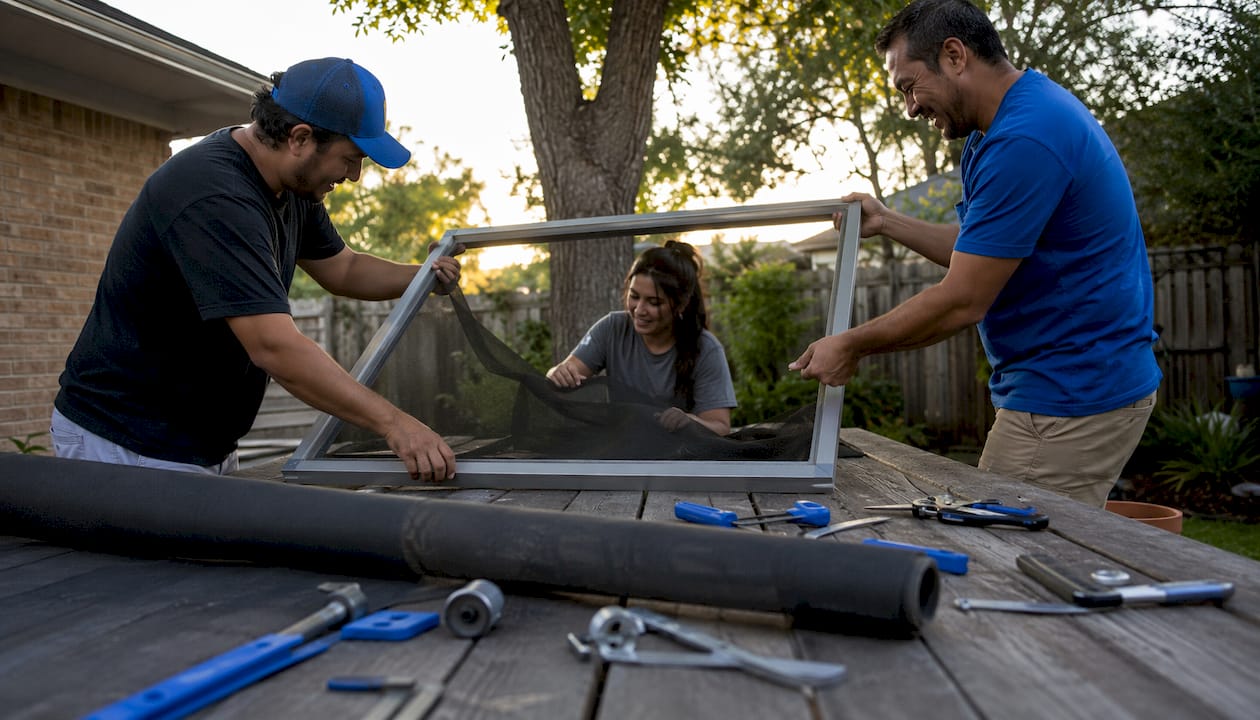
DIY kits run roughly $20–$300 depending on the size of the project, and preassembled replacement panels cost $65–$155 each. For a single damaged panel on a ground-floor porch, DIY is a legitimate option. For a full rescreen of a 20-panel enclosure, the math changes fast.
When DIY is reasonable:
- Single-panel repairs on a ground-floor porch
- Replacing a screen door insert
- Small patios (under 100 sq ft) with standard fiberglass and a sound frame
- Homeowners with prior experience using a spline roller and screen frame tools
When to hire a professional:
- Two-story or elevated enclosures where ladder work is required
- Damaged or corroded frames that need repair before rescreening
- Specialty meshes (solar, pet-resistant, no-see-um) that require precise tensioning
- Any job where you want a warranty on the installation
- Pool cages with complex geometry
The most common DIY failure modes are sagging screens (insufficient tension during installation), uneven spline seating that lets insects through, and cracked corner caps from forcing the frame. Fixing a failed DIY rescreen typically costs more than hiring a pro from the start, because the contractor has to remove and redo the work.
A professional installation on a 20×20 patio at $2–$4 per square foot installed runs $800–$1,600. A DIY attempt on the same space might cost $300–$600 in materials, but add 6–10 hours of your time and the real possibility of a redo.
Hidden costs that can surprise you on the final invoice
The base rescreening quote covers mesh and labor. What it often doesn’t cover is everything else the job turns up.
- Frame repairs. Bent or corroded aluminum sections, broken frame connectors, or rotted wood backing behind the frame are almost always quoted separately. Budget $100–$400 for minor frame work; major structural repairs can run higher.
- Kickplate replacement. The solid panel at the base of many screen enclosures takes the most abuse. A replacement kickplate typically adds $50–$150 per section.
- Door hardware. Screen door closers, handles, and hinges wear out faster than the screen itself. Replacing a door closer runs $20–$60 in parts; a full door replacement can add $150–$400 to the job.
- Disposal fees. Old screen material, spline, and hardware have to go somewhere. Some contractors include disposal; others add $25–$75 as a separate line item.
- Travel fees. Contractors outside your immediate area may charge a trip fee, especially for smaller jobs. Ask upfront.
- Pressure washing or painting. If the frame needs cleaning or repainting before new screen goes in, that’s additional time and cost. A frame repaint can add $200–$500 depending on size.
Lowball flat-fee quotes that don’t mention hardware checks or disposal are a consistent red flag. A quote that looks 20% cheaper than the competition often just excludes these line items rather than actually costing less.
Sample cost calculations: see the math for real projects
Running the numbers yourself takes about five minutes and gives you a solid sanity-check against any quote you receive.
20×20 patio (400 sq ft of screen surface):
- Low end (fiberglass, sound frame): 400 sq ft × $2.00/sq ft = $800
- Mid range (fiberglass, minor frame work): 400 sq ft × $3.50/sq ft + $200 frame repair = $1,600
- High end (solar or pet-resistant mesh, two-story): 400 sq ft × $5.00/sq ft = $2,000
Per-panel pricing examples:
- 6-panel small porch: 6 panels × $65 per panel = $390 (standard mesh, pro-installed)
- 28-panel pool cage: 28 panels × $55 per panel = $1,540 (standard mesh, ground-level access)
- 28-panel pool cage, two-story: Apply a 30–50% complexity premium → $2,000–$2,310
Regional multiplier: High-cost metro areas or coastal markets typically push installed rates 15–25% above national midpoints. In Scottsdale and the Phoenix metro, summer heat and UV exposure also make solar screen upgrades more common, which shifts the average material cost upward.
Pro Tip: Ask your contractor to quote both per-panel and per-square-foot pricing. On irregular enclosures, per-panel quotes often come out lower because the contractor isn’t padding for waste on odd-shaped panels.
How to get accurate quotes and read contractor estimates
Getting three quotes is the baseline. Reading them correctly is what actually protects your budget.
Contractor questions to ask before you commit
- What mesh type and brand are you using, and can I see a sample?
- Does your quote include spline, corner caps, and all hardware?
- What’s your warranty on labor and materials?
- How do you price: per panel, per square foot, or a flat job rate?
- Is there a travel fee or minimum charge?
- What’s your timeline from estimate to install?
- Are frame repairs included, or quoted separately if you find damage?
- Do you carry liability insurance and workers’ compensation?
What a fair itemized quote looks like
A solid quote breaks out: mesh material cost, spline and hardware, labor hours or panel count, travel or mobilization fee, disposal, and applicable tax. If a quote is a single lump sum with no breakdown, ask for the itemization before signing anything.
For guidance on hiring a screen installer, including what credentials and insurance to verify, Sparkletechsunscreens has a practical checklist worth reviewing before your first estimate call.
Red flags to watch for
- A flat fee with no mention of hardware or disposal
- No written warranty on labor
- No proof of insurance when asked
- Materials line item that seems implausibly low (often means the cheapest available mesh, not what was discussed)
- Pressure to sign on the spot before you’ve compared bids
How long does rescreening take, and when should you schedule it?
A small single-story porch with 4–6 panels is typically a same-day job, often 2–4 hours. An average pool cage with 20–30 panels runs 1–3 days. Two-story or complex enclosures with mansard rooflines or structural repairs can take 2–4 days or more.
Scheduling considerations:
- Spring and early summer are peak season for screen work in most of the country, and in Arizona specifically. Lead times stretch to 2–4 weeks during busy periods.
- Fall and winter often mean shorter lead times and, in some markets, slightly lower pricing as demand drops.
- Weather delays are real. Screen installation requires dry conditions; rain or high winds push jobs back.
The 6–8 year inspection interval is the industry standard for deciding when to rescreen. Signs that push the timeline earlier: visible holes or tears in multiple panels, brittle mesh that crumbles when touched, sagging that won’t tension back, or significant discoloration from UV degradation. If more than a third of your panels show these signs, a full rescreen is almost always more cost-effective than patching panel by panel.
Why a local professional delivers better long-term value
Choosing a qualified local installer isn’t just about convenience. It’s about getting the right material for your specific climate, a warranty that actually means something, and someone who knows what Arizona heat does to screen mesh over time.
Sparkletechsunscreens offers a full range of patio screen services built around Arizona’s conditions:
- Custom patio rescreening using fiberglass, solar screen, pet-resistant mesh, and aluminum options
- Solar screens that reduce heat gain and lower cooling costs during Phoenix-area summers
- Screen repairs for single panels, doors, and hardware without requiring a full rescreen
- Sliding screen door installation and replacement
- Bug screens and no-see-um mesh for homeowners dealing with insect pressure
Sparkletechsunscreens backs its work with a lifetime guarantee on services, which is a meaningful differentiator when you’re comparing bids. A contractor who guarantees their work indefinitely has a strong incentive to install correctly the first time.
For Arizona homeowners, material selection matters more than it does in milder climates. UV exposure in Scottsdale degrades standard fiberglass faster than it would in, say, the Pacific Northwest. Sparkletechsunscreens’s local experience means they’ll recommend the mesh weight and coating that actually holds up through Arizona summers, not just the cheapest option that looks fine at installation.
For a detailed breakdown of how custom screen pricing works by material and size, their pricing guide covers the key variables.
Do you need a permit to rescreen a patio?
For most straightforward rescreening jobs, no permit is required. Replacing existing screen mesh within an existing frame is considered maintenance, not construction, in the vast majority of U.S. jurisdictions.
Permits become relevant when:
- You’re adding a new screen enclosure where none existed before
- You’re replacing or modifying the structural frame, not just the mesh
- Your municipality has specific rules about pool enclosures (common in Florida; less common in Arizona but worth checking)
- Your property is in an HOA that requires approval for exterior changes, even cosmetic ones
In Arizona, the Maricopa County permit office and individual city building departments (Scottsdale, Tempe, Mesa, Chandler) are the right places to confirm whether your specific project triggers a permit requirement. A reputable contractor will know the local rules and tell you upfront if a permit is needed.
HOA rules are a separate layer. Even when no city permit is required, your HOA may have guidelines on screen color, mesh visibility, or enclosure appearance. Check your CC&Rs before scheduling work.
This article is general information, not legal or regulatory advice. Confirm current permit requirements with your local building department or a licensed contractor for your specific project.
Key Takeaways
Most patio rescreening projects fall in a wide price range depending on size, material, and frame condition, and getting three itemized quotes is the single most reliable way to land a fair price.
| Point | Details |
|---|---|
| Typical installed cost | Expect $2–$4 per sq ft installed for standard fiberglass; solar and pet-resistant mesh push higher. |
| Measure before you call | Count panels and measure square footage so contractors quote the same scope. |
| Budget for hidden costs | Frame repairs, disposal, and door hardware are often excluded from base quotes; add 10–15% contingency. |
| Rescreen every 6–8 years | Industry guidance recommends inspection at this interval; full rescreens beat repeated patch repairs on aging enclosures. |
| Sparkletechsunscreens | Offers custom patio rescreening in Scottsdale and surrounding Arizona areas, backed by a lifetime guarantee. |
What installers wish you knew before the estimate
Most of the friction in a rescreening project happens before the first panel comes out. A homeowner who’s prepared cuts the estimate visit in half and usually gets a more accurate quote.
Walk the enclosure before the contractor arrives and photograph every panel that shows damage, staining, or sagging. Note which panels have holes versus which are just discolored; those are different problems with different costs. If you have pets, tell the contractor upfront so they can quote the right mesh, not swap it out after the fact.
Clear the area. Move furniture, planters, and anything stored against the screen walls. Contractors who spend the first 20 minutes moving your patio chairs are billing that time somewhere. The same goes for pets: a dog that’s curious about the spline roller slows the job down and creates a safety issue.
Know your existing mesh type if you can. Peel back a corner or look at the frame label. If you’re upgrading from standard fiberglass to solar screen, the installer needs to know that before quoting, because the tensioning technique and spline size can differ.
Finally, ask for an itemized quote in writing before any work starts. A verbal “around $1,200” is not a quote. It’s a starting point for a conversation that ends with a number you didn’t expect.
Get a free estimate from Sparkletechsunscreens
Scottsdale homeowners who want a professional rescreen without the guesswork get something most national pricing guides can’t offer: a local expert who knows exactly what Arizona’s UV intensity, monsoon season, and dust storms do to screen mesh over time.

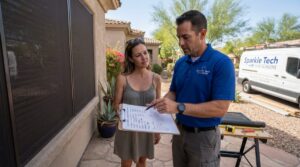
Sparkletechsunscreens provides free on-site estimates for patio rescreening, solar screen installation, screen repairs, and sliding screen door replacement throughout Scottsdale and the surrounding Phoenix metro. Before your appointment, have your patio dimensions ready, note any damaged panels or frame concerns, and think about whether you want a standard mesh or an upgrade like solar screen or pet-resistant fabric. The lifetime guarantee on all services means you’re not just buying a rescreen; you’re buying the confidence that it’s done right.
Request your free estimate through the Sparkletechsunscreens website, or use the contact page to ask about scheduling windows. Most estimates are completed within a few business days, and installation typically follows within 1–2 weeks depending on the season.
Selected sources and further reading
These sources were used to build the pricing data and guidance in this article. Regional variation can materially change any estimate, so use local quotes as your primary reference.
- Angi: 2026 Cost to Rescreen or Repair a Porch or Sunroom — National average project ranges ($864–$7,027), per-sq-ft material cost bands, and pet-resistant mesh pricing data.
- HomeAdvisor: 2026 Cost to Rescreen or Repair a Porch or Patio Enclosure — Labor pricing patterns (base fee + per-sq-ft increments), common add-on line items, and red flags in contractor quotes.
- HomeGuide: How much does it cost to rescreen a porch? — Installed per-sq-ft averages ($2–$4) and sample project totals by size.
- CR Aluminum: How much does it cost to rescreen your patio? — Industry rule-of-thumb on the 6–8 year inspection interval and the case for full rescreens over repeated patch repairs.
- PatioScreenPro: Patio Rescreening Cost in Boca Raton (2026 Guide) — Per-panel pricing examples and the 30–50% cost premium for two-story or mansard enclosures (Florida market; use as a directional reference for complexity premiums, not absolute prices).