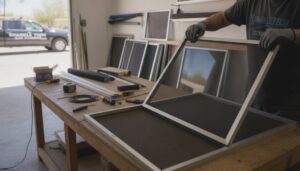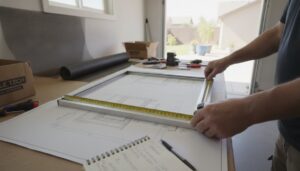

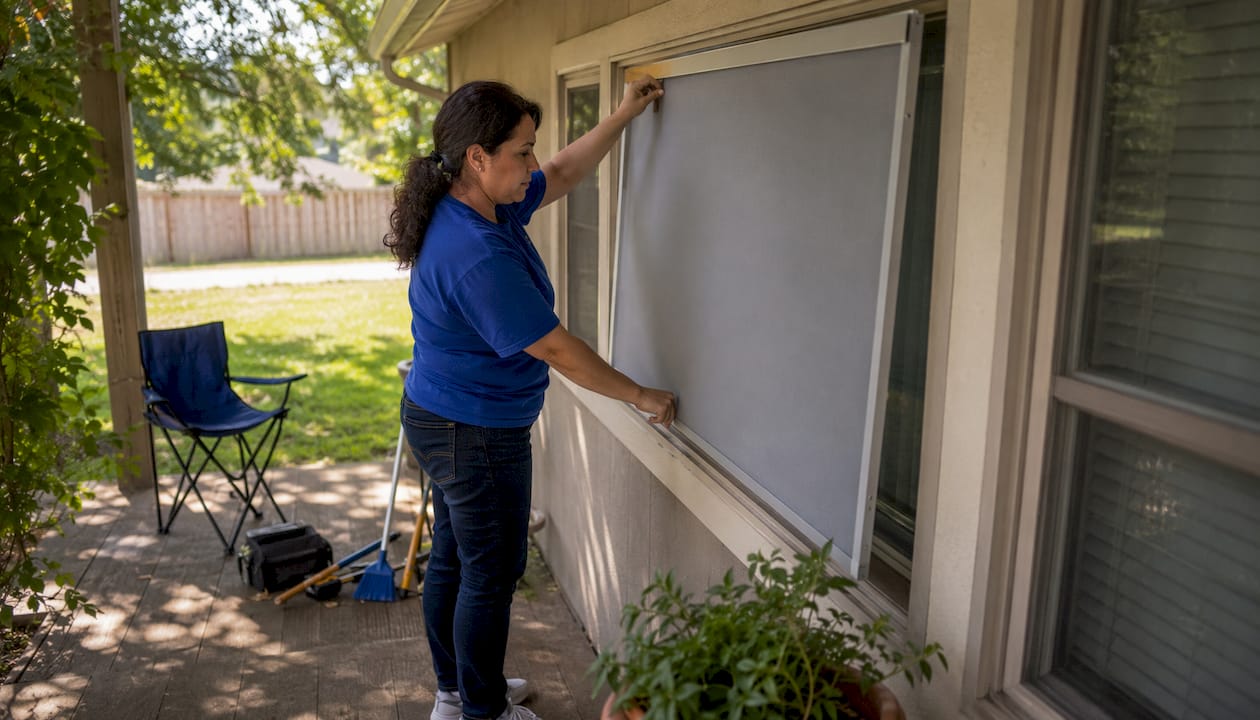

Solar screens are mesh panels mounted over windows, typically on the exterior, that intercept solar radiation before it ever reaches the glass. They absorb and reflect shortwave solar energy, which keeps your rooms cooler, reduces glare, and can block a significant portion of UV radiation depending on mesh density and color. If you have west- or southwest-facing windows in a hot climate, solar screens are one of the most cost-effective passive cooling upgrades you can make. Sparkletechsunscreens installs custom solar screens across Scottsdale and surrounding Arizona areas, and the U.S. Department of Energy consistently points to exterior shading as the most effective method for reducing window heat gain.
The bottom line: solar screens work best on sun-facing windows in warm climates, and the right openness factor and color matter as much as the material itself.
Table of Contents
- What are solar screens and how do they actually work?
- What materials and product types are available?
- Exterior vs interior solar screens: which placement actually wins?
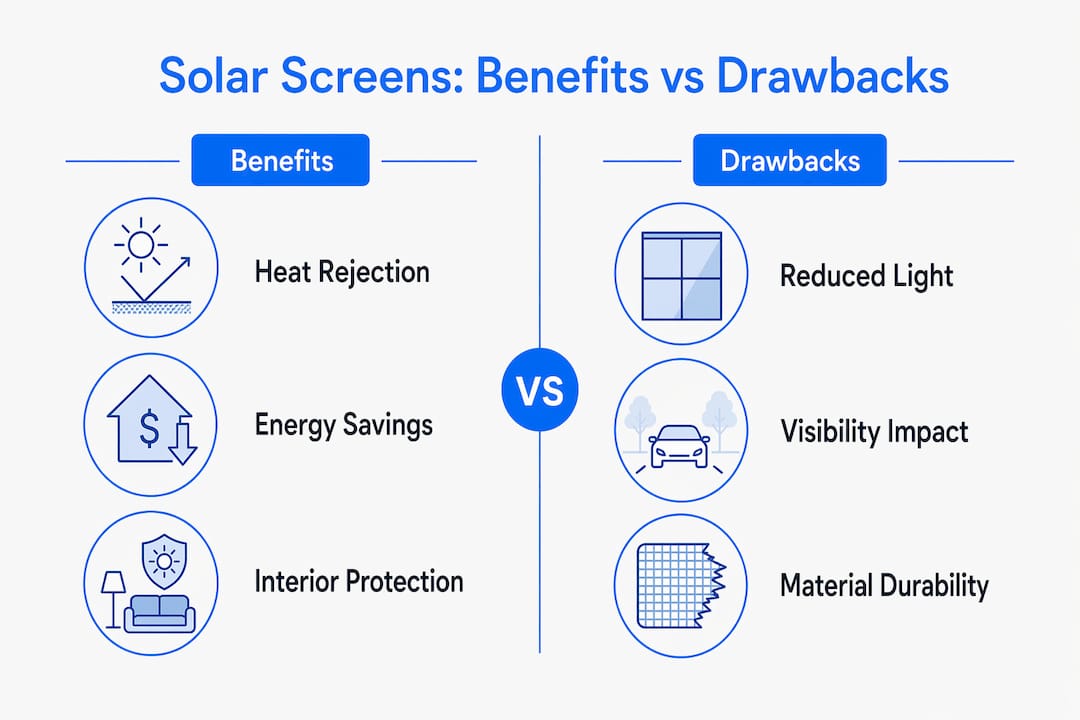
- What benefits do solar screens deliver for homeowners?
- What are the drawbacks you should know before buying?
- How do you choose the right openness factor and color by window orientation?
- Measuring, installation options, costs, and how long screens last
- When do solar screens make the most sense?
- Are solar screen materials environmentally sustainable?
- How do solar screens affect indoor light and ventilation?
- Key Takeaways
- The case for getting the weave right the first time
- Custom solar screens from Sparkletechsunscreens, installed right
- Useful sources for further reading
What are solar screens and how do they actually work?
Solar screens stop heat at the source. Instead of letting sunlight pass through glass and warm your interior, the mesh intercepts shortwave solar radiation outside the glass entirely. The fibers absorb a portion of that energy and reflect the rest back outward, so the glass itself never heats up as much as it would unshaded.
Exterior shading is the most effective method for reducing solar heat gain through windows, according to U.S. Department of Energy guidance on energy-efficient window coverings. Interior treatments manage heat only after it has already passed through the glass.
The air gap between the screen and the glass matters more than most homeowners realize. A gap of roughly 1/4 inch lets the mesh-absorbed heat convect outward into the open air rather than conduct through the glass into your home. Without that gap, you lose a meaningful share of the performance benefit. Proper frame installation preserves this gap, which is one reason professional fitting pays off over a loose DIY mount.
What materials and product types are available?
Solar screen mesh comes in three main material families, each with practical differences in durability, finish, and optical behavior.
- PVC-coated polyester: The most common residential option. Flexible, relatively affordable, and available in a wide color range. Holds up well in moderate climates but can degrade faster under prolonged intense UV exposure.
- PVC-coated fiberglass: Stiffer and more dimensionally stable than polyester. Resists warping in heat and is a strong choice for fixed-panel installations in hot, sunny regions like Arizona.
- Metallicized PVC-coated fiberglass: Used more often in commercial settings. The metallic layer increases reflectivity, which can push heat and UV rejection higher than standard coatings allow.
Beyond material, the product form shapes how you install and use the screen.
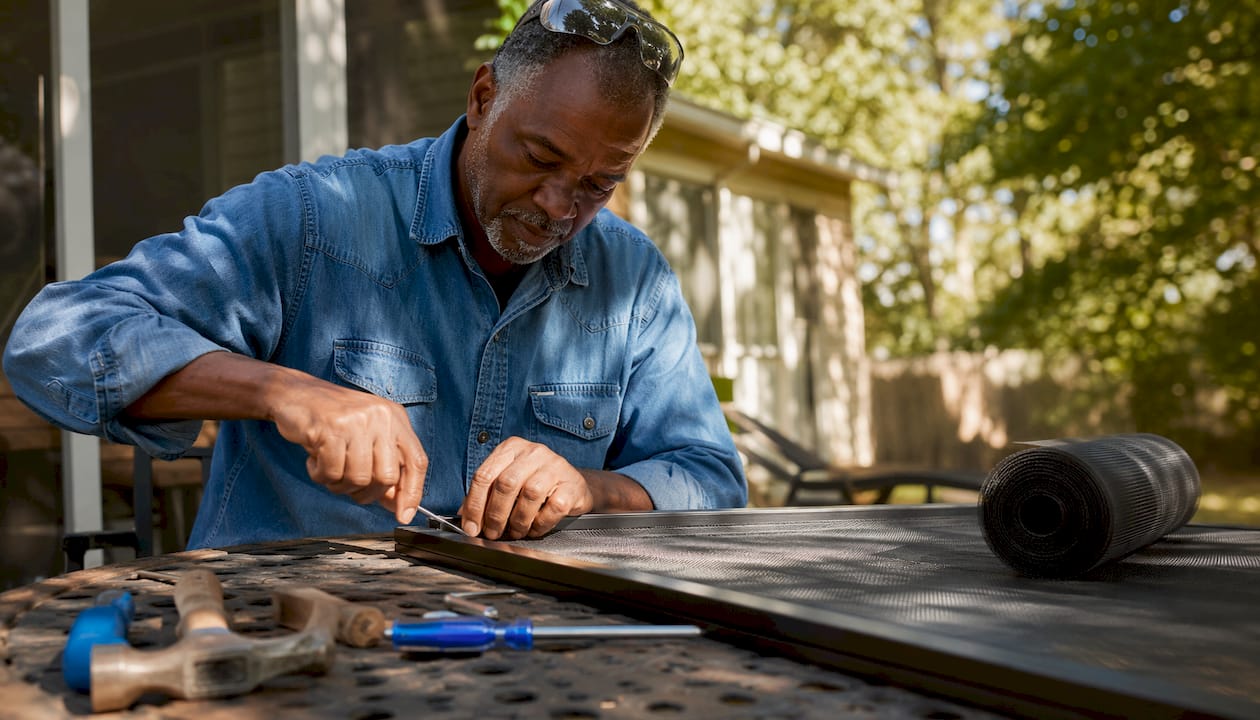
Fixed face-mounted panels are the most economical option. They attach directly to the window frame and stay in place year-round. Framed removable screens work like standard bug screens but with solar mesh, so you can pull them off in winter to recover passive solar gain. Exterior roller shades roll up when not needed and are convenient for large openings or upper floors, though they cost more. Interior solar shades are the easiest retrofit but, as covered in the next section, they work after the glass has already absorbed heat.
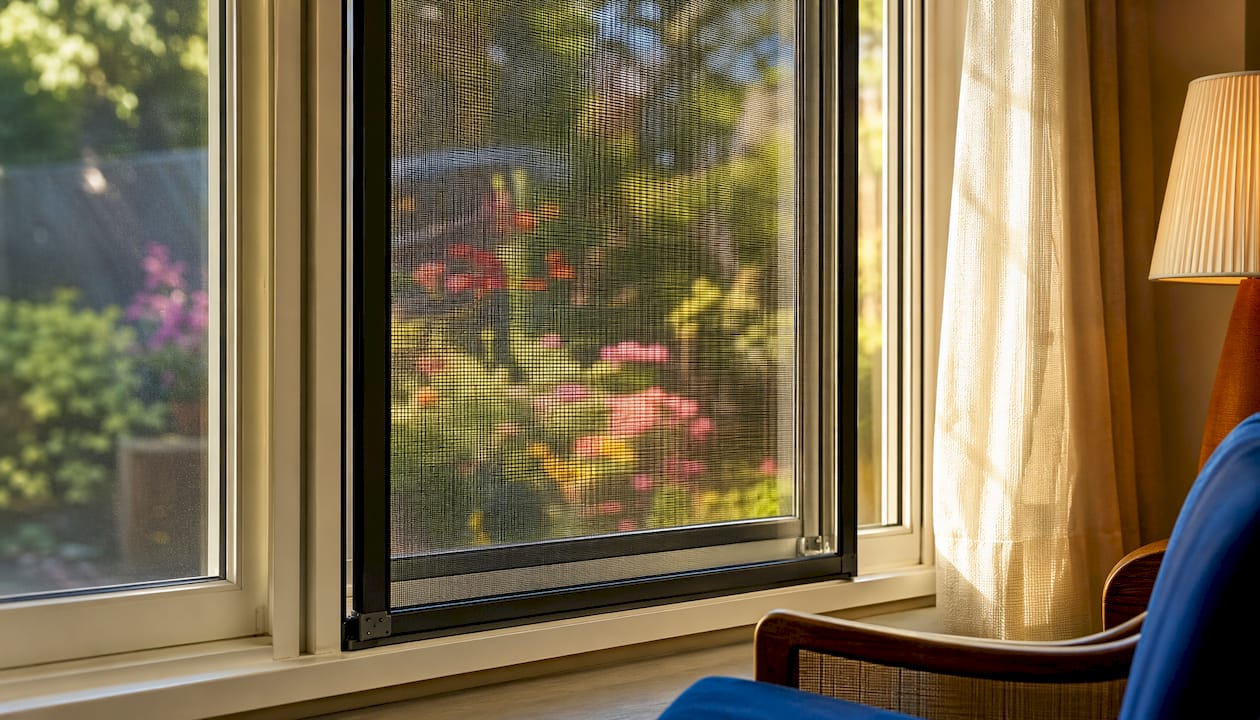
Pro Tip: For high-sun, windy, or coastal exposures, PVC-coated fiberglass in a fixed frame is the most durable choice. Polyester mesh in a removable frame works well where seasonal removal is a priority, but check that the frame hardware is corrosion-resistant if you’re near salt air.
Exterior vs interior solar screens: which placement actually wins?
Exterior screens win on heat rejection, and it’s not close. Because they stop solar energy before it hits the glass, the glass stays cooler and transfers far less heat into the room. Interior solar shades, by contrast, intercept light only after it has already passed through the glass and begun warming the space.
| Dimension | Exterior screens | Interior solar shades |
|---|---|---|
| Heat rejection | High (stops energy before glass) | Moderate (manages heat already inside) |
| UV protection | Up to 90%+ blocked | Partial (glass absorbs some first) |
| Outward visibility | Good with dark mesh | Good, unaffected by weather |
| Maintenance | Exposed to weather; periodic cleaning | Protected indoors; easier to clean |
| Window warranty risk | None; non-invasive | Some films can void IGU warranties |
| Installation complexity | Requires exterior access | Simple; no exterior work needed |
| Typical cost | Higher (materials + installation) | Lower for basic shades |
A few practical notes worth knowing before you decide:
- Exterior screens are exposed to wind, rain, and UV year-round, so material quality and frame attachment matter.
- Some HOAs or historic districts restrict exterior screen aesthetics; check local rules before ordering.
- Interior shades are a reasonable fallback for upper-floor windows where exterior access is difficult or cost-prohibitive.
- Exterior screens do not create thermal stress on insulated glass units the way certain window films can, which protects your window warranty.
What benefits do solar screens deliver for homeowners?
Solar screens cut your cooling load by keeping heat out before your air conditioner has to fight it. That’s the core benefit, and it cascades into several others that are easy to underestimate until you’ve lived with the screens through a hot summer.
Solar screens with tight weaves block a high percentage of UV radiation depending on material and color, which directly slows the fading of furniture, flooring, and artwork. Rooms that used to bleach out in a few years hold their color noticeably longer.
The tangible homeowner benefits, in order of impact:
- Lower cooling bills. Less solar heat entering the home means the AC runs less. The savings vary by climate, window area, and orientation, but west-facing rooms in Arizona can see meaningful reductions in peak afternoon load.
- Reduced UV damage. Furniture, rugs, and wood floors fade far more slowly when 75–99% of UV is blocked at the window.
- Improved daytime privacy. From outside, a solar screen looks dark and opaque in daylight; from inside, you can still see out. You get privacy without closing blinds.
- Glare control. Screens diffuse direct sunlight so you can work or watch TV near a window without squinting.
- Extended HVAC lifespan. Fewer peak-load hours on your air conditioner translates to less wear over time.
What are the drawbacks you should know before buying?
The most common trade-off is reduced visible light transmission. A 5% openness screen blocks more heat but also dims the room noticeably. A 10% screen lets in more light but gives up some heat rejection. Neither is a flaw; it’s a design choice you make based on your priorities.
Other drawbacks worth weighing:
- Slightly softened outward view. The mesh creates a screen-door effect. It’s not opaque, but the view is not as crisp as unobstructed glass.
- Winter solar gain loss. Fixed exterior screens block passive solar warmth in winter, which can increase heating costs in climates with cold winters. Removable screens solve this but add seasonal labor.
- Exterior maintenance. Screens accumulate dust, pollen, and debris. They need periodic rinsing, and frames need inspection for corrosion or warping.
- Upfront cost. Quality custom screens with professional installation cost more than interior shades, though they typically outperform and outlast them.
- HOA and aesthetic constraints. Dark mesh on a light-colored home can change curb appeal. Some communities regulate exterior screen colors or styles.
Pro Tip: If outward clarity is a priority, choose a dark charcoal mesh at 10% openness rather than a lighter mesh at 5%. Dark mesh absorbs light rather than scattering it, which actually gives you a cleaner view through the screen than a lighter color at the same or tighter weave.
How do you choose the right openness factor and color by window orientation?
The rule of thumb is straightforward: tighter weaves for intense afternoon sun, looser weaves where visibility and daylight matter more.
- West and southwest exposures get the harshest late-afternoon sun. Use a 5% openness screen in dark charcoal or black to maximize heat and UV rejection.
- South-facing windows receive strong midday sun. A 5–10% openness screen works well here; choose based on how much daylight you want to preserve.
- East-facing windows get morning sun, which is less intense. A 10% openness screen balances light and heat control without over-darkening the room.
- North-facing windows receive little direct sun. A 10% screen or even a lighter shade is usually sufficient; heat rejection is less critical here.
| Orientation | Recommended openness | Recommended color | Priority |
|---|---|---|---|
| West / Southwest | 5% | Charcoal / Black | Heat & UV rejection |
| South | 5–10% | Charcoal | Balanced performance |
| East | 10% | Charcoal or Bronze | Visibility & morning light |
| North | 10% | Any | Glare control, minimal heat |
Color interacts with openness factor in a way that surprises most homeowners. Dark mesh (charcoal, black) absorbs incoming light, which reduces glare and, counterintuitively, gives you a clearer view outward because there’s less reflected light bouncing back at you. Lighter mesh reflects more solar energy but can make the view look hazy or washed out, especially in bright conditions.
Pro Tip: On a house with mixed orientations, use 5% charcoal on west and south windows and 10% charcoal on east and north windows. The color stays consistent for curb appeal; only the weave tightness changes where the sun hits hardest.
Measuring, installation options, costs, and how long screens last
Before ordering, you need three measurements per window: width, height, and the mounting surface depth (the flat area around the frame where the screen will attach). Measure to the nearest 1/8 inch. Sparkletechsunscreens provides a detailed window measuring guide that walks through each step, including how to account for trim and hardware clearance.
Installation type shapes both cost and convenience:
- Fixed face-mounted panels: Lowest cost, permanent, best heat performance. Ideal for ground-floor windows with consistent sun exposure.
- Framed removable screens: Moderate cost, seasonal flexibility. Good for climates with cold winters where you want to recover passive solar gain.
- Motorized exterior roller shades: Highest cost, most convenient for large or upper-floor openings. Worth the premium when manual access is difficult.
For a detailed breakdown of what drives pricing, the custom screen pricing guide from Sparkletechsunscreens covers material, size, and installation variables clearly.
A properly installed exterior solar screen, with a maintained frame and correct air gap, typically lasts 10–15 years before the mesh degrades noticeably. Frame hardware and mounting clips often outlast the mesh itself, so a re-mesh rather than a full replacement is sometimes all that’s needed.
Maintenance is simple: rinse screens with a garden hose two to four times per year, inspect frames for warping or loose fasteners after storms, and check the air gap hasn’t been compressed by debris or frame movement. Screens that are cleaned regularly and re-tensioned when needed consistently reach the upper end of their lifespan.
When do solar screens make the most sense?
Solar screens are the right call when most of these apply to your situation:
- You have west-, south-, or southwest-facing windows that get direct afternoon sun.
- Your home is in a warm or hot climate where cooling costs are a significant expense.
- You have large glass areas, sliding doors, or picture windows that let in substantial heat.
- UV protection for furnishings or artwork is a priority.
- You want daytime privacy without closing blinds.
- You’re open to exterior installation and can access the window frames.
If your priority is maximum outward clarity with minimal exterior modification, interior solar shades or low-e window film may be a better fit. Awnings work well for south-facing windows but don’t address UV at the glass level. Window film is less invasive but can create thermal stress on insulated glass units and may void some window warranties. Solar screens sit in a practical middle ground: more effective than interior treatments, less permanent than film, and more UV-protective than most awnings.
Are solar screen materials environmentally sustainable?
PVC-coated polyester and fiberglass meshes are petroleum-based products, so their production carries a carbon footprint. That said, the energy savings they generate over their lifespan typically offset the embodied energy of manufacturing within a few cooling seasons in a hot climate. A screen that reduces peak AC load for 10–15 years delivers a net environmental benefit that outweighs its production impact in most U.S. Sun Belt applications.
Recyclability is limited. Most PVC-coated mesh is not accepted in standard curbside recycling, so end-of-life disposal is a real consideration. Some manufacturers take back old mesh for industrial recycling, so it’s worth asking your installer about take-back options. Choosing a longer-lasting material like PVC-coated fiberglass over polyester also reduces replacement frequency, which lowers cumulative waste.
The sustainability case for solar screens is strongest when you frame it correctly: they are a passive cooling tool that reduces grid energy demand, which in turn reduces power plant emissions. In Arizona, where the grid still relies heavily on natural gas for peak summer generation, cutting AC load has a direct emissions benefit.
How do solar screens affect indoor light and ventilation?
Solar screens reduce the amount of visible light entering a room, but the effect is more nuanced than simply “darker.” A 5% openness screen in charcoal will dim a room noticeably, while a 10% screen in the same color feels closer to a light overcast day. The dimming is most noticeable in rooms that rely on a single window for daylight.
Ventilation is unaffected for fixed-panel and framed screens because the mesh is porous. Air moves through freely, which is a meaningful advantage over window film or interior blinds that can trap heat near the glass. In fact, exterior screens can make natural ventilation more comfortable by reducing the radiant heat load from sun-warmed glass, so open windows feel cooler even on hot days.
For rooms where natural light balance matters, a few practical adjustments help:
- Use 10% openness on the primary daylight window and 5% on secondary windows that face intense afternoon sun.
- Pair solar screens with light-colored interior walls to compensate for the reduced light transmission.
- On north-facing windows where direct sun is rare, skip solar screens entirely and use a standard bug screen to preserve maximum daylight.
Key Takeaways
Solar screens are the most effective passive cooling upgrade for sun-facing windows in hot climates, blocking up to 90% of UV and significantly reducing solar heat gain before it reaches the glass.
| Point | Details |
|---|---|
| What solar screens do | Mesh panels mounted outside windows intercept solar radiation before it hits the glass, cutting heat and UV. |
| Openness factor rule | Use 5% weave on west/southwest exposures for maximum heat rejection; use 10% where visibility and daylight matter more. |
| Exterior beats interior | Exterior screens stop heat before it enters; interior shades manage it only after the glass has already absorbed it. |
| UV and fading protection | Quality solar screens block 75–99% of UV radiation, significantly slowing furniture and flooring fade. |
| Sparkletechsunscreens | Offers custom solar screen installation with a lifetime guarantee across Scottsdale and surrounding Arizona areas. |
The case for getting the weave right the first time
Most homeowners focus on whether to get solar screens at all. The more consequential decision is which weave and color to put on which window. A 10% screen on a west-facing window in Phoenix is a compromise that leaves real heat rejection on the table. A 5% screen on a north-facing window darkens a room for no practical gain. The orientation table in this article isn’t a suggestion; it’s the difference between screens that pay for themselves quickly and screens that disappoint.
The other thing that gets underestimated is the air gap. A screen pressed tight against the glass because of a poorly fitted frame loses a meaningful share of its performance. The mesh absorbs heat, but if there’s nowhere for that heat to go except through the glass, you’ve cut the benefit significantly. This is the detail that separates a professional installation from a rushed DIY job, and it’s why the frame matters as much as the mesh.
Custom solar screens from Sparkletechsunscreens, installed right
Homeowners who want the performance benefits described in this article without the guesswork of measuring, material selection, and frame fitting get exactly that from Sparkletechsunscreens. The service covers custom-cut solar screens built for Arizona’s intense sun, professional installation that preserves the critical air gap, and a lifetime guarantee that backs the work long after installation day.

Sparkletechsunscreens serves Scottsdale and surrounding Arizona areas, handling everything from initial measurement to final frame inspection. The team recommends the right openness factor and color for each window orientation in your home, so you’re not guessing between 5% and 10% on a west-facing wall. If you’re ready to cut cooling costs and protect your interiors, request a free estimate and get a quote built around your specific windows.
Useful sources for further reading
The claims in this article draw from the following authoritative sources. Each is worth bookmarking if you want to verify specific figures or dig deeper into any subtopic.
- U.S. Department of Energy: Energy-Efficient Window Coverings — Primary government source endorsing exterior shading as the most effective heat-reduction method for windows.
- Efficient Window Coverings: Exterior Solar Screen — Covers material types (PVC-coated polyester, fiberglass, metallicized) and their optical and durability properties.
- Blindsgalore: Interior vs Exterior Solar Screens — Explains the air gap mechanism and why exterior placement outperforms interior treatments on heat rejection.
- The Glass Guru: Solar Screen Buying Guide — Covers the window warranty implications of solar screens vs window film and general buying considerations.
- Drapery Company: What Are Solar Screens for Windows — Summarizes UV protection ranges (75–99%) and cost-effectiveness relative to other shading solutions.
- Sparkletechsunscreens: How to Measure Windows for Screens — Step-by-step measurement guide for homeowners preparing for a professional estimate.
- Sparkletechsunscreens Blog — Articles on materials, maintenance, and installation case studies from an Arizona-based installer.