
Table of Contents
- Desert Sun Screens vs Scottsdale Screen: Quick Comparison
- Solar Screen Installation Cost: What You’ll Actually Pay
- Heat and UV Ray Reduction: Performance Head-to-Head
- How to Choose Solar Screen Fabric for Your Home
- Installation, Durability, and Warranty Coverage
- Solar Screen Maintenance Tips and Long-Term Care
- Which Option Wins for Your Situation
- Conclusion
Last Updated: August 16, 2026
Desert Sun Screens vs Scottsdale Screen: Quick Comparison
When shopping for solar screens in the Phoenix metro area, you’ll encounter multiple providers claiming superior heat reduction and energy efficiency. Desert Sun Screens vs Scottsdale Screen represents a common decision point for homeowners balancing quality, durability, and cost. Both serve the local market but differ significantly in installation approach, material selection, and warranty support.
At SPARKLE TECH SUN SCREENS, we’ve analyzed how these competitors stack up against professional installation standards. The real question isn’t which company exists in your area, but which one delivers screens that perform under Arizona’s extreme climate and backs that performance with meaningful guarantees.
The core difference: Desert Sun Screens emphasizes mobile service convenience, while Scottsdale Screen focuses on premium materials. SPARKLE TECH SUN SCREENS combines both with same-week installation and a lifetime guarantee on qualifying services.
Solar Screen Installation Cost: What You’ll Actually Pay
Installation pricing depends on window count, custom sizing, mesh material, and whether you’re replacing or installing new screens.
Professional Installation Cost Breakdown
Most homeowners encounter these components:
- Material costs: Solar screen mesh and frames typically range from $5-$8 per square foot. A standard 36" × 48" window screen runs $72 in materials at $6 per square foot.
- Labor and installation: Professional installation adds $35-$90 per window depending on region and complexity. Mobile providers like Desert Sun Screens charge lower labor rates due to reduced overhead, while fixed-location providers like Scottsdale Screen may charge more but offer controlled quality environments.
- Measurement and consultation: Custom-fit screens require on-site measurement. Some providers include this free; others charge for it.
- Warranty and guarantees: Premium providers charge more upfront but include extended warranties. A lifetime guarantee on qualifying services (as offered by SPARKLE TECH SUN SCREENS) reduces long-term cost of ownership by eliminating replacement expenses for manufacturing defects.
For a typical residential project (8-12 windows), professional installation ranges from $800-$2,400 depending on window size, mesh selection, and provider.
DIY vs. Professional Installation: True Cost Analysis
DIY installation appears cheaper initially but carries hidden costs. Pre-made screens run $30-$80 per screen but rarely fit non-standard openings precisely. Incorrect measurements lead to gaps that compromise insect protection and heat reduction, often requiring replacement within 2-3 years. Proper installation requires specialized tools costing $100-$300 to purchase or $30-$50 per day to rent. DIY installation typically requires 30-60 minutes per screen, adding $12.50-$50 per screen in opportunity cost at $25-$50 per hour.
Professionally installed custom screens last 10-15 years in Arizona’s climate. DIY or pre-made screens often require replacement within 5-7 years due to improper fit or inferior materials.
Long-Term Cost of Ownership Comparison
Consider a homeowner with 10 windows over 15 years:
- Professional installation (one-time): $1,200-$2,000 upfront, lasting 12-15 years. Cost per year: $80-$167.
- DIY approach (replacement every 5-7 years): $300-$800 initial investment plus $150-$400 in tools. Requires 2-3 replacement cycles. Total 15-year cost: $900-$2,400 plus 15-30 hours of labor.
A lifetime guarantee on qualifying services reduces long-term cost to the initial installation fee, making professional installation significantly more economical.
Request itemized quotes separating material, labor, and warranty costs. Ask each provider for average screen lifespan under Arizona conditions and what their warranty covers. A $250 screen with a lifetime guarantee costs less over 15 years than a $200 screen with a 3-year warranty.
Desert Sun Screens’ mobile model often delivers lower labor costs. Scottsdale Screen’s premium positioning reflects higher per-unit costs but may include upgraded materials extending lifespan. SPARKLE TECH SUN SCREENS combines competitive pricing with same-week service and lifetime guarantees, changing the total cost calculation in favor of professional installation.
Heat and UV Ray Reduction: Performance Head-to-Head
Solar screens reduce heat gain by blocking a percentage of solar radiation before it enters your home. Effectiveness depends on mesh density, material composition, and UV-filtering properties. Higher-density mesh blocks more heat but allows less light transmission.
Desert Sun Screens typically offers standard mesh providing moderate heat reduction, adequate for most residential applications. Scottsdale Screen emphasizes premium mesh with enhanced UV filtering, providing noticeably better heat rejection in direct sun exposure. SPARKLE TECH SUN SCREENS utilizes weather-resistant materials engineered for Arizona’s harsh climate, withstanding prolonged UV exposure, extreme temperature swings, and dust-laden winds.
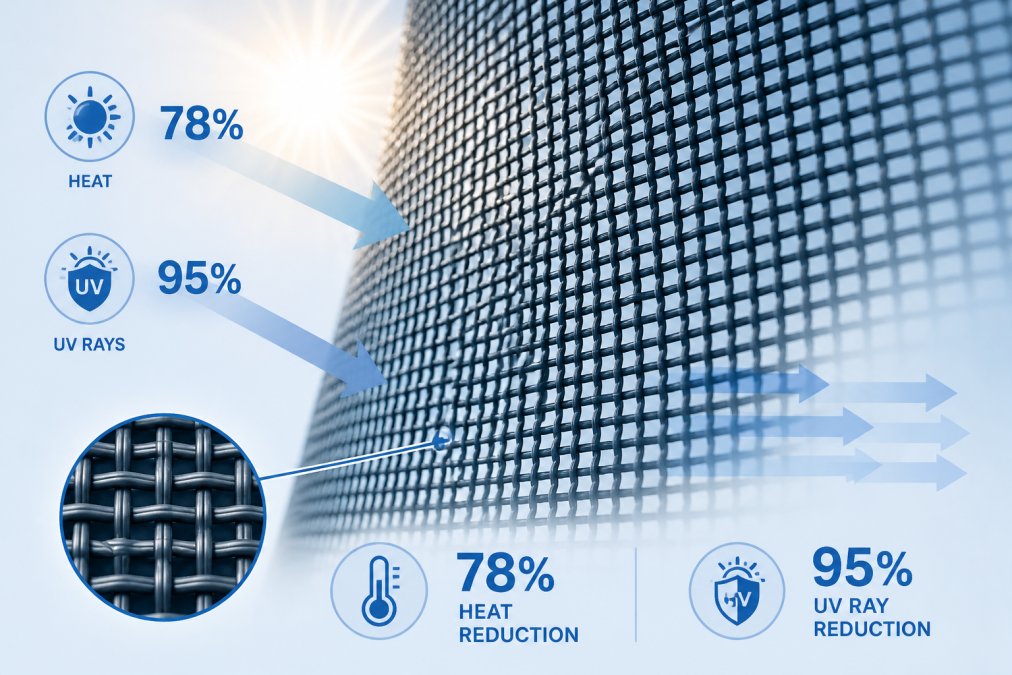
Mesh density affects both performance and aesthetics. Denser mesh provides superior heat and UV blocking but reduces visibility and airflow. Your choice depends on whether you prioritize cooling efficiency or clear sightlines.
How to Choose Solar Screen Fabric for Your Home
Selecting the right solar screen fabric requires understanding mesh density specifications and their real-world performance impact.
Understanding Mesh Blockage Percentages
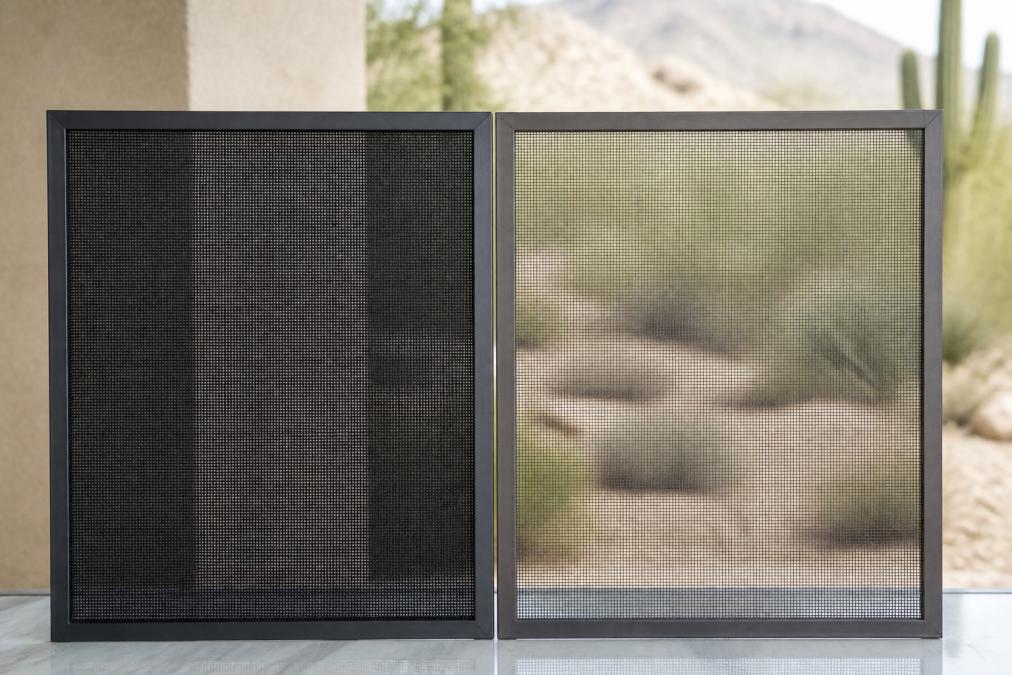
Solar screen mesh is rated by the percentage of solar radiation it blocks, typically ranging from 70% to 90%. This specification directly affects heat reduction, visibility, airflow, and interior brightness.
- 70% blockage (30% open): Allows maximum light transmission and airflow. Provides modest heat reduction. Best for homeowners prioritizing clear outdoor views over maximum cooling efficiency.
- 80% blockage (20% open): The most common residential choice. Reduces solar heat gain by approximately 15-20% during peak summer hours. Provides noticeable cooling cost reduction while maintaining acceptable visibility and airflow.
- 90% blockage (10% open): Maximum heat rejection. Significantly reduces interior brightness. Best for extreme sun exposure situations where maximum cooling efficiency outweighs visibility concerns.
The difference between 80% and 90% blockage is more significant than between 70% and 80%. Moving from 80% to 90% blocks an additional 50% of remaining solar radiation but noticeably reduces visibility and airflow.
Performance Trade-Offs by Mesh Density
Each blockage level involves specific compromises between heat reduction and visibility, cooling efficiency and natural ventilation, insect protection and airflow, and cost versus performance. Higher blockage percentages reduce heat more effectively but darken interiors. Denser mesh blocks more heat but restricts airflow. In Arizona’s low-humidity climate, natural ventilation through screens provides significant cooling benefit during evening and early morning hours. 90% blockage mesh typically costs 10-20% more than 80% blockage options, with additional cooling benefit of 5-10% more heat reduction.
Selecting the Right Density for Your Situation
Consider these factors when choosing blockage percentage:
- Window orientation: South- and west-facing windows benefit most from higher blockage percentages (85-90%). North-facing windows perform adequately with 70-80% blockage.
- Current cooling costs: Homeowners with cooling bills exceeding $200-$250 monthly during summer typically see measurable savings from 85-90% blockage screens.
- Interior use and lighting preferences: Home offices and media rooms benefit from lower blockage percentages (70-80%). Bedrooms can tolerate higher blockage (85-90%).
- Climate zone intensity: Arizona’s extreme heat justifies higher blockage percentages for south and west exposures.
- Existing shade structures: Homes with trees, awnings, or other shade structures may achieve adequate cooling with lower blockage percentages (70-80%).
Material Composition and Durability
Mesh blockage percentage alone doesn’t determine lifespan. Material composition matters equally:
- Vinyl-coated polyester: The industry standard for Arizona applications. Resists UV degradation significantly better than untreated materials. Maintains structural integrity and blockage effectiveness for 10-15 years under intense sun exposure. Costs 15-25% more but justifies the premium through extended lifespan.
- Untreated polyester: Less expensive initially but degrades faster under UV exposure. May lose 10-20% of blockage effectiveness within 5-7 years. Not recommended for Arizona’s intense solar environment.
- Aluminum frame vs. vinyl frame: Aluminum frames conduct heat and become uncomfortably hot to touch in direct sun. Vinyl frames insulate better and remain cooler.
Choosing mesh density based solely on price can backfire. A cheaper 70% blockage screen requiring replacement within 5-7 years costs more than a premium 85% blockage vinyl-coated option lasting 12-15 years. Factor total cost of ownership and material durability into your decision.
Recommended Density by Application
- Standard residential windows (mixed orientations): 80% blockage with vinyl-coated polyester. Balances heat reduction, visibility, airflow, and cost.
- South- and west-facing windows: 85-90% blockage with vinyl-coated polyester. Maximizes cooling benefit where sun exposure is most intense.
- North-facing windows or shaded areas: 70-75% blockage. Provides insect protection and modest heat reduction without unnecessary darkening.
- Patio doors and sliding glass doors: 80-85% blockage. Balances cooling efficiency with the need to see outdoor areas clearly.
- Retractable screens: 80% blockage. Allows flexibility to adjust coverage based on time of day and season.
Desert Sun Screens typically offers standard 80% blockage options suitable for typical residential needs. Scottsdale Screen provides a broader range of mesh densities with specialized heat-rejection properties. SPARKLE TECH SUN SCREENS works with you to select the specific blockage percentage matching your window orientation, cooling needs, and visibility preferences.
Installation, Durability, and Warranty Coverage
Professional installation quality directly impacts screen longevity. Improper measurement, poor frame fit, or inadequate fastening leads to premature failure, gaps compromising insect protection, and screens that sag or warp under wind stress.
Desert Sun Screens emphasizes mobile convenience, arriving at your location for measurements and installation. Scottsdale Screen typically operates from a fixed location, which can mean scheduling delays but may allow more controlled quality processes. SPARKLE TECH SUN SCREENS provides custom-fit screens for maximum durability, with on-site measurement ensuring precise fits even for odd-sized windows. Same-week service means you don’t wait weeks for installation, and the lifetime guarantee on qualifying services provides long-term peace of mind.
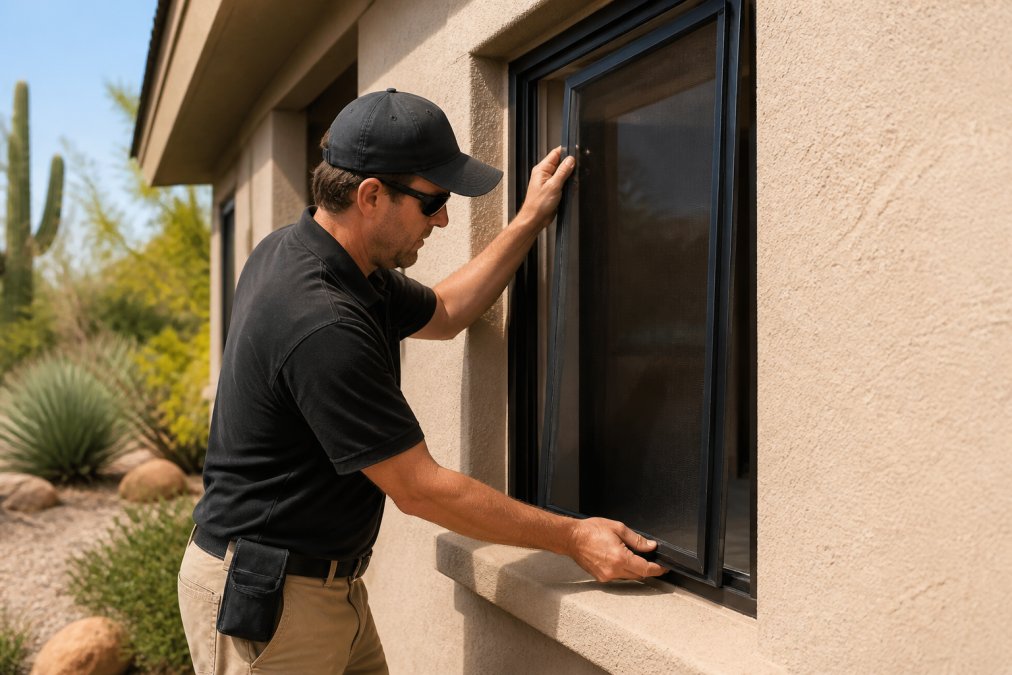
Durability depends on material quality, installation precision, and how well screens resist Arizona’s environmental stressors. Wind, dust, temperature extremes, and intense UV exposure all degrade screens over time. Weather-resistant materials designed specifically for these conditions significantly extend lifespan. Warranty coverage varies substantially between providers. Some offer limited warranties covering only manufacturing defects for one to three years. Others, like SPARKLE TECH SUN SCREENS, provide lifetime guarantees on qualifying services, meaning major failures are covered indefinitely.
Solar Screen Maintenance Tips and Long-Term Care
Regular maintenance extends screen lifespan and preserves performance. Dust, pollen, and debris accumulate on mesh surfaces, reducing airflow and light transmission. Periodic cleaning prevents buildup and allows early damage detection.
Basic maintenance tasks include monthly inspection for tears and loose fasteners, quarterly cleaning with a soft brush and water, annual deep cleaning with mild soap, frame inspection to ensure fasteners remain tight, and immediate repair of small tears or holes to prevent enlargement.
Seasonal maintenance becomes especially important in Arizona. Pre-monsoon season inspection catches potential wind damage risks. Post-monsoon cleaning removes dust and debris stirred up by severe weather.
Most screen failures result from deferred maintenance rather than manufacturing defects. A screen cleaned twice yearly and inspected monthly typically lasts significantly longer than one receiving no attention. This simple routine protects your investment and maintains performance.
Which Option Wins for Your Situation
Choose Desert Sun Screens if: You prioritize mobile convenience and quick scheduling, have standard window sizes and straightforward installation needs, and are comfortable with standard mesh options.
Choose Scottsdale Screen if: You want premium mesh materials with enhanced UV filtering, value established local reputation, and are willing to accept potentially longer scheduling delays.
Choose SPARKLE TECH SUN SCREENS if: You need same-week installation with custom-fit precision, want weather-resistant materials engineered for Arizona’s climate, require on-site professional measurement for odd-sized windows, and value a lifetime guarantee on qualifying services. The combination of speed, durability, and warranty coverage makes this the top choice for most homeowners seeking reliable, long-term performance.
The decision ultimately depends on what matters most to you: speed of service, material quality, warranty protection, or some combination of these factors. SPARKLE TECH SUN SCREENS aligns all three: fast service, premium durability, and meaningful long-term guarantees.
Choosing between solar screen providers requires comparing more than just price per screen. According to the Department of Energy’s guidance on window treatments and energy efficiency, properly selected and installed solar screens can reduce cooling costs by 15-20% during peak summer months. The real value emerges when you combine effective heat reduction with installation quality and warranty protection ensuring your screens perform for years.
SPARKLE TECH SUN SCREENS delivers that combination with same-week service, custom-fit installation, and a lifetime guarantee on qualifying services. Get your free quote today and see how professional solar screen solutions can improve your home’s comfort and energy efficiency while protecting against Arizona’s harsh climate.
Frequently Asked Questions
What is the difference between standard screens and solar screens?
Standard screens block insects and allow airflow but provide minimal heat or UV protection. Solar screens use specialized mesh with tighter weaves and reflective coatings that block 65-90% of solar heat and UV rays while maintaining visibility and ventilation. This difference directly impacts your home's cooling costs and interior fading, making solar screens a significant upgrade for climates with intense sun exposure.
How much should solar screens cost, and what affects the price?
Solar screen installation cost varies based on window size, mesh type, frame material, and whether you choose professional installation or DIY. Custom-fit screens and professional installation typically cost more than standard options, but they deliver better performance and longevity. For accurate pricing tailored to your home, request a free quote from a local provider who can measure your windows and assess your specific needs.
Are window sun screens worth it for reducing energy bills?
Yes, solar screens are worth the investment for most homeowners in high-heat climates. They reduce solar heat gain by 65-90%, which can lower cooling costs by 15-30% depending on your home's sun exposure and current window treatments. The payback period typically ranges from 3-7 years, after which you benefit from ongoing savings plus improved comfort and reduced fading of interior furnishings.
What type of porch screen would be best against UV rays?
Porch screens with high solar density mesh (80-90% opacity) offer the best UV protection while maintaining visibility. Exterior-mounted screens perform better than interior screens because they block heat before it enters your home. Choose screens with UV-blocking coatings and durable materials like fiberglass or aluminum that withstand Arizona's extreme heat and dust without degrading over time.
This article was written using GrandRanker