

Table of Contents
- Why Durable Window Screens Matter for Child Safety
- ASTM F2090 Compliant Window Guards: What You Need to Know
- Key Materials and Weight Capacity Standards
- How to Install Window Safety Screens: DIY vs. Professional
- Childproofing Windows for Toddlers: Beyond Screens
- Choosing the Right Screen for Your Window Type and Climate
- Maintenance, Durability, and Long-Term Performance
- Conclusion
Last Updated: August 12, 2026
Why Durable Window Screens Matter for Child Safety
Window falls represent a serious threat to young children. Durable window screens for child safety are engineered to withstand significant force while maintaining visibility and airflow. At SPARKLE TECH SUN SCREENS, we understand that Arizona families need screens that work in extreme heat and intense sun while keeping children safe from accidental falls.
A standard window screen might collapse under 10 pounds of pressure, while a properly installed safety screen can withstand static loads of 100 pounds or more without failing. Durable window screens built with reinforced fiberglass mesh and aluminum frames maintain their integrity for decades, even in Arizona’s intense heat, dust storms, and UV exposure.
Durable window screens for child safety aren’t luxury upgrades, they’re essential protective infrastructure. The right installation method and materials determine whether a screen prevents falls or merely looks the part.
ASTM F2090 Compliant Window Guards: What You Need to Know
ASTM F2090 is the industry standard that defines how window guards and safety screens must perform to protect children from falls. ASTM F2090 compliant window guards must resist a horizontal force of 100 pounds per linear foot without allowing a 4-inch sphere to pass through the mesh, representing the typical force a young child might apply while playing near a window.
Many products marketed as "child-safe" don’t actually meet this standard. When evaluating durable window screens for child safety, always ask whether the product has been tested and certified to ASTM F2090. Installation method directly affects compliance, a tension-mounted screen installed correctly will comply; the same screen installed improperly will fail testing.
Many retailers sell window screens labeled “child-safe” without ASTM F2090 certification. These products may look similar to compliant options but offer no guaranteed protection. Always verify certification before purchase.
Key Materials and Weight Capacity Standards
Fiberglass Mesh vs. Heavy-Duty Alternatives
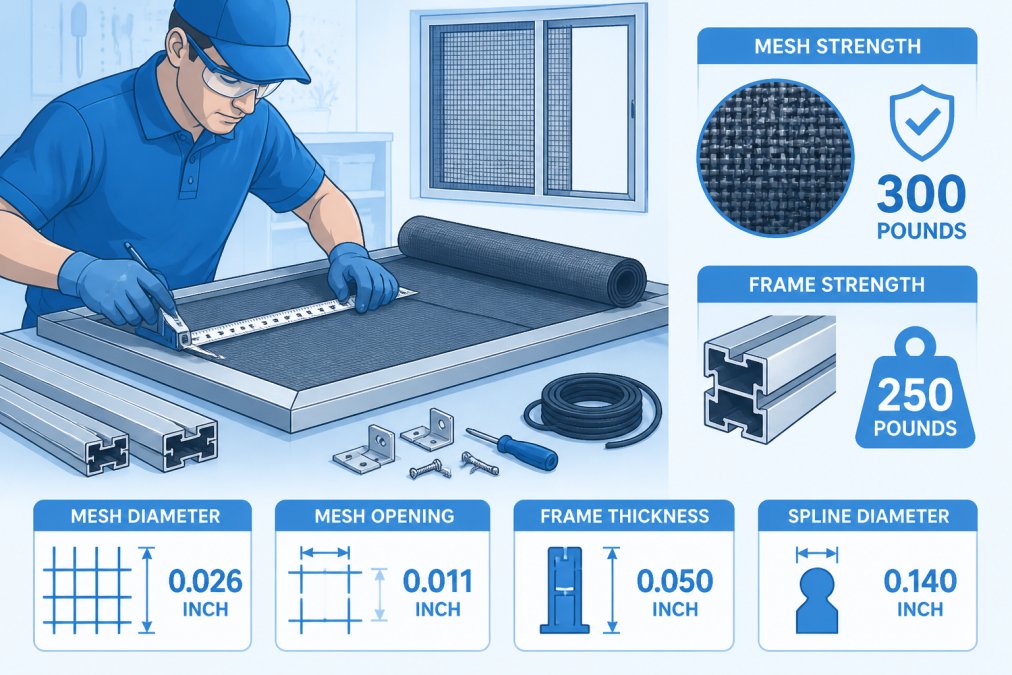
Standard fiberglass mesh typically handles 10-20 pounds of static load before deforming, which is insufficient for child safety applications. Polyester mesh offers superior durability, resisting UV degradation better in Arizona’s intense sun and supporting 100+ pounds of static load, making it appropriate for ASTM F2090 compliant applications. Stainless steel mesh represents the premium option, withstanding 200+ pounds of static load and resisting virtually all environmental degradation.
Frame material matters as much as mesh. Aluminum frames resist corrosion in Arizona’s dry climate, while reinforced aluminum frames with additional bracing provide better structural support for heavy-duty mesh. The combination of mesh and frame determines overall performance, a heavy-duty mesh in a standard frame will fail because the frame can’t support the load.
Static Weight Capacity and Force Resistance
Static weight capacity refers to how much weight a screen can support when applied gradually and held steady. ASTM F2090 testing applies force at a specific rate to simulate how a child might lean or push against a screen. Arizona’s heat affects force resistance, as materials expand and contract with temperature swings from 120-degree days to cool mornings. Quality screens maintain consistent force resistance across temperature ranges because manufacturers account for thermal expansion during design.
Testing for force resistance should be independent and third-party verified. When comparing durable window screens for child safety, always request documentation of independent testing results.
Don’t confuse weight capacity with force resistance. A screen might support 100 pounds of weight but fail at 80 pounds of horizontal force applied at a specific angle. ASTM F2090 tests the specific force patterns that matter for child safety.
How to Install Window Safety Screens: DIY vs. Professional
Tension-Mounted Installation for Double-Hung Windows
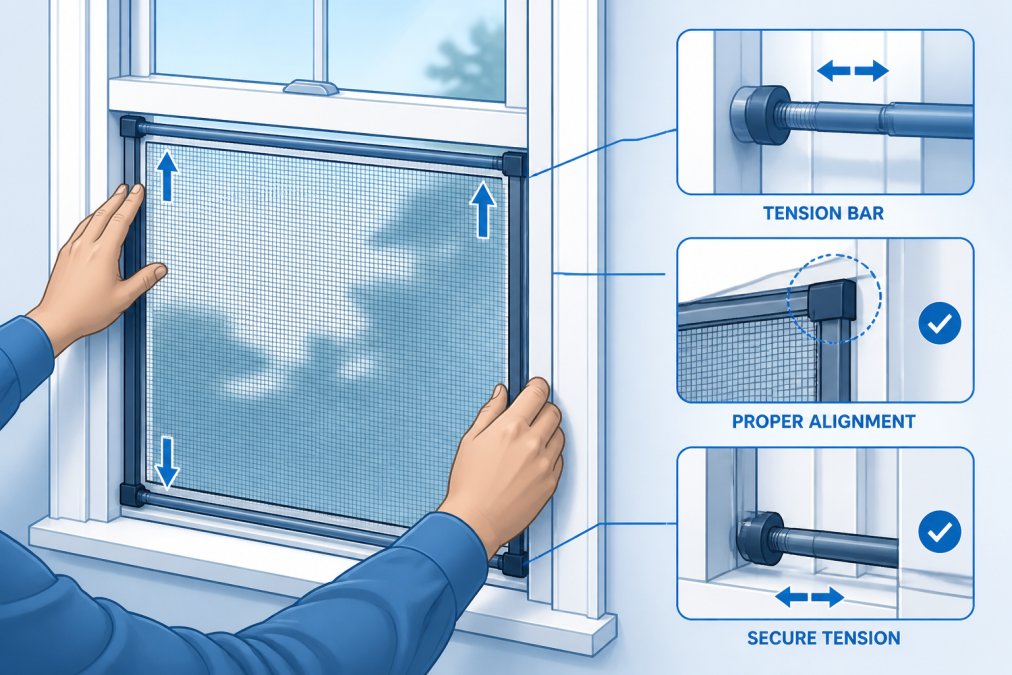
Tension-mounted screens work by applying spring tension to hold the frame snugly within the window opening. Installation begins with accurate measurement of the inside width and height of the window opening, even a quarter-inch error can prevent proper installation or create gaps. The screen frame must be square and rigid, and tension adjustment must be precise. Too little tension and the screen shifts or falls out; too much tension and the frame warps.
Professional installers know exactly where to set tension for each window type. DIY installation often results in improper tension because homeowners lack this calibration experience. Double-hung windows present specific challenges because the lower sash moves. The screen must sit above the lower sash so it doesn’t interfere with window operation while maintaining the protective barrier.
When Professional Certification Matters
Professional installation certification ensures the screen meets ASTM F2090 requirements. A certified installer has been trained on the specific force requirements, measurement protocols, and installation techniques that the standard demands. They understand how installation errors compromise safety and have tools to verify that the finished installation actually meets the standard.
DIY installation works for standard screens where aesthetics matter more than force resistance. But for durable window screens designed for child safety, professional installation is the appropriate choice. Professional installers account for variables that DIY installers often miss, window frames that aren’t perfectly square, trim that interferes with standard screen installation, and damaged frames that need reinforcement.
Arizona’s heat creates installation challenges that professionals handle routinely. Aluminum frames expand in extreme heat, which can affect screen tension. Professionals know how to account for thermal expansion, setting initial tension slightly lower to compensate for expansion that will occur during the first summer.
SPARKLE TECH SUN SCREENS provides same-week service for custom screen installations, including safety screens for child protection. Our technicians measure windows precisely, manufacture screens to exact specifications, and install them using methods that ensure ASTM F2090 compliance. We back every installation with a lifetime guarantee on qualifying services.
Families with young children, second-story windows, or windows in high-traffic areas. Professional installation is the only reliable way to ensure that durable window screens for child safety actually perform as intended.
Childproofing Windows for Toddlers: Beyond Screens
Safety screens are essential, but they’re one component of comprehensive window safety. Window opening limiters restrict how far a window can open, preventing a child from creating an opening large enough to fall through. Combined with durable window screens for child safety, opening limiters create redundant protection. Install opening limiters on every window accessible to young children, these devices allow the window to open 4 inches maximum, enough for ventilation but too narrow for a child to squeeze through.
Move beds, dressers, and climbing structures away from windows. A child standing on furniture can reach a window that would otherwise be out of reach. Supervision remains the primary safeguard. Screens, limiters, and locks are safety infrastructure, but they’re not substitutes for watching children.
Choosing the Right Screen for Your Window Type and Climate
Climate-Specific Durability in Extreme Heat and Wind
Arizona’s climate presents unique challenges for window screens. Summer temperatures regularly exceed 120 degrees, causing materials to expand and lose structural integrity. Dust storms bring abrasive particles that scratch and degrade mesh. Standard fiberglass mesh degrades rapidly in this environment, with UV exposure breaking down the resin within 2-3 years. Polyester mesh resists UV degradation significantly better, maintaining flexibility and strength even after years of intense sun exposure and routinely lasting 8-10 years in Arizona.
Wind resistance matters in Arizona, where dust storms and seasonal wind events are common. Screens designed for Arizona wind conditions use reinforced frames and tight mesh weave that resists wind loads without deforming.
Integration with Existing Window Hardware
Screens must work with existing window hardware without requiring modifications that compromise the window’s function or appearance. Double-hung windows require the screen to sit above the lower sash without interfering with its movement. Casement windows open outward, creating installation challenges that require custom fabrication. SPARKLE TECH SUN SCREENS manufactures screens custom-fitted to your specific window dimensions, ensuring they integrate seamlessly with your existing hardware.
Maintenance, Durability, and Long-Term Performance
Durable window screens for child safety require regular maintenance to preserve their protective function. Clean screens monthly during heavy dust season and quarterly otherwise using a soft brush and mild soap solution. Avoid high-pressure washing, which can damage the mesh. Inspect screens seasonally for damage, looking for tears, bent frames, or areas where the mesh has separated from the frame.
Check tension on tension-mounted screens annually. Over time, springs and tension mechanisms can lose effectiveness, causing screens to shift or become loose. Arizona’s intense sun accelerates material degradation. Most quality screens remain fully functional for 10-15 years before UV exposure significantly affects performance.
SPARKLE TECH SUN SCREENS provides maintenance recommendations with every installation. Our lifetime guarantee on qualifying services means we stand behind the durability of our work.
Protecting children from window falls requires multiple layers of protection, and durable window screens for child safety form the first critical barrier. SPARKLE TECH SUN SCREENS specializes in custom-manufactured screens built to withstand Arizona’s extreme climate while meeting ASTM F2090 safety standards. Our same-week service, precise custom measurements, and lifetime guarantee ensure your screens will protect your family for years to come. Get Your Free Quote today and discover how professional screen solutions can enhance both your home’s safety and comfort.
Frequently Asked Questions
What makes durable window screens for child safety different from standard insect screens?
Standard insect screens are designed to keep bugs out, not to prevent falls. Child safety screens use reinforced fiberglass mesh and heavier aluminum frames with higher static weight capacity and force resistance. They meet ASTM F2090 standards, which require the screen to resist outward pressure from a child pushing or leaning. Safety screens also feature improved structural integrity and are tested for impact resistance to ensure they won't fail under stress.
Are ASTM F2090 compliant window guards required by law?
ASTM F2090 standards are voluntary guidelines developed by the American Society for Testing and Materials to establish safety requirements for window fall prevention devices. However, some jurisdictions may have specific building codes or rental property regulations that require fall protection on upper-story windows. Check with your local building department or HOA to determine what applies to your situation. Regardless of legal requirements, ASTM-compliant screens provide measurable protection against accidental falls.
Can I install window safety screens myself, or do I need a professional?
Many homeowners can install tension-mounted safety screens on standard double-hung windows using basic tools and following manufacturer instructions. However, professional installation ensures proper measurements, correct tension, and compliance with safety standards. Professional installers have the expertise to handle non-standard window sizes, difficult angles, and integration with existing hardware. If you're unsure about installation or have older or unusual windows, professional certification guarantees the screens are installed correctly for maximum safety and durability.
How do I childproof windows for toddlers beyond just installing screens?
Durable window safety screens are a critical first layer, but childproofing windows for toddlers involves multiple strategies. Install window opening limiters to restrict how far windows can open, ensuring children can't squeeze through gaps. Use cordless window coverings to eliminate strangulation hazards. Position furniture away from windows to prevent climbing. Teach children that screens are barriers, not play surfaces. For second-story windows, consider installing both screens and guards. A comprehensive home safety audit identifies all fall hazards and ensures consistent protection across your home.
[EXTERNAL_LINK: ASTM International standards for window fall prevention | astm.org]
[EXTERNAL_LINK: CDC guidance on preventing unintentional injuries in children | cdc.gov]
[EXTERNAL_LINK: National Center for Injury Prevention and Control window safety data | cdc.gov]
This article was written using GrandRanker