
Table of Contents
- Why Durable Window Screens Matter in Arizona’s Extreme Climate
- Solar Screen Benefits for Arizona Homes
- Best Window Screen Material for Sun Protection
- How Long Do Window Screens Last in Arizona Heat
- External Mounting vs. Internal Installation Methods
- DIY vs. Professional Installation: Cost and Quality Analysis
- Screen Color and HOA Compliance for Arizona Homes
- How to Choose the Right Durable Window Screens
Last Updated: August 8, 2026
Why Durable Window Screens Matter in Arizona’s Extreme Climate
Arizona’s climate destroys standard window screens in months, not years. Temperatures regularly exceed 110°F, intense UV radiation beats down relentlessly, and monsoon winds gust over 60 mph. Durable window screens for arizona heat aren’t a luxury, they’re a practical necessity for protecting your home and maintaining energy efficiency.
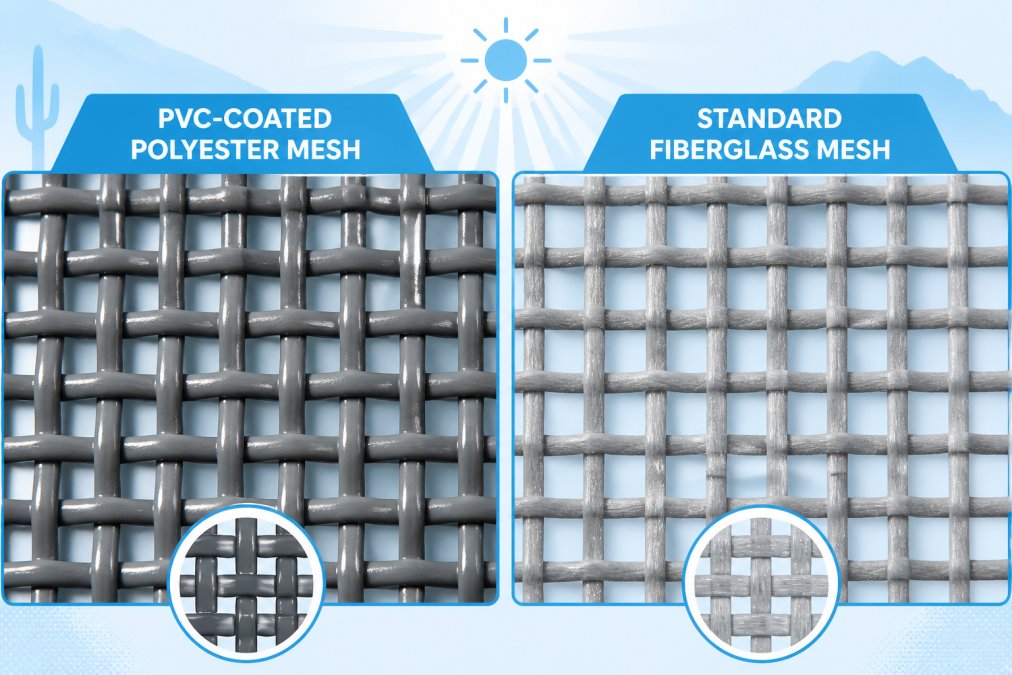
At SPARKLE TECH SUN SCREENS, we’ve worked with homeowners facing this exact problem. Standard fiberglass screens fail because they weren’t engineered for sustained solar exposure. The mesh degrades, frames rust, and you’re left with holes that let in dust, insects, and unwanted heat. The difference between a screen that lasts two years and one that lasts a decade comes down to material selection, frame construction, and proper installation.
This guide covers the materials that hold up, the installation methods that matter, and how to avoid common mistakes that waste money on screens that won’t survive the next monsoon season.
Solar Screen Benefits for Arizona Homes
UV Radiation and Heat Reduction
Solar screens block a significant portion of incoming solar radiation before it enters your home. The mesh is engineered to reflect and absorb infrared energy rather than allow it to pass through your windows, creating a thermal barrier that reduces cooling load on your air conditioning system.
A properly installed solar screen on a west-facing window reduces heat gain noticeably. You’ll experience less direct sun glare, cooler interior temperatures, and reduced strain on your HVAC system. Homeowners in the Phoenix metro area report that south and west-facing windows feel noticeably cooler after solar screen installation.
Mesh density matters here. Higher density screens (90% blocking) provide more heat reduction but slightly reduce visibility and airflow. Lower density screens (80% blocking) maintain better sightlines while still delivering meaningful thermal protection. Your choice depends on whether you prioritize maximum heat reduction or visual clarity.
Energy Efficiency and Cooling Cost Savings
Reducing solar heat gain directly lowers your cooling costs. When less heat enters your home, your air conditioning system doesn’t have to work as hard, translating to lower energy consumption during peak heat months (May through September) when cooling costs dominate utility bills.
Savings depend on several factors: how many windows you screen, their orientation (west-facing windows receive the most afternoon heat), your current air conditioning efficiency, and local electricity rates. A home with multiple south and west-facing windows can see measurable reductions in cooling costs by mid-summer.
Beyond direct energy savings, solar screens extend your HVAC equipment’s lifespan. When your cooling system doesn’t fight intense solar heat gain, it runs fewer hours and experiences less wear, a significant preventive benefit over time.
Best Window Screen Material for Sun Protection
PVC-Coated Polyester vs. Fiberglass Mesh
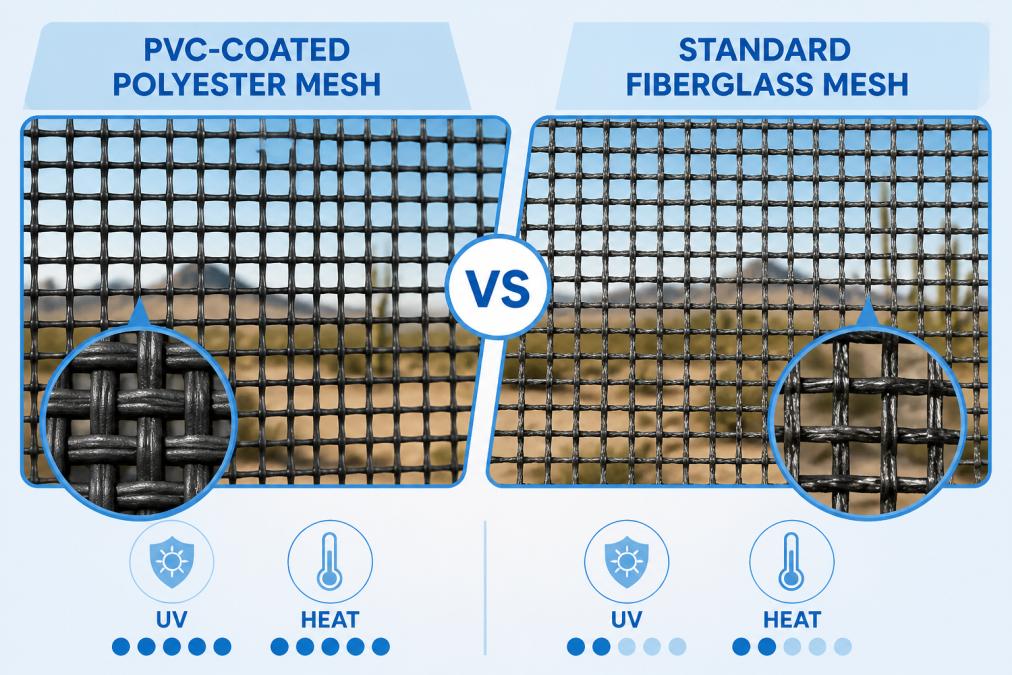
Standard fiberglass mesh is inexpensive but degrades quickly under intense UV exposure. The resin binding the fibers breaks down, the mesh becomes brittle, and holes develop within 12-24 months.
PVC-coated polyester mesh is engineered specifically for harsh climates. The polyester core provides tensile strength and durability, while the PVC coating protects against UV radiation and weathering. This combination means the mesh maintains its integrity year after year, even under Arizona’s relentless sun.
When you calculate replacement frequency, potentially every 1-2 years for fiberglass, the total cost of ownership becomes significantly higher than investing in PVC-coated polyester upfront. For durable window screens for arizona heat, PVC-coated polyester is the material that actually performs.
Frame material matters equally. Rust-resistant frames, either anodized aluminum or powder-coated steel, prevent frame degradation. SPARKLE TECH SUN SCREENS uses rust-resistant framing on all installations to ensure your screens remain structurally sound for decades.
Mesh Density and Tensile Strength
Mesh density refers to the percentage of the mesh that blocks light and heat, typically expressed as 70%, 80%, or 90% blocking. Higher density means more material per square inch, increasing tensile strength and durability. A 90% blocking mesh is thicker and stronger than a 70% mesh, making it more resistant to tearing and puncture damage.
Tensile strength is critical during monsoon season when wind-driven debris hits your screens. A mesh with higher tensile strength resists punctures and tears that would compromise weaker material. PVC-coated polyester with 90% density provides the best combination of heat blocking and durability.
The tradeoff is visibility and airflow. A 90% mesh reduces your outward view and restricts air circulation slightly. Many homeowners find 80% density a practical middle ground, offering substantial heat blocking with acceptable visibility and airflow.
How Long Do Window Screens Last in Arizona Heat
Durability in Desert Climates and Monsoon Winds
In Arizona’s climate, screen lifespan depends almost entirely on material quality and installation method. Standard screens degrade in 1-2 years because of continuous UV exposure and seasonal monsoon stress. Durable window screens for arizona heat should last 10-15 years or longer with proper materials.
PVC-coated polyester mesh resists UV degradation that would destroy fiberglass in months. Combined with rust-resistant frames and proper installation, these screens endure the full spectrum of Arizona’s environmental challenges.
Monsoon winds exceeding 60 mph create lateral forces that standard installations can’t withstand. Screens must be anchored securely to prevent buckling, warping, or pulling away from frames. External mounting, where screens are installed on the outside of your window frame, provides better wind resistance because the frame itself bears the load.
Professional installation matters more in Arizona than in milder climates. Proper anchoring and frame attachment ensure your screens survive monsoon season intact. DIY installations often fail during the first significant wind event because the fastening method isn’t adequate for Arizona’s wind speeds.
Material Degradation and Warranty Protection
UV radiation breaks down the resin and polymers in standard fiberglass mesh. PVC-coated polyester resists this degradation because the coating reflects UV energy rather than absorbing it. The material remains flexible and strong throughout its lifespan.
Warranty protection becomes meaningful when the manufacturer stands behind the product. A lifetime guarantee on qualifying services (like SPARKLE TECH SUN SCREENS provides) means the company is confident in the material’s durability.
Real-world degradation patterns in Arizona show that PVC-coated polyester screens maintain functionality for 12-15 years before any visible wear appears. Standard fiberglass shows significant degradation within 18-24 months.
External Mounting vs. Internal Installation Methods
External mounting places the screen frame on the outside of your window, with the mesh facing outward. This design intercepts solar radiation before it reaches your glass, providing maximum heat reduction. The frame bears the full force of wind and weather, which is why sturdy construction and proper anchoring are essential.
Internal mounting places the screen inside your window frame. This approach is easier to install but less effective because solar heat has already passed through your glass before the screen blocks it. Internal screens also restrict airflow more noticeably.
External mounting is the preferred method for Arizona homes seeking maximum energy efficiency and durability. Professional installers secure external screens with heavy-duty fasteners and proper spacing to ensure they withstand monsoon winds.
DIY vs. Professional Installation: Cost and Quality Analysis
DIY screen installation appeals to homeowners looking to save money upfront. However, DIY installation introduces several risks in Arizona’s climate.
Measurement errors are common. Windows in older homes aren’t always perfectly square, and odd-sized windows require custom fabrication. A screen that’s slightly too large or too small won’t fit properly, leaving gaps that defeat the purpose. Professional installers measure precisely and account for frame irregularities.
Fastening and anchoring determine whether your screens survive monsoon winds. Professional installations use heavy-duty fasteners, proper spacing, and techniques that distribute wind loads across the entire frame. DIY installations frequently rely on lighter fasteners or adhesive methods that fail when wind speeds exceed 40 mph. You might save $200-300 on installation, then spend $800-1200 replacing damaged screens after the next monsoon.
Professional installation also includes expertise in material selection. A professional knows which mesh density works best for your windows’ orientation, which frame material resists rust in your specific location, and how to optimize airflow while maximizing heat reduction. SPARKLE TECH SUN SCREENS offers same-week service and quick quotes.
For durable window screens for arizona heat, professional installation pays for itself through avoided replacement costs and superior performance during monsoon season.
Screen Color and HOA Compliance for Arizona Homes
Screen color affects both aesthetics and heat absorption. Dark screens (charcoal, bronze) absorb more solar radiation than light screens (gray, tan), providing slightly more heat reduction. However, dark screens are more visible from the street, which matters if your HOA has appearance restrictions.
Many Phoenix and Scottsdale communities restrict screen color to maintain neighborhood aesthetics. Common restrictions allow only gray, tan, or bronze screens. Some HOAs prohibit screens on front-facing windows, allowing them only on side and rear exposures. Check your HOA documentation before ordering screens.
Light-colored screens (tan, beige) maintain better visibility outward while still providing meaningful heat reduction. They’re less noticeable from the street and typically comply with HOA guidelines.
Professional installers are familiar with local HOA requirements across the Phoenix metro area. When you get your free quote, mention any HOA restrictions and the installer can recommend colors and installation methods that comply with your community guidelines.
How to Choose the Right Durable Window Screens
Evaluating Rust-Resistant Frames and Airflow
Start with frame material. Anodized aluminum is the standard for rust-resistant frames in Arizona. The anodizing process creates a protective oxide layer that prevents corrosion. Powder-coated steel is another option that provides excellent rust resistance.
Airflow is determined by mesh density and frame design. A 70% density mesh allows more air circulation than a 90% density mesh. Most homeowners find 80% density strikes the right balance between heat reduction and ventilation.
Test visibility by looking at sample screens before ordering. Higher density meshes reduce visibility noticeably, while lower density meshes maintain clearer sightlines. Ask about custom fabrication options to ensure your screens fit perfectly, eliminating gaps that reduce effectiveness.
Custom Fabrication and Proper Measurements
Accurate measurements are the foundation of proper screen fit. Professional installers measure twice, once for initial quote and again before fabrication, to catch any discrepancies. They account for frame irregularities, sloped sills, and architectural details that affect screen fit.
Custom fabrication allows screens to be built to your exact specifications. Non-standard window sizes, shaped openings, and specialty installations all require custom work. Proper measurements also determine frame attachment points, ensuring fasteners are placed at the strongest locations to distribute wind loads properly.
| Factor | Impact on Performance | Selection Priority |
|---|---|---|
| Mesh Material | UV resistance, durability, lifespan | Critical, use PVC-coated polyester |
| Mesh Density | Heat blocking, visibility, airflow | High, choose 80% for balance |
| Frame Material | Rust resistance, structural integrity | Critical, use anodized aluminum |
| Installation Method | Wind resistance, performance | Critical, use external mounting |
| Measurement Accuracy | Fit quality, gap elimination | Critical, professional measurement required |
| Custom Fabrication | Fit for non-standard windows | High, necessary for odd-sized windows |
Choosing durable window screens for arizona heat comes down to material quality, proper installation, and understanding your home’s specific needs. The difference between screens that last two years and screens that last a decade is material selection and professional installation. SPARKLE TECH SUN SCREENS delivers both, with custom-fit screens, rust-resistant frames, and professional installation backed by a lifetime guarantee on qualifying services. Get your free quote today and discover how solar screens can reduce your cooling costs while protecting your home from Arizona’s harsh climate.
Frequently Asked Questions
What is the most durable window screen material for Arizona's heat and sun?
PVC-coated polyester offers superior durability in Arizona's extreme heat compared to standard fiberglass. The PVC coating resists UV radiation and infrared solar radiation that causes mesh degradation in desert climates. Aluminum frames with rust-resistant finishes prevent corrosion from monsoon moisture and dust. For maximum longevity, look for screens with high tensile strength ratings and 80-90% mesh density, which balance sun-blocking performance with airflow while withstanding Arizona's intense solar heat gain.
How much do durable window screens cost in Arizona?
Pricing for durable window screens depends on several factors: screen size, mesh density, frame material, custom fabrication requirements, and whether you choose professional installation or DIY. For accurate pricing specific to your home's dimensions and material preferences, visit SPARKLE TECH SUN SCREENS's website for a free quote. Professional installation typically includes custom measurements to ensure proper fit and maximum durability.
Do solar screens actually reduce indoor temperatures and energy bills in Arizona?
Yes, solar screens significantly reduce heat gain by blocking 60-90% of infrared solar radiation depending on mesh density and material. This reduction in solar heat gain directly lowers your cooling load, reducing strain on your HVAC system and lowering energy costs. Many Arizona homeowners notice measurable reductions in their cooling expenses during peak summer months. The actual savings depend on your current window orientation, home insulation, and how many windows you screen.
How often should I replace window screens in Phoenix's climate?
High-quality durable window screens made from PVC-coated polyester can last 10-15 years or longer in Phoenix's desert climate when professionally installed and maintained. Standard fiberglass screens may need replacement every 5-7 years due to UV radiation and heat exposure. Screens in areas exposed to direct monsoon winds or intense afternoon sun may have shorter lifespans. Regular cleaning and inspection help extend screen longevity. Many professional services offer lifetime guarantees on qualifying installations, ensuring long-term protection.
What's the difference between DIY installation and professional window screen installation?
Professional installation ensures custom fabrication to exact measurements, proper external mounting or internal installation based on your window type, and correct tensile strength for wind resistance. DIY installation risks improper fit, inadequate fastening against monsoon winds, and potential warranty voidance. Professionals handle weather-stripping and frame alignment that impacts both performance and durability. While DIY costs less upfront, professional installation provides guaranteed fit, faster completion, and long-term reliability backed by warranties.
Are there HOA restrictions on solar window screens in Arizona?
Many Arizona HOAs have aesthetic regulations regarding screen visibility, color, and external mounting. Common restrictions limit dark or reflective screens visible from the street, or require screens to match existing trim colors. Some communities prohibit external solar screens entirely. Before installation, check your HOA guidelines or contact your community management. Professional screen providers familiar with local Arizona regulations can recommend compliant options that meet both your heat protection needs and aesthetic requirements.
What makes window screens resistant to Arizona's monsoon winds?
Monsoon-resistant screens use high tensile strength materials like PVC-coated polyester with reinforced aluminum frames. Proper external mounting with secure fasteners and weather-stripping prevents wind from lifting or tearing the mesh. Rust-resistant frame finishes withstand moisture and dust from monsoon storms. Custom fabrication ensures frames fit snugly within your window opening, maximizing wind resistance. Professional installation includes proper bracing and tension adjustment to handle Arizona's extreme wind speeds during monsoon season.
This article was written using GrandRanker