
Table of Contents
- Are Custom Screen Measurements Worth It: The Real Answer
- Benefits of Custom Window Screens for Your Home
- How to Measure for Window Screens: Step-by-Step Process
- DIY Window Screen vs. Custom: Which Makes Sense for You
- Custom Window Screen Cost: Understanding Your Investment
- Customization Options That Add Real Value
- Maintenance and Long-Term Value of Custom Screens
- Conclusion: Making the Right Choice for Your Home
Custom Screen Measurements Worth It: A Practical Guide
Last Updated: July 25, 2026
Are custom screen measurements worth it? For most Arizona homes, custom measurements deliver measurable value that generic off-the-shelf solutions cannot match. At SPARKLE TECH SUN SCREENS, we’ve spent years helping Phoenix and Scottsdale residents understand when precision measurements justify the investment.
Are Custom Screen Measurements Worth It: The Real Answer
Custom screen measurements are worth the investment when you value precision fit, durability in extreme climates, and protection that lasts years instead of months. Arizona’s heat, dust, and intense sun destroy poorly fitting screens within one to three years. A screen that doesn’t fit tightly allows dust and debris to bypass the mesh, reduces airflow efficiency, and fails faster under thermal stress.
When measurements are taken correctly, accounting for frame depth, window slope, and seasonal expansion, custom screens perform measurably better. Many homeowners report screens lasting five to seven years with proper maintenance, compared to two to three years with standard sizing.
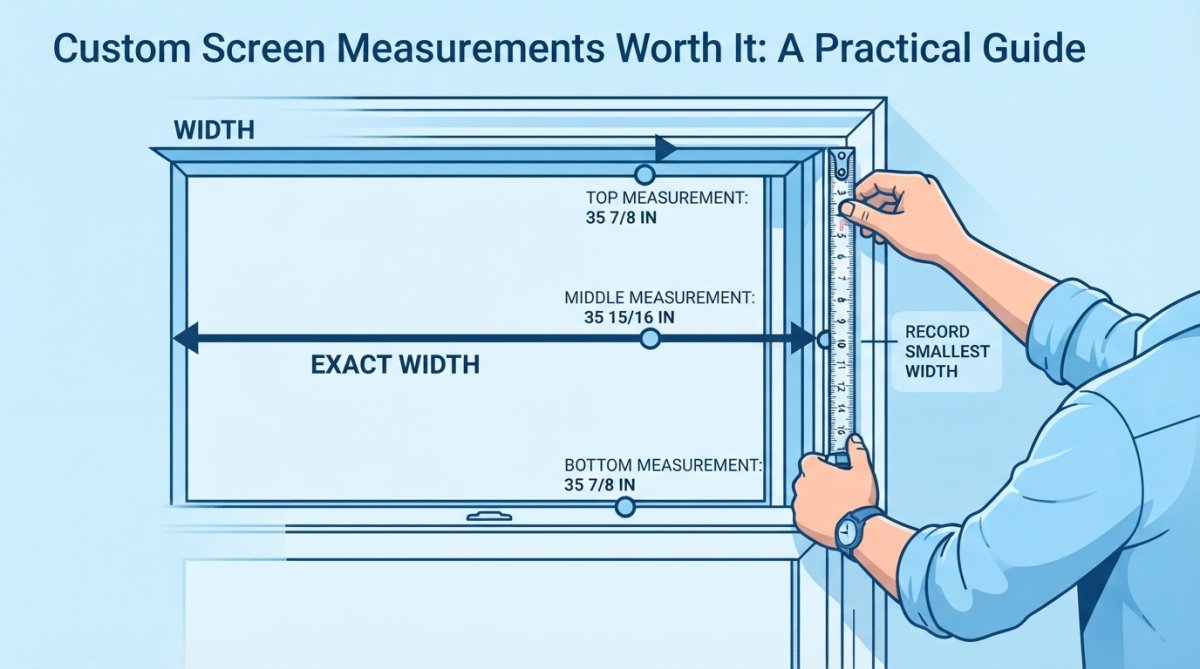
Measure at three points on each side (top, middle, bottom) rather than one. Window frames often aren’t perfectly square, and Arizona’s temperature swings cause slight seasonal shifts. Professional measurements account for this variability; DIY single-point measurements miss it.
For homeowners staying long-term, custom measurements justify the upfront cost (typically $15-$30 per screen). For renters or those planning to move within two years, the case is weaker.
Pros That Justify the Investment
Perfect fit eliminates the most common failure point in screen performance. When screens fit precisely, they seal against the frame properly, preventing air gaps that let dust and insects bypass the mesh.
Durability improves dramatically with accurate measurements. Screens that fit tightly don’t flex or shift in the wind, reducing metal fatigue and extending mesh life. Energy efficiency gains are real, a screen that fits poorly allows hot air to bypass it, forcing your air conditioning to work harder. Research from U.S. Department of Energy guidelines on window efficiency confirms that air leakage through gaps accounts for significant cooling loss in Arizona homes.
Installation speed increases when measurements are precise. Professional installers spend less time adjusting fit issues, making same-day or next-day installation feasible.
The single biggest advantage of custom measurements is that they solve the fit problem permanently. You measure once, order correctly, and avoid screens that don’t fit or fail prematurely.
Cons to Consider Before Committing
Cost is the obvious drawback. For a typical Arizona home with 8-12 screens, the premium for custom work ranges from $150 to $400 total, depending on frame materials and complexity.
Lead time can extend your project timeline. Custom screens typically require 5-10 business days for fabrication after measurement. If you need immediate replacement, this delay might force a faster but less optimal solution.
Measurement errors still happen, though rarely. Even professional measurements can miss details if a homeowner misidentifies the frame type or a window has settled unevenly. Reputable companies like SPARKLE TECH SUN SCREENS verify measurements before fabrication and offer corrections if needed.
Overkill applies in some cases. If you’re screening a seasonal cabin or renting short-term, the investment in precision measurements doesn’t make financial sense.
Benefits of Custom Window Screens for Your Home
Durability and Long-Term Performance
Weather-resistant materials built for Arizona’s climate perform dramatically better than generic alternatives. SPARKLE TECH SUN SCREENS uses mesh and frame materials engineered to withstand sustained temperatures above 110°F, intense UV exposure, and abrasive dust. Custom frames account for thermal expansion, Arizona temperatures swing 40-50°F between day and night, causing materials to expand and contract. Frames designed for this stress maintain their seal through these cycles.
Maintenance becomes simpler when screens are built to last. You’re not replacing frames every two years or dealing with mesh that tears easily.
Perfect Fit and Reduced Air Leaks
A screen that fits perfectly against the frame stops air infiltration at the source. According to Arizona Department of Housing guidelines on residential energy efficiency, air leakage accounts for 15-20% of cooling loss in homes without proper sealing. Precise-fitting screens dramatically reduce this problem and lower cooling costs measurably during peak summer months.
Reduced air leaks also mean fewer dust particles entering your home. Arizona dust is notoriously fine and abrasive. Screens that fit poorly allow this dust to accumulate on windowsills and inside your home, requiring constant cleaning.
How to Measure for Window Screens: Step-by-Step Process
Measuring correctly is non-negotiable. The goal is to capture three critical dimensions: width, height, and frame depth.
Tools You’ll Need
A quality 25-foot steel tape measure is essential, steel doesn’t stretch or sag like cloth tape. A notepad or phone notes app keeps measurements organized. A level helps identify whether your window frame is square.
Measuring Width, Height, and Diagonal
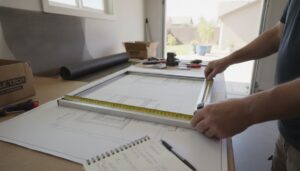
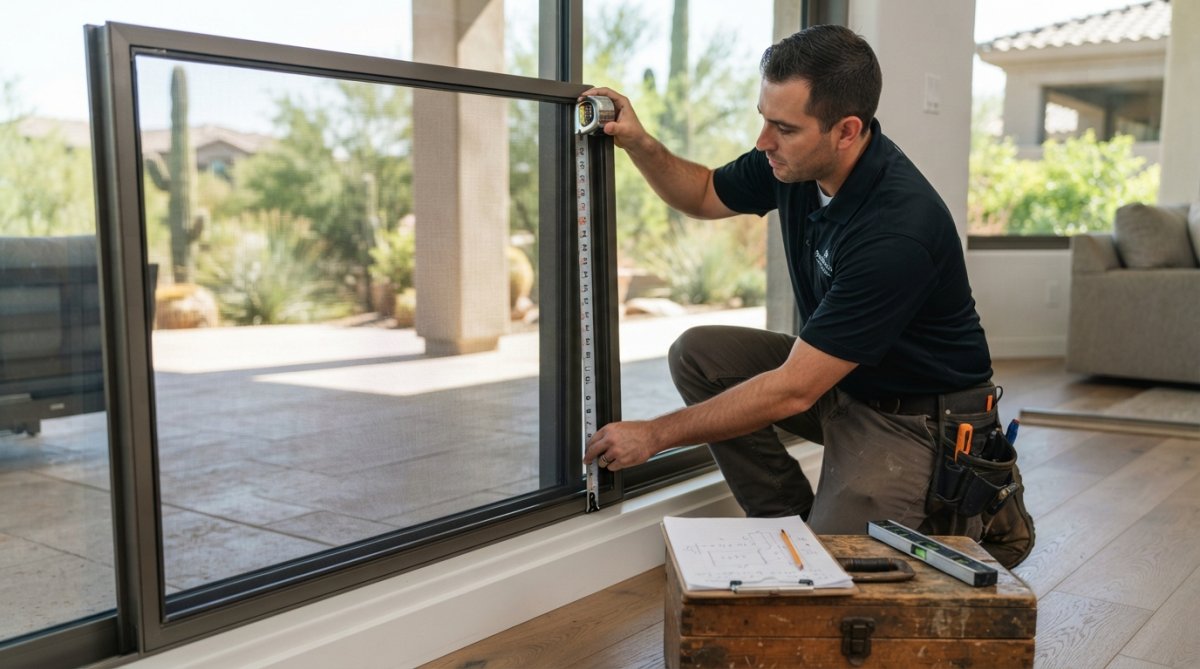
Start with width. Measure horizontally across the inside of the frame at three points: top, middle, and bottom. Record all three measurements. If they vary, your frame isn’t perfectly square, and your screen supplier needs to know.
Height comes next. Measure vertically from top to bottom at three points: left side, center, and right side. The diagonal measurement is critical. Measure from the top-left corner of the frame to the bottom-right corner, then from top-right to bottom-left. If these measurements differ, the frame is slightly rhomboidal, and your screen needs to account for this.
Frame depth is essential for certain screen types. Measure how deep the frame extends from the outside of the window to the inside surface at the top, middle, and bottom.
A common mistake is measuring only once at each dimension. Window frames are often not perfectly square due to settling or installation issues. Single-point measurements miss this variation and result in screens that fit poorly on some edges while gapping on others.
Common Measuring Mistakes to Avoid
Measuring the outside of the frame instead of the inside causes fit problems. Always measure the interior opening where the screen will sit. Forgetting to account for frame depth causes issues on screens that use tracks or grooves. Rounding measurements to the nearest half-inch introduces errors, record exact measurements to the quarter-inch or eighth-inch. Measuring on a windy day introduces errors, and not accounting for seasonal variation is a mistake in Arizona. Measure during moderate temperatures (spring or fall), not during peak summer heat or winter cold.
(/cost-of-custom-window-screens/)s: Step-by-Step Process]
DIY Window Screen vs. Custom: Which Makes Sense for You
When DIY Might Work
DIY screens make sense for temporary situations or when budget is the primary constraint. If you’re renting and need screens for a year or two, building your own frames from kits can be cost-effective at $30-$60 per screen versus $80-$150 for custom work.
Why Custom Screens Outperform DIY Solutions
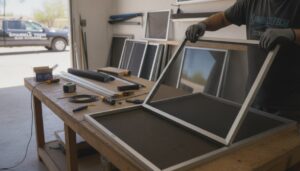
Custom screens are built with precision tooling and materials that DIY frames cannot match. Professional fabricators have machines that cut frame components to exact specifications and assemble them under tension. Material quality differs significantly, commercial-grade aluminum frames and mesh are engineered for durability and performance. DIY builders typically use hardware store materials not optimized for Arizona’s climate.
Installation quality separates professionals from DIY work. A professional installer knows how to seat screens in tracks, adjust tension, and ensure proper alignment. Time investment is substantial with DIY. Building eight screens takes 20-40 hours if you work carefully. Factor in your hourly rate, and custom screens become financially competitive.
Warranty and support are absent with DIY screens. SPARKLE TECH SUN SCREENS backs its work with a lifetime guarantee on qualifying services. That peace of mind has real value.
If you’re considering DIY, start with one screen as a test. You’ll quickly learn whether the time and effort are worth the savings.
Custom Window Screen Cost: Understanding Your Investment
Factors That Affect Pricing
Screen size is the primary cost driver. Larger screens require more frame material and mesh, directly raising costs. Frame material selection affects pricing substantially, aluminum frames are standard and cost-effective, while stainless steel costs more but resists corrosion better.
Mesh type determines both cost and performance. Standard fiberglass mesh is affordable but tears more easily. Pet-resistant mesh costs more but withstands claws and abuse. Solar mesh or specialty options command premium pricing.
Screen type influences cost significantly. Sliding screens are standard. Retractable screens are the most complex and expensive. Quantity discounts apply when screening an entire home.
Getting Accurate Quotes
Request quotes from multiple providers to understand the market. SPARKLE TECH SUN SCREENS offers free quotes and same-day pickup for many projects. Provide detailed measurements when requesting quotes, including photos of your windows if possible. Ask about what’s included in the quote, measurement, fabrication, delivery, and installation. Understand the warranty coverage. SPARKLE TECH SUN SCREENS’s lifetime guarantee on qualifying screen services is comprehensive, but you should verify exactly what’s covered.
Customization Options That Add Real Value
Material Selection for Arizona’s Climate
Weather-resistant mesh designed for extreme sun is worth the investment in Arizona. UV-resistant mesh maintains flexibility and durability much longer than standard fiberglass. The cost difference is modest, typically $10-$20 per screen.
Solar mesh or reduced-glare options reduce heat gain and glare while maintaining visibility. If your home faces west or south, solar mesh can reduce interior temperatures by 5-10°F on hot days. The premium is typically $15-$30 per screen, and energy savings often recover the cost within one to two years.
Pet-resistant mesh is essential if you have dogs or cats. This mesh is woven more densely and reinforced to withstand claws. It costs $15-$25 more per screen but prevents torn screens and frequent replacement.
Frame Types and Installation Considerations
Sliding frames work well for standard rectangular windows and are the most common choice. Fixed frames are ideal for windows you rarely open. Retractable screens roll up into a housing when not in use, maintaining your window’s appearance and allowing full opening. They cost significantly more but offer maximum flexibility.
Maintenance and Long-Term Value of Custom Screens
Keeping Your Screens in Top Condition
Annual cleaning is the primary maintenance task. Use a soft brush and mild soap to remove dust and debris. For Arizona’s dusty environment, cleaning twice annually is better than once.
Inspect screens seasonally for damage. Look for tears in the mesh, bent frames, or loose fasteners. Check frame alignment periodically, especially after high winds or temperature extremes. Lubricate sliding tracks if your screens use them with a light application of silicone spray.
The most important maintenance step is regular cleaning. Arizona’s dust environment requires more frequent cleaning than other climates. Twice-yearly cleaning prevents most common problems and keeps screens performing optimally.
When Replacement or Repair Makes Sense
Small tears in mesh can be patched with screen repair tape. If tears are larger than a few inches, or if multiple tears appear, replacement is more practical. Bent frames usually can’t be straightened effectively. Deteriorated mesh that’s brittle or has lost its flexibility should be replaced. The decision between repair and replacement depends on the screen’s age and condition. If your screen is less than five years old and the damage is isolated, repair makes sense. If the screen is eight years or older and showing multiple signs of wear, replacement is the better investment.
Conclusion: Making the Right Choice for Your Home
For Arizona homeowners who value durability, precise fit, and long-term performance, custom screen measurements are worth the investment. Custom measurements ensure your screens fit perfectly, resist Arizona’s extreme climate, and last five to seven years instead of two to three.
If you’re staying in your home long-term, professional screen solutions make financial sense. SPARKLE TECH SUN SCREENS delivers custom-fit screens with weather-resistant materials, professional installation, and a lifetime guarantee on qualifying services. This approach eliminates the frustration of poor-fitting screens and the expense of premature replacement.
The investment in precision measurements and professional fabrication pays for itself through improved durability, better energy efficiency, and reduced maintenance headaches.
Ready to upgrade your home’s screens with precision-measured, professionally installed solutions? Get your free quote from SPARKLE TECH SUN SCREENS today. We’ll measure your windows accurately, discuss customization options suited to Arizona’s climate, and install screens built to last. Experience the difference that professional workmanship and weather-resistant materials make in your home’s comfort and curb appeal. Learn more about professional screen installation standards from the National Association of Home Builders
Frequently Asked Questions
How much do custom window screen measurements and installation typically cost?
Custom window screen pricing depends on several factors including screen size, material type, frame style, and your location. For accurate pricing tailored to your specific needs and dimensions, contact SPARKLE TECH SUN SCREENS for a free quote. Their same-week service and quick quote process make it easy to understand your investment before committing.
What are the main benefits of custom window screens compared to standard sizes?
Custom window screens offer superior benefits of custom window screens including perfect fit to your exact dimensions, reduced air leaks and dust infiltration, better durability in harsh climates, and enhanced curb appeal. They're built with weather-resistant materials designed to withstand extreme sun, wind, and dust, providing long-term performance and comfort improvements that standard screens cannot match.
Can I measure my windows myself, or should I hire a professional?
While you can measure for window screens yourself using a tape measure, professional measurement ensures accuracy and prevents costly fit issues. Professionals account for frame irregularities, proper diagonal measurements, and installation considerations. SPARKLE TECH SUN SCREENS provides professional custom measurements at no cost, eliminating guesswork and ensuring your screens fit perfectly the first time.
Is DIY window screen installation worth it compared to ordering custom screens?
DIY window screens work for temporary solutions or standard-sized frames, but custom screens typically outperform DIY options in durability, fit, and longevity, especially in Arizona's harsh climate. Custom screens use superior materials and precision fitting that DIY kits cannot match. The investment in custom screens pays dividends through reduced replacement needs and better performance over time.
This article was written using GrandRanker