
Table of Contents
- What Are the Key Benefits of Custom Patio Rescreening Services
- Types of Patio Screen Material and Their Unique Benefits
- Cost to Rescreen Patio: Understanding Your Investment
- Patio Screen Repair vs. Full Rescreening: When to Choose Each
- How Screened-In Porch Value Impacts Your Home’s Curb Appeal and Resale
- Professional Installation vs. DIY Rescreening: What You Need to Know
- Why Custom Patio Rescreening Delivers Long-Term Durability and Comfort
- Conclusion
Benefits of Custom Patio Rescreening Services
Last Updated: July 26, 2026
What Are the Key Benefits of Custom Patio Rescreening Services
Custom patio rescreening services offer homeowners a practical solution to enhance outdoor living spaces while protecting against Arizona’s unforgiving climate. At SPARKLE TECH SUN SCREENS, we’ve helped hundreds of Phoenix and Scottsdale homeowners reclaim their patios with durable, weather-resistant screens built to withstand extreme sun, wind, and dust. Professional rescreening delivers measurable improvements in comfort, property value, and long-term durability.
Protection from Insects and Pests
Screened patios create a barrier that keeps mosquitoes, flies, and other insects at bay without requiring chemical sprays. Pet-resistant varieties offer three times the durability for households with active dogs or cats. The Phifer PetScreen is seven times stronger than regular screening and specifically engineered to withstand claw damage while maintaining full insect protection. For tiny insects like no-see-ums, specialty mesh with smaller openings provides targeted defense without compromising airflow.
Pet-resistant screens typically add $25-$40 per screen compared to standard fiberglass, but they eliminate constant repairs. For pet owners, this is one of the highest-ROI upgrades available.
A properly screened patio becomes genuinely usable from morning through evening without reapplying bug spray. Families with young children particularly appreciate this protection from pest exposure and mosquito-borne illnesses.
Enhanced Weather and Element Protection
Arizona’s climate presents unique challenges: intense UV radiation, dust storms, extreme heat, and violent winds. A rescreened patio shields you from all of these without the expense of an enclosed room addition.
Direct UV rays degrade outdoor furniture and fade cushions. UV-blocking screens reduce solar heat transfer while maintaining visibility and airflow. The Twitchell Textilene 90% UV-blocking mesh blocks up to 90% of the sun’s UV rays and significantly reduces heat transferred through windows, directly lowering air conditioning costs during summer months. Arizona’s monsoon season brings sudden downpours and wind-driven dust. Quality rescreening materials withstand repeated exposure to extreme conditions without deteriorating. Aluminum frames resist corrosion far better than vinyl, and proper installation prevents water from pooling at frame joints where mold can develop.
Extended Outdoor Living Space
Rescreened patios effectively add usable square footage to your home without the cost of a full room addition. You can eat meals outdoors without swatting insects, relax in the evening without retreating indoors, and host gatherings that span from afternoon into early evening without pest disruptions. For families with children, a screened porch becomes a safe play area where kids enjoy outdoor air while parents maintain peace of mind.
Types of Patio Screen Material and Their Unique Benefits
Screen material selection directly determines durability, visibility, and how well your patio performs against Arizona’s specific climate challenges.
Fiberglass Mesh: Clarity and Standard Protection
Standard fiberglass mesh balances cost, visibility, and basic protection. The material is inherently transparent, allowing clear views while maintaining adequate airflow. The Phifer UltraVue Insect Screen represents an upgrade within the fiberglass category, offering exceptional optical clarity and a water-repellent coating that keeps the mesh cleaner longer, a meaningful advantage in Arizona’s dusty environment.
Standard fiberglass is the budget choice, but UV-resistant variants like UltraVue offer better longevity in Arizona without moving to specialty materials.
Pet-Resistant Screens: Durability for Active Households
Pet-resistant screens are engineered for households where dogs or cats regularly interact with screens. The material is three to seven times stronger than standard fiberglass, depending on the specific product. Phifer TuffScreen (three times stronger) and Phifer PetScreen (seven times stronger) maintain insect protection while dramatically reducing tear and puncture damage from pet claws. Households with active pets typically replace standard screens every 12-18 months, while pet-resistant screens often last 3-5 years, translating to fewer service calls and lower total cost of ownership.
UV-Blocking and Solar Screens: Heat and Glare Reduction
Solar and UV-blocking screens represent the premium tier for Arizona homeowners. The Twitchell Textilene 90% UV-blocking mesh blocks up to 90% of the sun’s UV rays, preventing outdoor furniture from fading in months and reducing air conditioning load during summer months. According to research from the National Fenestration Rating Council, solar screens can reduce cooling costs by 15-25% depending on orientation and climate zone. In Arizona, where air conditioning runs 6-8 months annually, this translates to meaningful utility savings. The trade-off is reduced transparency and airflow, which makes sense for patios facing west or southwest where afternoon sun is most intense.
Cost to Rescreen Patio: Understanding Your Investment
Rescreening costs vary significantly based on patio size, frame condition, screen material selection, and whether you’re rescreening existing frames or building new enclosures.
Factors That Influence Rescreening Costs
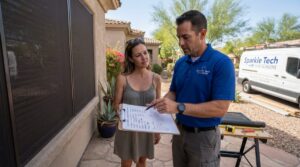
Patio size is the primary cost driver. Material selection amplifies costs: standard fiberglass costs less than pet-resistant screens, which cost less than UV-blocking varieties. Frame condition matters significantly; if your existing aluminum frame is structurally sound, rescreening costs only for labor and new mesh. Labor complexity also factors in, with straightforward rectangular porches taking 3-5 hours and complex shapes requiring 8-12 hours. SPARKLE TECH SUN SCREENS provides custom quotes based on your specific patio dimensions and material selections, with same-week service availability.
ROI and Long-Term Value of Professional Rescreening
Direct utility savings from solar screens reduce air conditioning costs by 15-25% during cooling months. Extended patio usability increases effective living space, reduced maintenance extends outdoor furniture lifespan, and enhanced curb appeal increases home valuation. Professional installation with quality materials creates screens that last 5-10 years without significant degradation. When you amortize professional rescreening costs across 8-10 years of reliable performance, the per-year cost becomes remarkably reasonable.
Patio Screen Repair vs. Full Rescreening: When to Choose Each
Not every damaged screen requires complete rescreening. Understanding when to repair versus when to fully rescreen prevents unnecessary spending.
Signs Your Screens Need Repair Only
Small tears, punctures, or holes in otherwise sound mesh can be patched without rescreening the entire frame. If the damage is localized to a single area and the surrounding mesh is intact, a repair patch costs significantly less than full rescreening. The key question is whether the damage is isolated or symptomatic of broader deterioration. If your screens are 2-3 years old and showing only one tear, repair makes sense.
When Full Rescreening Is the Better Choice
Full rescreening becomes the right choice when damage is widespread, the mesh is severely degraded, or the frame shows signs of age-related failure. Screens older than 5-7 years typically benefit from complete rescreening rather than piecemeal repairs. If your frame is bent, corroded, or structurally compromised, full rescreening with frame repair addresses the root problem and prevents recurring issues.
| Condition | Best Option | Typical Timeline |
|---|---|---|
| Single tear or small puncture | Repair patch | Same day to 3 days |
| Multiple small tears in one area | Repair patch or single panel replacement | 1-3 days |
| Widespread damage across multiple panels | Full rescreening | 3-5 days |
| Damage plus frame corrosion | Full rescreening with frame repair | 5-7 days |
| Screens older than 7 years | Full rescreening | 3-5 days |
How Screened-In Porch Value Impacts Your Home’s Curb Appeal and Resale
A well-maintained screened porch or patio is one of the few outdoor improvements that consistently adds perceived value to residential properties. A screened enclosure signals that the homeowner maintains and invests in their property, demonstrating functional outdoor living space. Screened patios add usable square footage to your home’s effective living space, and while appraisers typically don’t add full room value to screened enclosures, they recognize the improvement as a valuable amenity. In Arizona’s market, where outdoor living is genuinely usable 8-10 months annually, this carries significant weight. Maintenance condition matters enormously, a well-maintained, recently rescreened patio adds value, while torn screens and corroded frames signal deferred maintenance to potential buyers.
Professional Installation vs. DIY Rescreening: What You Need to Know
The choice between professional rescreening and DIY approaches involves trade-offs between cost, quality, durability, and your actual skill level.
Advantages of Professional Custom Rescreening
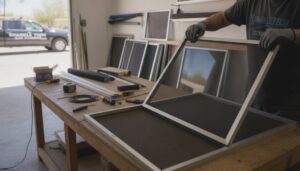
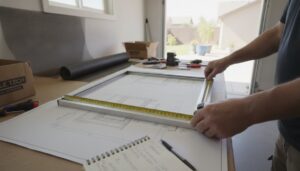
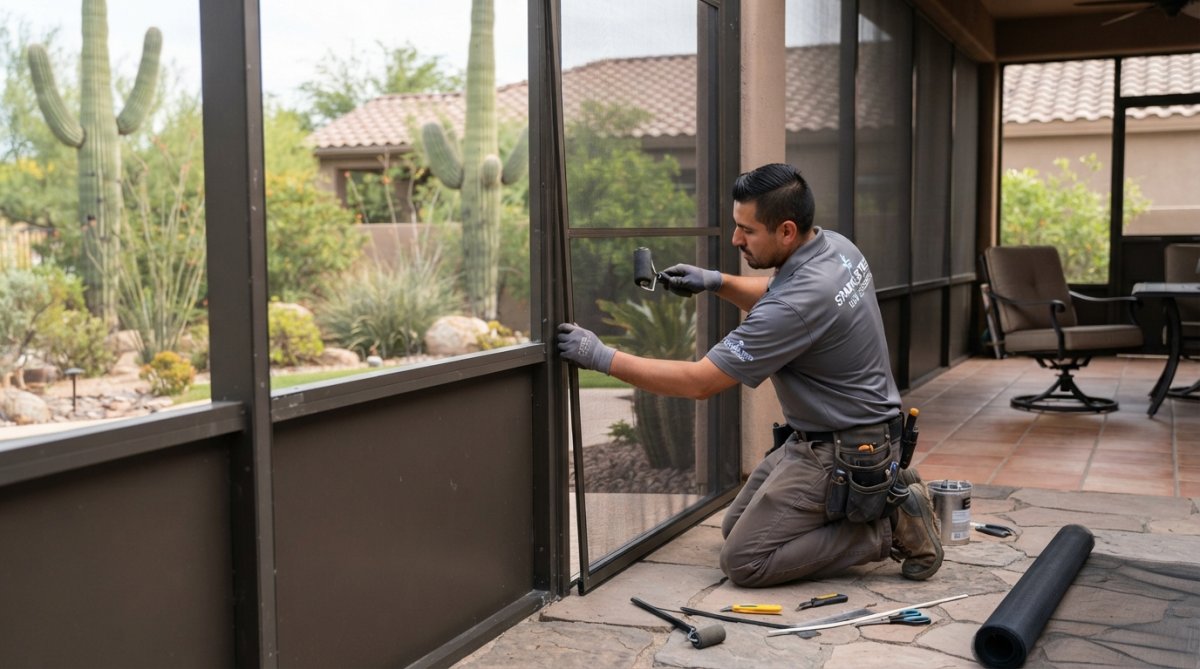
Professional installation begins with precise measurement. Technicians measure frame openings with accuracy that prevents the common DIY mistake of ordering screens that don’t fit properly. Quality materials and proper techniques ensure durability. Professional installers use commercial-grade splines, frame materials, and mesh that homeowners typically can’t source through retail channels. They know how to properly tension mesh to prevent sagging, seal frame joints to prevent water infiltration, and finish edges cleanly.
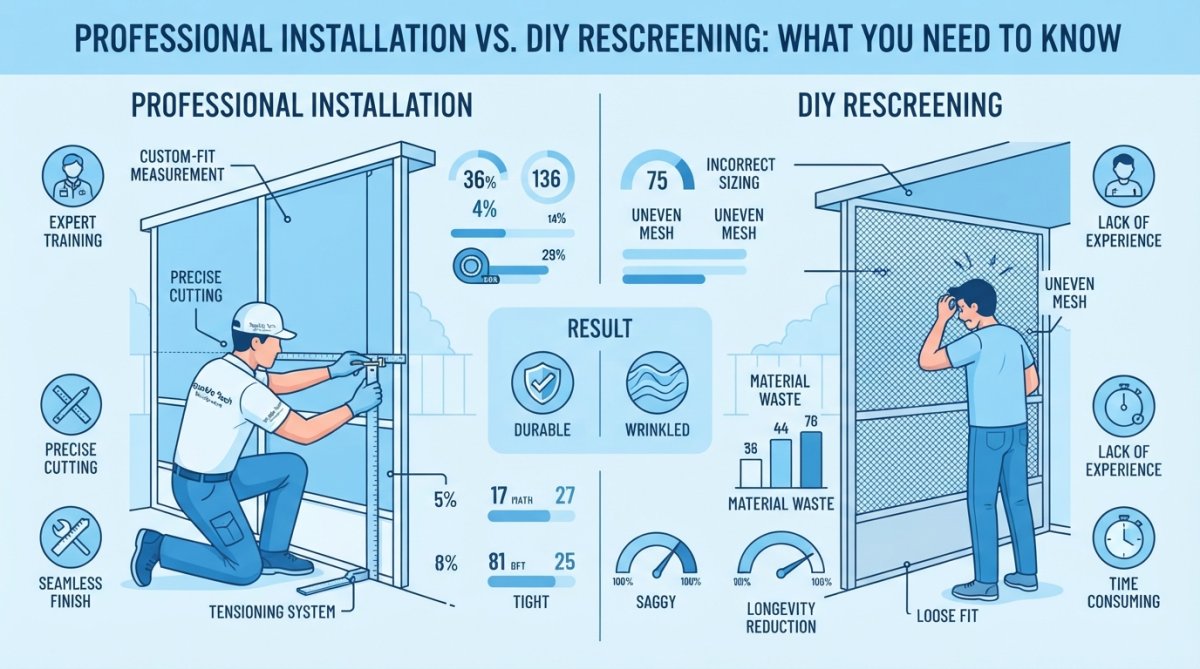
Proper mesh tensioning requires specific tools and experience. What might take a homeowner an entire weekend typically takes a professional 3-5 hours. SPARKLE TECH SUN SCREENS offers same-week service and quick quotes, with a lifetime guarantee on qualifying services.
Common DIY Mistakes and Why Professional Service Matters
The most common DIY error is incorrect measurement. Homeowners often measure only once, fail to account for frame warping or irregularities, or don’t understand how to measure for angled or curved frames. Mesh tensioning is the second major failure point, DIY installers often apply too much tension, which tears the mesh during installation or causes premature failure under wind stress. Material selection mistakes are equally common, with DIY enthusiasts choosing materials based solely on cost without understanding how they perform in Arizona’s climate.
DIY rescreening on older frames with warped or corroded aluminum often fails because the frame itself isn’t square or properly aligned. A professional can identify frame problems before starting and recommend repairs that DIY approaches typically miss.
Why Custom Patio Rescreening Delivers Long-Term Durability and Comfort
Custom rescreening provides durability that standard or DIY approaches rarely match. This durability emerges from material selection, proper installation, and design choices specific to Arizona’s climate.
Weather-Resistant Materials for Arizona’s Harsh Climate
Arizona’s climate is uniquely challenging. Summer temperatures exceed 110°F regularly, UV index reaches extreme levels, monsoon winds can exceed 60 mph, and dust storms create abrasive conditions that degrade most materials rapidly. Weather-resistant materials are engineered specifically for these conditions. Aluminum frames resist corrosion far better than vinyl or steel. Fiberglass mesh with UV-protective coatings maintains integrity longer than untreated material. The frame construction matters as much as the mesh, with professional-grade frames using thicker aluminum with proper joinery that prevents warping under temperature stress. SPARKLE TECH SUN SCREENS uses weather-resistant materials specifically selected for Phoenix and Scottsdale’s climate, backed by a lifetime guarantee reflecting confidence in these material choices.
Improved Airflow and Energy Efficiency
Screened patios improve airflow by creating protected spaces where natural ventilation works effectively. Without screens, afternoon wind can be uncomfortably strong; with screens, wind is filtered and slowed, creating comfortable breezes. Energy efficiency improvements emerge from solar screens specifically. By blocking 50-90% of UV rays before they reach windows and doors, solar screens reduce the solar heat gain that drives air conditioning costs. A screened patio with solar screens is 10-20°F cooler than an unscreened patio during afternoon hours, making the space genuinely usable during peak heat.
Conclusion
The benefits of custom patio rescreening services extend far beyond simple insect protection. Professional rescreening transforms your outdoor space into a genuinely usable room that functions across all seasons and weather conditions. From protecting against Arizona’s intense heat and UV exposure to eliminating pest problems and enhancing property value, quality rescreening delivers measurable improvements in comfort, durability, and long-term home value.
The choice between DIY and professional installation ultimately determines whether you get 2-3 years of mediocre performance or 7-10 years of reliable functionality. SPARKLE TECH SUN SCREENS delivers custom-fit screens built from weather-resistant materials engineered for Arizona’s harsh climate, backed by a lifetime guarantee on qualifying services. Same-week service and quick quotes mean your patio becomes fully functional again without months of waiting.
Frequently Asked Questions
What is the difference between patio screen repair and full rescreening?
Screen repair addresses isolated damage, small tears, holes, or bent frames, and is cost-effective for minor issues. Full rescreening replaces the entire mesh and frame, ideal when multiple panels are damaged, the frame is deteriorating, or you want to upgrade to a different screen material. Professional assessment helps determine which option suits your situation and extends the life of your outdoor living space.
How much does it cost to rescreen a patio, and what factors affect pricing?
Rescreening costs depend on patio size, material type, frame condition, and labor complexity. Custom-fit screens for weather-resistant materials typically cost more than standard fiberglass. Professional services like Sparkle Tech Sun Screens offer free quotes and same-week service. Investing in quality materials and professional installation ensures durability and protects your investment for years, especially in harsh climates with intense sun, wind, and dust.
Do screened-in patios and porches add value to your home?
Yes, screened-in porches and patios enhance curb appeal and increase property value by extending usable living space. They provide year-round insect protection, weather defense, and improved comfort, features homebuyers value highly. A well-maintained, custom-rescreened patio enclosure signals quality home maintenance and adds functional square footage, making your home more attractive to potential buyers and justifying the initial investment.
Should I hire a professional for patio rescreening or try DIY installation?
Professional rescreening ensures custom-fit screens, proper frame alignment, and warranty coverage, critical in extreme climates. DIY installation often results in poor airflow, misaligned mesh, and premature failure. Professionals use weather-resistant materials and specialized tools to guarantee durability. Services like Sparkle Tech Sun Screens offer same-week installation, lifetime guarantees, and expertise that DIY cannot match, making professional service the smarter long-term choice.
This article was written using GrandRanker