

Table of Contents
- Why Dust Accumulates in Your Home
- Seal Air Leaks and Control Ventilation
- How Often to Change Furnace Filter for Dust Control
- Install Window Screens to Block Dust and Debris
- Best Air Purifier for Dust Removal
- Daily and Weekly Dust Control Routines
- Control Indoor Humidity to Reduce Dust Mites
- Conclusion
Last Updated: August 13, 2026
Why Dust Accumulates in Your Home
Dust is a constant challenge in any home. Understanding where dust comes from is the first step toward controlling it effectively. Not all dust is the same, and identifying your primary dust source lets you target solutions rather than applying generic cleaning advice.
Three Main Dust Sources and How to Identify Them
External dust (outdoor air infiltration). This dust enters through gaps, cracks, unsealed windows, and doors. It’s typically coarser and accumulates fastest on windowsills, near entryways, and on surfaces facing prevailing wind patterns. If your dust problem worsens during windy days or dry seasons, external dust is likely your primary culprit.
Internal fabric-based dust (textile breakdown). Upholstered furniture, curtains, carpets, bedding, and clothing shed fibers constantly. This finer dust settles more slowly but accumulates heavily on soft furnishings themselves. If your dust concentrates on couches, curtains, and bedrooms, fabric-based dust dominates your home.
Biological dust (skin cells and dust mites). Humans shed approximately 1.5 pounds of dead skin cells annually per person, and dust mites feed on this organic matter. Biological dust accumulates most heavily in bedrooms and on mattresses. If your dust problem is worst in bedrooms or you notice dust mite allergen symptoms, biological dust is a significant contributor.
Diagnosing Your Dust Problem
Most homes experience a combination of all three sources, but one typically dominates. Track where dust accumulates fastest over a one-week period without cleaning. Does it concentrate near windows and doors (external)? On soft furnishings (fabric-based)? Or in bedrooms (biological)? Your answer determines which control strategies will deliver the fastest results.
External dust problems require sealing air leaks and upgrading window screens. Fabric-based dust demands aggressive textile cleaning and decluttering. Biological dust calls for humidity control, regular bedding washing, and dust mite-specific strategies. A homeowner who addresses only secondary dust sources while ignoring their primary one will see minimal improvement despite significant cleaning effort.
Seal Air Leaks and Control Ventilation
Sealing air leaks is the foundation of dust control. Every gap, crack, and unsealed opening invites outdoor dust indoors. Start by inspecting window frames, door thresholds, and where walls meet the foundation. Use weatherstripping or caulk to seal visible gaps. Pay special attention to areas where utilities enter your home.
Ventilation requires balance. You need fresh air exchange for indoor air quality, but uncontrolled ventilation brings dust with it. Modern homes benefit from controlled mechanical ventilation systems that filter incoming air. If using natural ventilation through windows, time it strategically, early morning and late evening typically have lower dust levels than midday.
Window screens play a critical role. A properly installed screen blocks large debris while allowing air circulation. Standard screens don’t filter fine particulate matter effectively. Professional-grade screens with tighter mesh reduce airborne dust entry significantly. SPARKLE TECH SUN SCREENS installs custom-fit screens designed to maximize airflow while minimizing dust penetration.
Check your weather stripping annually. Arizona’s intense sun and temperature swings cause materials to degrade faster than in other climates. Replacing worn stripping costs little but prevents substantial dust infiltration.
How Often to Change Furnace Filter for Dust Control
Your HVAC system’s filter is your first line of defense against airborne particles. How often to change furnace filter depends on several factors: your system’s efficiency rating, how much dust your home generates, whether you have pets, and the overall cleanliness of your ductwork. In a typical home, standard filters need replacement every three months. With pets, near construction, or faster dust accumulation, monthly changes may be necessary.
The filter’s MERV rating (Minimum Efficiency Reporting Value) determines what size particles it captures. Standard fiberglass filters (MERV 1-4) catch large particles only. MERV 8-11 filters capture more fine dust and are compatible with most residential systems. MERV 13+ filters trap very fine particulate matter but can restrict airflow, check your HVAC manufacturer’s recommendations before upgrading.
Monitor your filter visually every month. A gray or brown filter needs replacement sooner than the recommended interval. Restricted filters force your system to work harder, reducing efficiency and potentially allowing unfiltered air to bypass the filter entirely.
HEPA Filtration Standards
HEPA filters remove 99.97% of particles 0.3 micrometers or larger, capturing dust mites, pollen, and most household dust. True HEPA filters are found in dedicated air purifiers rather than standard furnace systems, since their density restricts airflow too much for typical HVAC units. For households with allergies or dust sensitivity, the investment in a HEPA air purifier pays dividends in air quality and health.
Beyond the Filter: HVAC System Maintenance for Dust Control
A clean filter alone doesn’t guarantee clean air if your ductwork and blower motor are contaminated. Over time, dust accumulates inside your air ducts, on the blower motor, and in the return air plenum. When your system runs, this accumulated dust gets circulated back into your home.
Duct cleaning. Professional duct cleaning removes accumulated dust, debris, and potential mold growth from inside your ductwork. This is particularly important if you’ve never had ducts cleaned, recently completed home renovation, or notice dust being blown from vents when the system starts. Duct cleaning typically costs $300-$500 for an average home but can reduce recirculated dust significantly.
Blower motor inspection. The blower motor and its housing accumulate dust over years of operation. A dusty blower motor works harder and can release dust into the airstream. During routine HVAC maintenance, ask your technician to inspect and clean the blower motor housing.
Return air plenum sealing. The return air plenum can develop leaks that allow dust-laden air to bypass your filter. If your return air ductwork is in an attic, crawlspace, or garage, seal gaps with mastic sealant to ensure all return air passes through your filter.
Filter rack inspection. Even with a new filter, gaps between the filter frame and rack allow unfiltered air to bypass the filter entirely. Check that your filter fits snugly with no visible gaps. Some homeowners use foam weatherstripping around the filter frame to create a tighter seal.
Establishing an HVAC Maintenance Schedule
Effective dust control requires treating your HVAC system as a complete unit. Establish an annual maintenance schedule: replace filters on your recommended interval, have your system professionally serviced annually to inspect the blower motor and return air plenum, and consider professional duct cleaning every 3-5 years or when you notice visible dust being released from vents.
Install Window Screens to Block Dust and Debris
Window screens are your home’s first physical barrier against dust and debris entering from outside. A properly installed screen blocks large particles and insects while maintaining airflow. However, gaps between the screen frame and window opening, worn mesh, or loose mounting allow dust to slip through unfiltered.
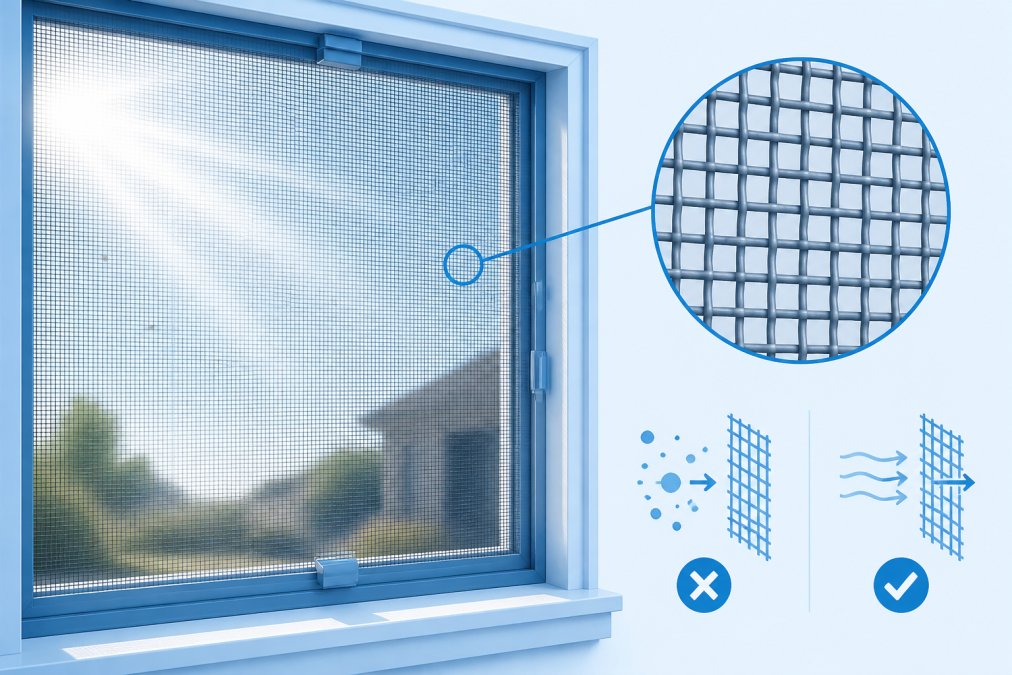
Custom-fit screens eliminate the gaps that plague standard screens. When screens are measured and installed professionally, the frame seals tightly against the window opening, leaving no pathway for dust to bypass the mesh. SPARKLE TECH SUN SCREENS designs screens for Arizona’s specific environmental challenges, intense sun, extreme heat, and dust storms. Our weather-resistant materials withstand temperature swings and UV exposure.
The mesh material matters significantly. Standard aluminum screens use relatively coarse mesh that allows small dust particles through. Finer mesh improves dust blocking but can reduce airflow. Professional installers help you choose the right mesh density for your specific needs.
Maintenance keeps screens effective. Dust accumulates on the mesh itself, reducing both airflow and visibility. Clean screens monthly by gently brushing or rinsing with water. Inspect for tears or damage that compromise the barrier. A screen with a small hole becomes ineffective at blocking dust.
Standard screens installed by homeowners often have gaps around the frame edges where dust easily enters. Professional installation ensures a tight seal that actually reduces dust infiltration.
Best Air Purifier for Dust Removal
When sealing and filtration aren’t enough, a dedicated air purifier adds another layer of dust control. The best air purifier for dust removal uses HEPA filtration combined with activated carbon pre-filters. The pre-filter catches large particles and dust, extending the HEPA filter’s lifespan.
Placement matters as much as the purifier itself. Position the unit in your bedroom or main living area where you spend the most time. Purifiers work best in closed or semi-closed spaces; an open floor plan reduces their effectiveness. Run the purifier continuously or during hours when dust accumulation is highest.
Look for purifiers with CADR (Clean Air Delivery Rate) ratings specific to dust. A CADR of 300+ for dust indicates a purifier suitable for medium-sized rooms. Check filter replacement costs before purchasing, as ongoing expenses vary significantly.
Air purifiers complement but don’t replace source control. A purifier handles airborne dust, but sealing air leaks and maintaining filters prevents dust from entering in the first place, a more efficient approach.
Daily and Weekly Dust Control Routines
Establishing a consistent dusting routine prevents dust buildup from becoming overwhelming. Daily habits compound into significant dust reduction over time. Start with high-traffic areas and surfaces where dust accumulates fastest: shelves, windowsills, and furniture tops.
Vacuuming and Microfiber Cloth Techniques
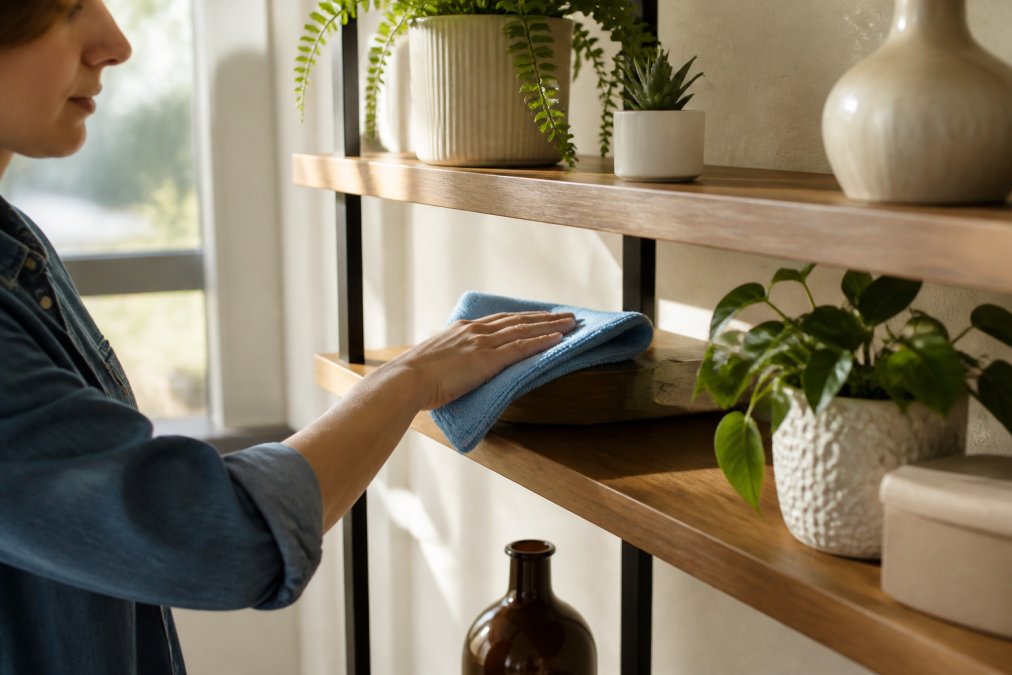
Vacuuming is more effective than sweeping for dust control. Sweeping kicks dust into the air where it settles elsewhere; vacuuming removes it entirely. Use a vacuum with a HEPA filter to prevent fine dust from being expelled back into the air.
The microfiber cloth is your secret weapon for dusting. Unlike traditional cotton cloths that push dust around, microfiber’s electrostatic properties attract and trap dust particles. Dampen the cloth slightly with water to enhance the electrostatic effect and prevent dust from becoming airborne. Dust lightly twice weekly rather than aggressively once every two weeks, as frequent light cleaning prevents significant buildup.
Managing Pet Dander and Soft Furnishings
Pet dander is a major dust contributor in homes with animals. Regular pet grooming reduces the amount of dead skin cells and loose fur entering your home’s air. Brush pets outdoors when possible. Bathe pets regularly to remove loose fur and dander before they shed naturally.
Soft furnishings trap and harbor dust. Wash bedding weekly in hot water to kill dust mites and remove accumulated dander. Vacuum upholstered furniture weekly, and consider using furniture covers that you can wash regularly. Curtains should be cleaned every few months.
Reduce soft furnishings in your home if dust is a persistent problem. Hard surfaces and minimalist décor naturally accumulate less dust than homes filled with textiles.
Control Indoor Humidity to Reduce Dust Mites
Dust mites thrive in humid environments. Maintain humidity levels between 30-50% for optimal dust mite suppression. Above 60% humidity, dust mite populations explode.
Use a dehumidifier in naturally humid areas like basements or bathrooms. Ensure your HVAC system includes a humidifier if your home tends toward dry air in winter. Arizona’s dry climate typically requires humidification rather than dehumidification.
Air circulation helps control humidity and prevents dust from settling. Ceiling fans and portable fans keep air moving, making it harder for dust to accumulate on surfaces.
Controlling dust in your home requires a multi-layered approach: seal air entry points, maintain your HVAC filtration system, install quality window screens, and establish consistent cleaning routines. SPARKLE TECH SUN SCREENS helps with the critical first step, professional window screen installation that blocks dust and debris while maintaining healthy airflow. Our custom-fit screens are engineered for Arizona’s climate and backed by a lifetime guarantee on qualifying services. Get your free quote today and discover how proper screening reduces dust infiltration at the source.
Frequently Asked Questions
How often should I change my HVAC furnace filter to reduce dust?
Change standard 1-inch furnace filters every 1-3 months, depending on dust levels and pet presence. If you have pets, allergies, or notice visible dust buildup on the filter, change monthly. HEPA filters last 6-12 months but cost more. Check your filter monthly, if it looks gray or clogged, replace it immediately. A clean filter improves filtration efficiency and reduces airborne particles circulating through your home.
What is the best air purifier for dust in a home?
Look for air purifiers with HEPA filtration, which captures 99.97% of particulate matter 0.3 microns or larger. Place the unit in high-traffic areas or bedrooms where you spend the most time. Run it continuously or at least 8 hours daily for maximum dust reduction. Combine an air purifier with other methods like window screens and regular vacuuming for best results. Check that the unit's clean air delivery rate (CADR) matches your room size.
What causes excessive dust buildup in a house?
Dust comes from multiple sources: outdoor particles entering through open windows and doors, dead skin cells shed by occupants, pet dander, fabric fibers from upholstery and curtains, and HVAC system dust. Air leaks around windows and doors allow airborne contaminants inside, especially in dry climates. Poor ventilation traps dust indoors. Unsealed gaps and lack of weatherstripping increase dust infiltration. Installing window screens and sealing air leaks directly addresses these sources.
Can window screens actually reduce dust in my home?
Yes. Quality window screens with fine mesh block dust, pollen, and debris while allowing fresh air and natural ventilation. Custom-fit screens seal gaps around the frame, preventing dust from entering around the edges. Screens are most effective when combined with proper HVAC maintenance and humidity control. They're especially valuable in areas with high dust or during windy seasons, protecting your indoor air quality without blocking airflow.
This article was written using GrandRanker