
Table of Contents
- How Thermal Expansion Causes Window Screens to Sag
- UV Rays and Solar Loading: Long-Term Mesh Degradation
- How to Tighten Window Screen Mesh: DIY Tensioning Techniques
- Best Window Screen Material for Heat Resistance
- How to Replace Window Screen Spline for Lasting Results
- Preventative Heat-Shielding and Seasonal Maintenance
- Conclusion: Protecting Your Window Screens from Heat Damage
Last Updated: August 5, 2026
How Thermal Expansion Causes Window Screens to Sag
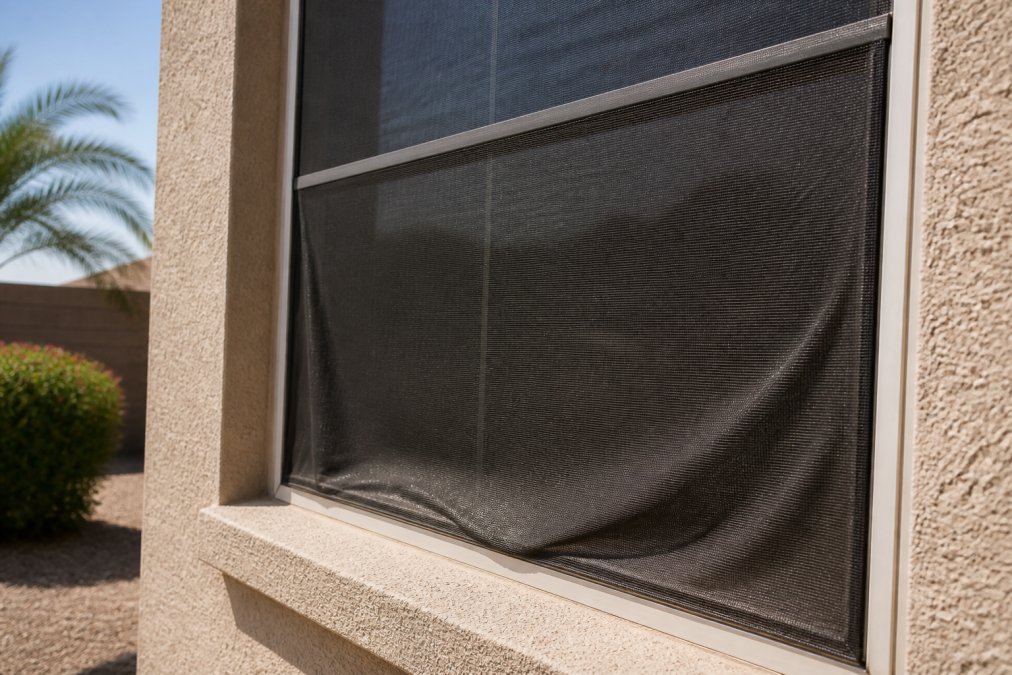
Window screens sag in heat because the mesh and rubber spline cord that secures it expand when exposed to direct sunlight and high temperatures. This thermal expansion is predictable physics. The Arizona sun regularly exceeds 110°F, and window surfaces can reach 140°F or higher. At those temperatures, fiberglass mesh and rubber spline physically expand, then contract at night. Over weeks and months, this cycle fatigues the materials, causing permanent sagging.
The Physics of Heat-Induced Stretching
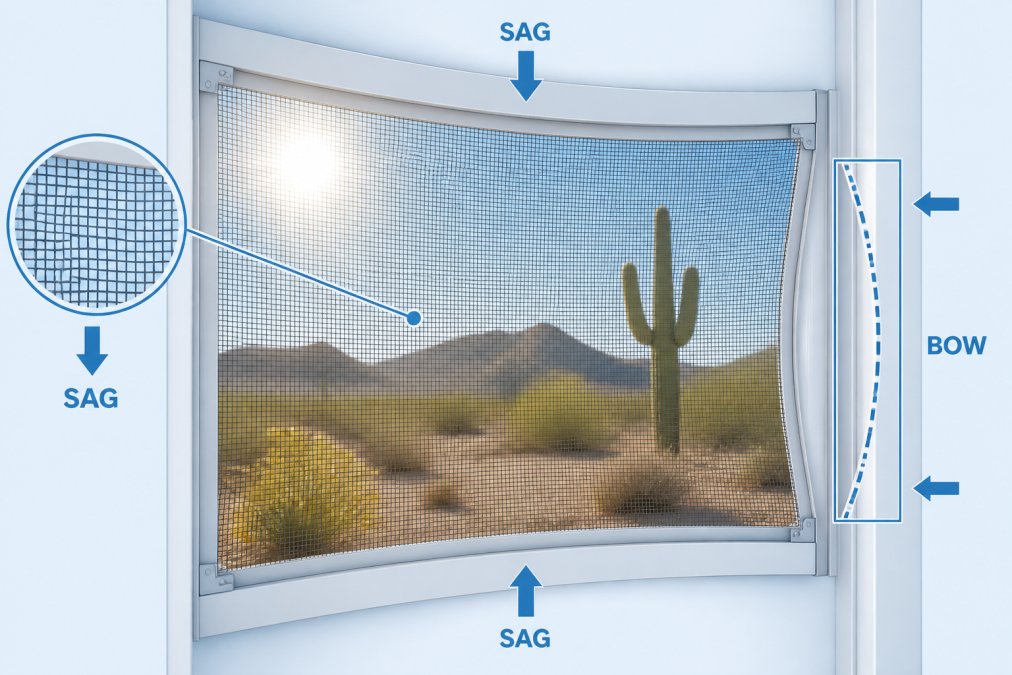
Every material has a coefficient of thermal expansion. Fiberglass mesh expands more than the aluminum frame, creating uneven stress distribution. When heat arrives, the mesh wants to expand but the frame doesn’t expand at the same rate. The mesh stretches further, the spline loses grip, and sagging results.
The spline is the weak point. Rubber cord softens significantly above 80°F and becomes pliable at 120°F or higher. This is why screens installed in spring often hold tension through summer, then sag by late August. Each heat cycle reduces the spline’s ability to grip the mesh.
Material-Specific Thermal Thresholds
Fiberglass mesh typically shows permanent deformation around 130°F. Aluminum mesh is more stable but conducts heat directly to the spline, accelerating degradation. Vinyl-coated fiberglass performs slightly better than standard fiberglass.
Standard rubber spline loses significant elasticity at 100°F and becomes nearly non-functional by 140°F. This is why screens in Phoenix fail faster than identical screens in cooler climates.
SPARKLE TECH SUN SCREENS uses weather-resistant materials specifically selected for Arizona’s thermal demands.
UV Rays and Solar Loading: Long-Term Mesh Degradation
Ultraviolet radiation breaks down polymer bonds in fiberglass mesh over time, making the material brittle. Phoenix receives over 300 days of direct sunlight annually, with UV intensity well above national averages. A fiberglass screen exposed to unobstructed UV for three to five years becomes noticeably more brittle and prone to tearing.
The combination of thermal cycling and UV exposure is the real problem. Heat causes expansion and spline fatigue. UV causes the fiberglass to become less flexible. Together, they create a failure mode that’s difficult to reverse. A screen sagging for two years in full UV exposure will likely tear when you try to re-tension it because the mesh has become too brittle.
Preventative measures, heat-shielding, seasonal adjustments, or material upgrades, are more cost-effective than repeated repairs.
How to Tighten Window Screen Mesh: DIY Tensioning Techniques
If your screens are sagging but the mesh isn’t torn and the spline isn’t cracked, you can re-tension them yourself. This is a temporary fix for screens that have lost tension due to thermal expansion. The process takes 15 to 30 minutes per screen.
Step-by-Step Tensioning Process
Step 1: Remove the screen from the window frame. Lay it flat on a clean surface.
Step 2: Inspect the spline. Run your finger along the rubber cord. If it’s cracked, hardened, or pulling away, replacement is your only option. If it’s still flexible, re-tensioning is worth attempting.
Step 3: Use a spline roller to re-seat the spline. Press the wheel firmly into the groove where the spline sits, rolling it along the perimeter. This tightens the mesh. Apply consistent, moderate pressure.
Step 4: Work methodically around the frame. Start at one corner and roll along each side. Work the corners last.
Step 5: Check your progress. If the sag is gone and the mesh appears evenly taut, you’re done. If there’s still visible sag, repeat with slightly more pressure.
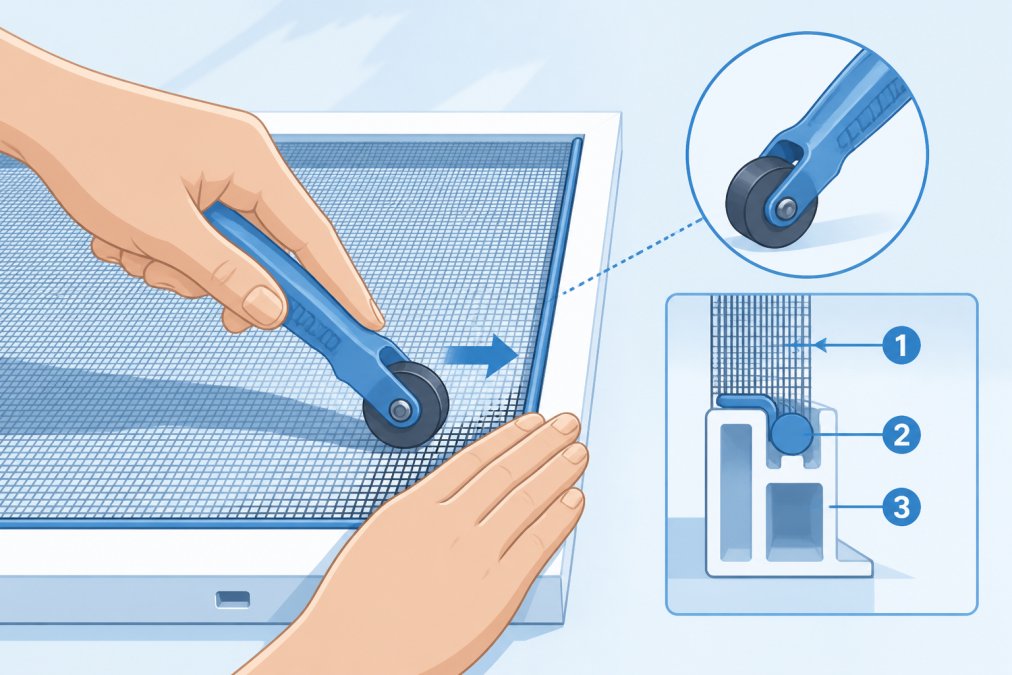
Tools You’ll Need
A spline roller costs between $5 and $15 at any hardware store. You might also need a flathead screwdriver to lift the spline and a utility knife to trim excess mesh.
Re-tension in moderate temperatures, ideally below 85°F. Early morning or late afternoon is ideal.
Best Window Screen Material for Heat Resistance
Fiberglass vs. Aluminum Mesh
Fiberglass is the standard choice because it’s affordable and easy to work with. It’s also the first material to sag under thermal stress, showing permanent deformation within two to three years in Arizona’s climate.
Aluminum mesh is more rigid and resists UV damage better. It’s two to three times more expensive than fiberglass but doesn’t expand as much. It does conduct heat, which means the spline heats up faster.
A hybrid approach is increasingly common: fiberglass mesh with a vinyl or polyester coating. The coating adds UV resistance and improves thermal stability without the cost of full aluminum.
Heat-Resistant Coatings and Low-E Options
Some manufacturers offer screens with low-emissivity (low-E) coatings, similar to energy-efficient windows. These coatings reflect solar heat rather than absorbing it. A low-E coated screen can reduce surface temperature by 10 to 15 degrees compared to uncoated mesh. Over five years, this translates to significantly less thermal cycling and spline fatigue.
The trade-off is visibility. Low-E coatings reduce light transmission slightly. For most Arizona homeowners, the durability gain outweighs this minor visual impact.
SPARKLE TECH SUN SCREENS offers weather-resistant material options designed specifically for Arizona’s thermal environment.
How to Replace Window Screen Spline for Lasting Results
Spline replacement is the most common screen repair for screens that have sagged or failed due to thermal expansion. If the mesh is intact but the spline is hardened, cracked, or no longer gripping, replacement is straightforward and inexpensive.
Signs Your Spline Needs Replacement
- The mesh pulls away from the frame groove, creating visible gaps
- The spline is visibly cracked or split
- The spline is hard and inflexible when pressed
- The mesh sags even after re-tensioning attempts
- The spline has pulled completely out of the groove in spots
New spline costs $5 to $15 per screen.
Replacement Steps and Best Practices
Step 1: Remove the old spline. Use a flathead screwdriver to lift it out of the groove.
Step 2: Check the groove for debris. Use a dry cloth or compressed air to clean out dust and fragments.
Step 3: Lay the new spline in the groove. Start at one corner and press it gently into the groove by hand, working around the frame.
Step 4: Use the spline roller to seat it firmly. Apply moderate, consistent pressure to tighten the mesh and secure the spline.
Step 5: Trim excess mesh. Use a utility knife to trim mesh flush with the frame edge.
Step 6: Reinstall the screen. The screen is ready to go back in the window.
The entire process takes 30 to 45 minutes per screen. For multiple screens or if uncomfortable with the process, professional re-screening ensures proper tensioning and extends the screen’s usable life.
Preventative Heat-Shielding and Seasonal Maintenance
The best approach to preventing sagging is to reduce the thermal stress your screens experience.
Seasonal Care Tips for Arizona Climates
During peak summer months (June through September), consider removing screens from windows receiving intense afternoon sun. Removing them for the hottest three months and reinstalling in fall significantly extends their lifespan.
If removal isn’t practical, apply exterior shading. A shade cloth or solar screen attached outside reduces solar loading by 30 to 50 percent.
Check your spline condition twice a year, in spring before the heat season and in fall. A quick visual inspection catches degradation before full failure. If the spline is losing flexibility, re-tensioning or replacement before peak summer prevents emergency repairs.
Inspect frame alignment seasonally. Thermal expansion can cause frame bowing, distributing tension unevenly. If the frame is no longer square or mesh sags more on one side, the frame may need adjustment or replacement.
When to Repair vs. Replace Screens
Repair makes sense if the mesh is intact and the frame is straight. Re-tensioning or spline replacement can extend screen life by two to three years.
Replace screens if the mesh is torn or punctured, the frame is bent or warped, or the mesh has become brittle from UV exposure. A torn screen will only tear more with repairs. A bent frame won’t hold tension evenly. Brittle mesh will tear when re-tensioned.
For screens in place five or more years in Arizona’s climate, replacement with higher-quality materials (aluminum mesh or coated fiberglass) is often the better long-term investment.
Window screens sag in heat because thermal expansion and UV degradation are fundamental physics problems in Arizona’s climate. The solution is to choose materials that resist it and maintain your screens proactively. SPARKLE TECH SUN SCREENS provides custom-fit screens using weather-resistant materials specifically engineered for Arizona’s thermal demands, backed by a lifetime guarantee on qualifying services. Professional installation ensures proper tensioning and frame alignment from day one, eliminating the thermal stress that causes premature sagging. Get your free quote today and invest in screens built to last through Arizona’s harshest seasons.
Frequently Asked Questions
Can you tighten a sagging window screen?
Yes. Sagging screens caused by thermal expansion or mesh tension loss can be re-tensioned using a spline roller tool. Remove the rubber cord holding the mesh, pull the mesh taut, and re-seat the spline. For severe sagging or damaged mesh, replacement is more effective. Professional re-screening ensures proper tension and durability, especially in Arizona's extreme heat where thermal stress is constant.
How does solar loading affect window screen durability?
Solar loading, the heat absorbed by direct sunlight exposure, causes thermal stress that stretches mesh and weakens frame alignment. In Arizona, intense UV rays degrade fiberglass mesh faster than aluminum, reducing elasticity and causing brittleness. High solar heat gain coefficient values accelerate material fatigue. Screens facing south and west experience the most damage. Preventative measures like heat-shielding and seasonal maintenance extend screen life significantly.
What window screen material resists heat best?
Aluminum mesh resists thermal expansion better than fiberglass because it has lower dimensional stability changes under temperature fluctuations. However, fiberglass offers better visibility and is less noisy. For maximum heat resistance, choose screens with low-e coatings or solar-control films that reduce solar heat gain. Material thickness and frame construction also matter, thicker aluminum frames resist bowing better than thin ones under thermal stress.
How long do window screens typically last in Arizona's heat?
Standard screens last 3-5 years in Arizona's intense heat and UV exposure. High-quality, weather-resistant screens with reinforced splines and durable mesh can last 7-10 years or more with seasonal maintenance. Factors affecting lifespan include material quality, installation precision, and sun exposure direction. Professional rescreening with premium materials and proper tension extends durability significantly compared to standard replacements.
This article was written using GrandRanker