
Table of Contents
- How Screens Impact Home Value and Resale Appeal
- Return on Investment: Screens and Property Appraisal
- Energy-Efficient Smart Home Devices and Screen Technology
- Screened Porch Value: Indoor-Outdoor Living Spaces
- Smart Security System Value and Safety Features
- Types of Screen Enclosures and Their Market Impact
- Permitting, Insurance, and Legal Considerations
- Regional Market Variations and Climate-Specific Value
Last Updated: August 2026
Impact of Screens on Home Value and Resale Appeal
Screens enhance home value through multiple channels: they improve curb appeal, reduce energy costs, expand livable space, and address practical concerns like insect protection and dust control. However, not all screen installations contribute equally to property value. The type of screen, installation quality, material durability, and regional market conditions all play significant roles.
Research from the National Association of Realtors indicates that outdoor living spaces and home improvements enhancing comfort and functionality rank among the appealing features to buyers. Screened-in porches and properly maintained window screens fall into this category, particularly in climates where heat, insects, and dust are genuine concerns.
Curb Appeal and First Impressions
Visible deterioration, including worn, torn, or missing screens, signals deferred maintenance. Conversely, clean, well-maintained screens with modern materials and professional installation create an immediate impression of a cared-for home. Quality screens frame windows attractively, suggest attention to detail, and indicate protection from environmental hazards. In Arizona’s harsh climate, visible screen protection signals smart property management.
Professional installation and material quality are critical. Poorly installed screens that sag, rattle, or show visible gaps communicate neglect. SPARKLE TECH SUN SCREENS uses custom-fit screens and weather-resistant materials that maintain their appearance and function for years.
Buyer Demand for Screened Living Spaces
Buyer demand for screened outdoor spaces has grown steadily, particularly in regions where climate control and pest management are lifestyle necessities. A screened-in porch transforms a property from "has outdoor space" to "has usable outdoor living."
Many homebuyers in Phoenix and Scottsdale specifically seek properties with screened spaces. They understand that an unscreened patio becomes unusable during peak heat months or dust storms. A screened enclosure extends the usable season, reduces air conditioning reliance, and provides insect protection. Properties with screened porches often spend less time on the market and receive more qualified inquiries, translating to better negotiating position and higher final sale prices.
Return on Investment: Screens and Property Appraisal
The ROI of screen installations depends on initial cost, material quality, regional market conditions, and how screens integrate with the home’s overall condition. Strategic investments in high-visibility, durable screens often deliver positive ROI.
Property appraisers evaluate screens as part of the home’s overall condition and functional appeal. A professionally installed, well-maintained screened porch adds value because it represents genuine functional improvement.
Appraised Value vs. Installation Cost
Several factors influence this recovery rate. First, visibility and impact matter, a screened porch adds more value than window screens taken for granted. Second, material quality affects appraisal value. Screens made from durable materials like aluminum with weather-resistant mesh last decades, while cheaper alternatives deteriorate within 5-10 years. Third, regional market conditions determine buyer appetite for screened spaces. In Phoenix and Scottsdale, screened spaces command premium attention. Professional installation quality directly influences appraised value.
Real Estate Comps and Market Conditions
Property appraisers use comparable sales (comps) to establish value. If similar homes in your neighborhood sold recently with and without screened porches, the appraiser can estimate the value contribution by comparing sale prices. This means screen impact varies significantly by market.
In neighborhoods where screened porches are common, their presence becomes an expected feature rather than a premium upgrade. In neighborhoods where screens are less common, a high-quality screened porch can differentiate your property and command a premium.
The U.S. Census Bureau’s housing data shows that outdoor living spaces rank among the top home features influencing buyer decisions. In Arizona specifically, outdoor living spaces and climate control features rank higher than in cooler regions.
Energy-Efficient Smart Home Devices and Screen Technology
Modern screen technology extends beyond simple insect barriers. Smart screens and energy-efficient designs can meaningfully reduce cooling costs, particularly in Arizona’s intense heat environment.
Solar Heat Reduction and Climate Control
Screens block incoming solar radiation, reducing heat load on air conditioning systems. Solar screens or specialized mesh designed to reflect UV radiation are particularly effective. A home with solar screens on south and west-facing windows experiences measurably lower indoor temperatures during peak heat hours, reducing air conditioning runtime and energy consumption.
For property appraisers and buyers, energy efficiency is an increasingly valued feature. SPARKLE TECH SUN SCREENS offers solar screens and specialized mesh options that maximize heat reduction while maintaining visibility and airflow.
Smart Home Technology ROI and Automation Integration
Motorized and retractable screens represent the intersection of traditional screen functionality and smart home technology. These systems can be automated to open and close based on temperature, time of day, or manual control via smartphone.
Smart screens contribute to the broader smart home narrative that increasingly influences property value. A home with integrated smart systems appeals to buyers who value automation and energy management. The ROI on motorized screens is higher than fixed screens because they command premium pricing from buyers who value automation, though installation costs and maintenance complexity are also higher.
Screened Porch Value: Indoor-Outdoor Living Spaces
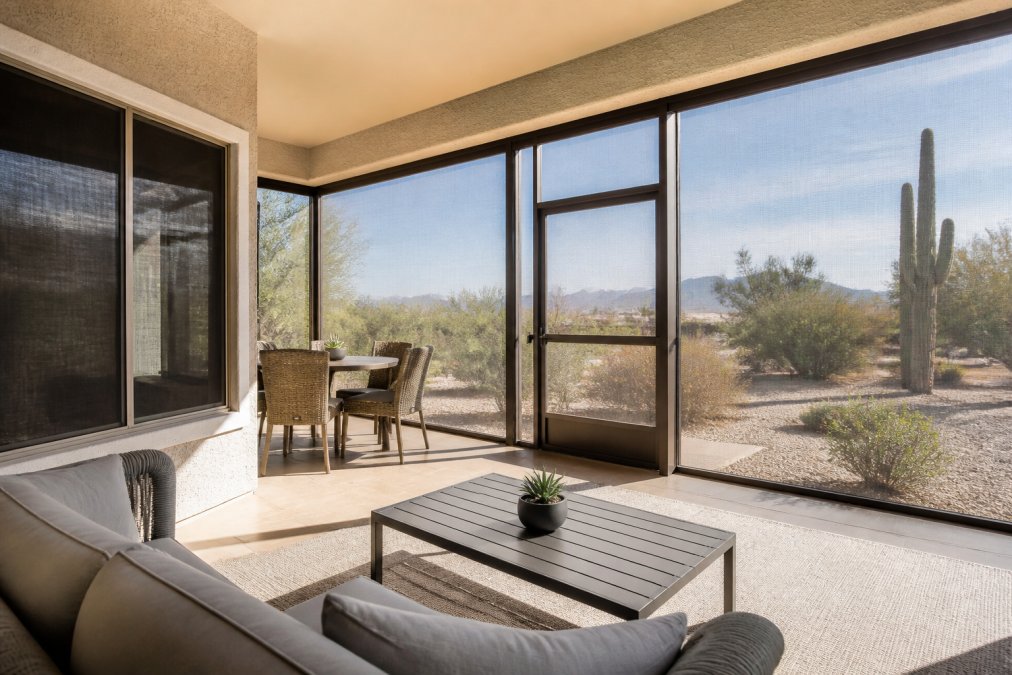
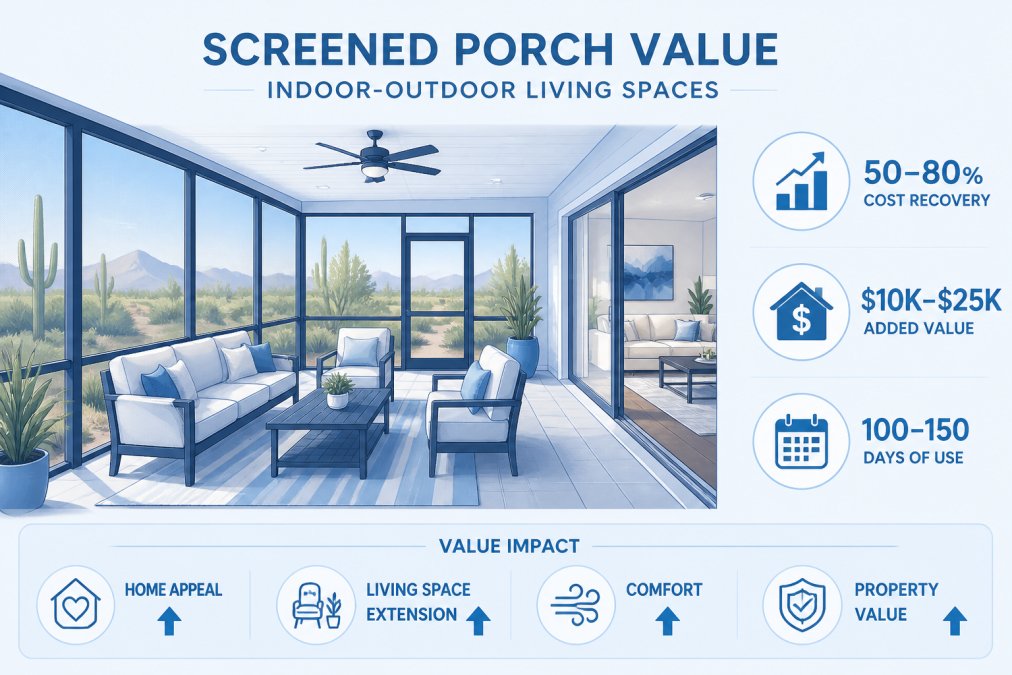
A screened porch fundamentally changes how a homeowner uses outdoor space. It extends usable living area, creates a buffer zone between interior and exterior environments, and adds functional square footage that appeals to buyers seeking expanded living capacity.
Square Footage and Functional Living Space
Real estate professionals distinguish between conditioned square footage (heated and cooled interior space) and functional square footage (usable but not fully climate-controlled). A screened porch occupies a middle ground: it’s not air-conditioned, but it’s protected from weather and insects, making it genuinely usable for much of the year.
Appraisers typically credit screened porches at 50-75% of the value of equivalent interior square footage. A 200-square-foot screened porch might add value equivalent to 100-150 square feet of interior space. Buyers recognize this functional value, and properties with screened porches often attract more serious inquiries because the space immediately solves a real problem: how to use outdoor space comfortably in Arizona’s climate.
Lifestyle Upgrade and Aesthetic Appeal
Beyond square footage calculations, screened porches represent a lifestyle upgrade. They signal investment in comfort, entertaining capacity, and quality of life. Buyers who envision themselves using a screened porch develop emotional attachment to the property, which often translates to higher offers.
A well-designed screened porch with matching architecture, quality materials, and professional finishing becomes a feature that elevates the entire property. In competitive markets, the property with the most appealing screened porch often wins buyer preference and commands premium pricing.
Smart Security System Value and Safety Features
Modern screen systems can integrate with home security by providing visible deterrents to intrusion and protecting entry points. While screens are not security barriers, they contribute to the perception of a well-maintained, secure property.
Protection Against Insects, Dust, and Debris
The practical value of screens often gets overlooked in property value discussions, but it’s significant. Screens solve genuine problems: they keep insects out, reduce dust infiltration (critical in Arizona), and protect against debris during monsoons. Buyers who have experienced these issues understand the value immediately.
A property with quality screens on all windows and doors demonstrates that the homeowner has addressed environmental challenges. For buyers with allergies, asthma, or families with young children, these benefits translate directly to quality of life improvement.
Weather Resistance and Structural Integrity
In Arizona, screens must withstand intense sun, extreme temperatures, wind, and dust storms. Screens made from inferior materials deteriorate quickly, requiring replacement every few years. Quality screens made from aluminum frames and UV-resistant mesh last 15-20+ years with minimal maintenance.
Appraisers evaluate the structural integrity and condition of all visible home components, including screens. Well-maintained screens signal proper home care. SPARKLE TECH SUN SCREENS uses weather-resistant materials specifically engineered for Arizona’s climate, ensuring screens maintain their appearance and function for decades.
Types of Screen Enclosures and Their Market Impact
Different screen options have different impacts on property value. Understanding these distinctions helps homeowners make investments aligned with market demand and buyer preferences.
Fixed Screens vs. Motorized and Retractable Options
Fixed screens are the traditional, most affordable option. They’re permanently installed, require no maintenance beyond cleaning, and provide reliable functionality. However, they create a utilitarian appearance and cannot be adjusted based on weather or preference.
Motorized screens represent a significant step up in functionality and appeal. These systems can be controlled remotely, automated based on sensors, or operated manually. They offer flexibility and appeal strongly to buyers who value smart home features.
Retractable screens occupy a middle ground. They’re permanently installed but can be drawn closed or retracted into a housing, maintaining clean lines and architectural aesthetics when screens aren’t in use.
| Screen Type | Durability | Buyer Appeal | Best For |
|---|---|---|---|
| Fixed Screens | 15-20 years | Practical, maintenance-conscious | Budget-conscious buyers, rental properties |
| Motorized Screens | 15-20 years | Tech-savvy, premium appeal | High-end homes, tech-forward buyers |
| Retractable Screens | 12-18 years | Modern, flexible | Contemporary homes, design-focused buyers |
| Screened Porch Enclosure | 20+ years | Functional, lifestyle upgrade | Family homes, entertaining-focused buyers |
The market impact of each type varies by neighborhood and buyer demographics. In luxury neighborhoods where smart home features are expected, motorized screens command premium value. In family-oriented neighborhoods, screened porches often deliver the strongest ROI.
Material Longevity, Depreciation, and Durability
Screen longevity directly influences their contribution to property value. A screen installation lasting 20 years represents a genuine asset. One requiring replacement in 5 years is essentially a maintenance liability.
Material quality determines longevity. Aluminum frames resist corrosion better than steel. UV-resistant mesh maintains integrity and appearance far longer than standard fiberglass mesh. Weather-resistant coatings protect against Arizona’s intense sun and temperature extremes.
The impact of screens on home value depends heavily on their condition at sale. A home with recently installed, high-quality screens may see strong value contribution. A home with aging, deteriorating screens may see negative value impact because appraisers view them as deferred maintenance requiring replacement. SPARKLE TECH SUN SCREENS backs its installations with a lifetime guarantee on qualifying services, signaling confidence in material quality and durability.
Permitting, Insurance, and Legal Considerations
Screen installations involve legal and regulatory considerations that significantly impact property value and the ability to complete installations.
Local Building Codes and Permitting Requirements
Arizona requires permits for most screen enclosures, particularly those that enclose porches or modify the home’s exterior structure. Local jurisdictions in Phoenix and Scottsdale have specific codes governing screen materials, installation standards, and structural requirements. Failing to obtain permits creates serious problems during property sale.
An unpermitted screen enclosure becomes a liability. During inspection or appraisal, inspectors will note unpermitted work. This creates problems: the buyer’s lender may require removal before financing, unpermitted work must be disclosed to future buyers, and the home may face code enforcement action requiring removal at the owner’s expense.
Permitted, code-compliant screen installations create no such problems. They’re documented in public records, fully transferable to new owners, and represent genuine improvements that appraisers can confidently value. The City of Phoenix Development Services provides detailed information on permitting requirements for screen enclosures and exterior modifications.
Insurance Premium Implications
Screen enclosures can influence homeowner’s insurance in several ways. A screened porch that’s fully enclosed may be considered conditioned living space, potentially increasing the home’s insurable value. Properly permitted and installed screen enclosures typically don’t increase premiums significantly.
Unpermitted enclosures create insurance complications. If an unpermitted screen enclosure is damaged and the homeowner files a claim, the insurance company may deny the claim because the enclosure wasn’t permitted. This represents a significant financial risk that often exceeds the cost of obtaining permits upfront.
Regional Market Variations and Climate-Specific Value
The impact of screens on home value varies dramatically by region. In Arizona, where heat, dust, and insects are significant environmental factors, screens add measurable value. In cooler regions where outdoor living is seasonal, screens contribute less to property value.
Arizona and Desert Climate Advantages
Arizona’s climate creates unique value dynamics for screens. The intensity of summer heat, the frequency of dust storms, and the prevalence of insects make screens essential for comfortable living, not optional amenities. This necessity translates directly to buyer demand and property value.
Properties in Phoenix and Scottsdale with high-quality screened porches and window screens are highly competitive in the market. Buyers specifically seek these features because they solve real problems. The energy efficiency angle is also more pronounced in Arizona. Solar screens that reduce cooling costs have measurable annual value in a region where air conditioning runs nine months per year.
Desert climate also means screen materials face extreme stress. Quality screens that survive these conditions for 15-20+ years are genuinely impressive and valuable. Cheap screens that deteriorate within 5 years are liabilities.
Property Valuation Differences Across Markets
Within Arizona, valuation differences exist by neighborhood, price point, and buyer demographics. Luxury neighborhoods in Scottsdale where outdoor entertaining is a lifestyle centerpiece place high value on screened porches and motorized screens. Middle-market neighborhoods in Phoenix value screened spaces for practical reasons: heat and dust management.
The Arizona Regional Multiple Listing Service (ARMLS) tracks property sales and feature values across Arizona markets. Data consistently shows that screened porches and outdoor living spaces command premium pricing in most Arizona markets, particularly in the Phoenix metro area.
The impact of screens on home value in Arizona is substantial when installations are done professionally, use quality materials, and meet local building codes. Screened porches and high-quality window screens enhance curb appeal, improve buyer appeal, reduce energy costs, and extend usable living space. The ROI is respectable for a home improvement in a region where outdoor living and climate control are genuine priorities.
However, not all screen installations deliver equal value. Cheap, poorly installed screens that deteriorate quickly are liabilities rather than assets. Professional installation using durable, weather-resistant materials is essential for maximizing value contribution. SPARKLE TECH SUN SCREENS specializes in custom-fit screens engineered for Arizona’s climate, with professional installation and a lifetime guarantee on qualifying services. Whether you’re looking to enhance your home’s appeal before selling or improve your daily quality of life, investing in quality screens from SPARKLE TECH SUN SCREENS delivers measurable returns. Get your free quote today and discover how professional screens can transform your home’s value and comfort.
Frequently Asked Questions
How much does installing screens actually add to home value?
The impact of screens on home value depends on several factors including screen type, installation quality, local market conditions, and regional demand. Screened porches and enclosures typically add functional outdoor living space that appeals to buyers, but the exact appraised value increase varies. Professional installation with durable, weather-resistant materials ensures your screens maintain their appeal and function over time, supporting long-term home equity. Contact us for a free quote to understand the specific value impact for your property.
What's the return on investment (ROI) for screen installations?
ROI for screens depends on installation cost versus the added appeal and functionality they provide. In markets with high buyer demand for outdoor living spaces, like Arizona, screened-in porches often deliver strong ROI. Energy-efficient smart home devices integrated with screens can reduce cooling costs, further improving ROI. The key is choosing quality materials and professional installation to prevent depreciation. Regional market conditions and real estate comps in your area significantly influence whether screens recoup their cost at resale.
Do energy-efficient smart home devices like motorized screens actually save money?
Yes. Motorized screens and smart home technology can reduce solar heat gain, lowering air conditioning costs in hot climates like Phoenix. UV protection and weather-resistant materials block harmful rays and heat, especially important in desert environments. While installation costs vary, the combination of reduced energy bills and increased curb appeal supports both immediate comfort and long-term home value. Smart home technology ROI improves when integrated with other energy-efficient upgrades.
Will screens increase my property appraisal value?
Screens can influence property appraisal by adding functional square footage and improving aesthetic appeal, but they won't automatically increase appraised value. Appraisers consider real estate comps, market conditions, and whether screens are permanent, high-quality installations. Professional, durable screens with proper permitting and structural integrity are more likely to be valued positively. Temporary or poorly maintained screens may not impact appraisal. Consult a local appraiser to understand how screens affect your specific property's valuation.
Are there permitting or insurance issues I should know about before installing screens?
Yes. Building codes and permitting requirements vary by location and screen type. Some jurisdictions require permits for screened enclosures, especially those affecting structural integrity. Insurance implications can include changes to coverage if screens are considered security features or if they alter the home's footprint. Before installation, check local regulations and notify your insurance provider. Professional installers familiar with regional codes can guide you through permitting and ensure compliance, protecting your investment and home equity.
How long do screens last in Arizona's extreme heat and dust?
Quality screens with weather-resistant, UV-protected materials can last many years in Arizona's harsh climate when properly maintained. Material longevity depends on screen type and installation quality. Motorized and retractable screens may require more maintenance than fixed options. Professional installation ensures proper fit and durability. Many premium services, including ours, offer lifetime guarantees on qualifying installations, protecting your investment against premature depreciation and ensuring long-term home equity.
Does a screened porch add more value than other outdoor improvements?
Screened porch value depends on local buyer demand, climate, and market conditions. In warm regions like Arizona, screened porches add functional indoor-outdoor living space that appeals to buyers seeking protection from heat, insects, and dust. They increase usable square footage and curb appeal. However, value also depends on installation quality, maintenance, and how well the enclosure integrates with the home's aesthetic. Professional, durable screens with proper structural integrity generally outperform budget options in terms of long-term home equity.
This article was written using GrandRanker