

Have you ever walked into a room that feels like a greenhouse, even with the windows closed? You’re not alone. The sun streaming through your windows can turn a comfortable space into an unbearable sauna, send your energy bills through the roof, and fade your favorite furniture over time.
That’s where a window sun blocker comes in. But here’s the thing: there are so many options out there that choosing the right one can feel completely overwhelming, especially if you’ve never dealt with this problem before.
The good news is that you don’t need to be an expert to make a smart choice. In this post, we’re going to break down the most popular window sun blocker options available today, from simple curtains and blinds to window films and exterior shades. We’ll look at how well each one actually works, how much they cost, and how easy they are to install and use.
By the end, you’ll have a clear picture of which solution makes the most sense for your home, your budget, and your lifestyle. Let’s get into it.
What Is a Window Sun Blocker?
If you’ve noticed your living room turning into a sauna every afternoon, or you’re squinting past glare just to see your screen, you’re already dealing with a window sun problem. The good news is that an entire category of products exists to fix it. A window sun blocker is any product designed to reduce solar heat gain, glare, and UV exposure coming through your home’s windows, and the options range from simple fabric shades to high-tech automated systems.
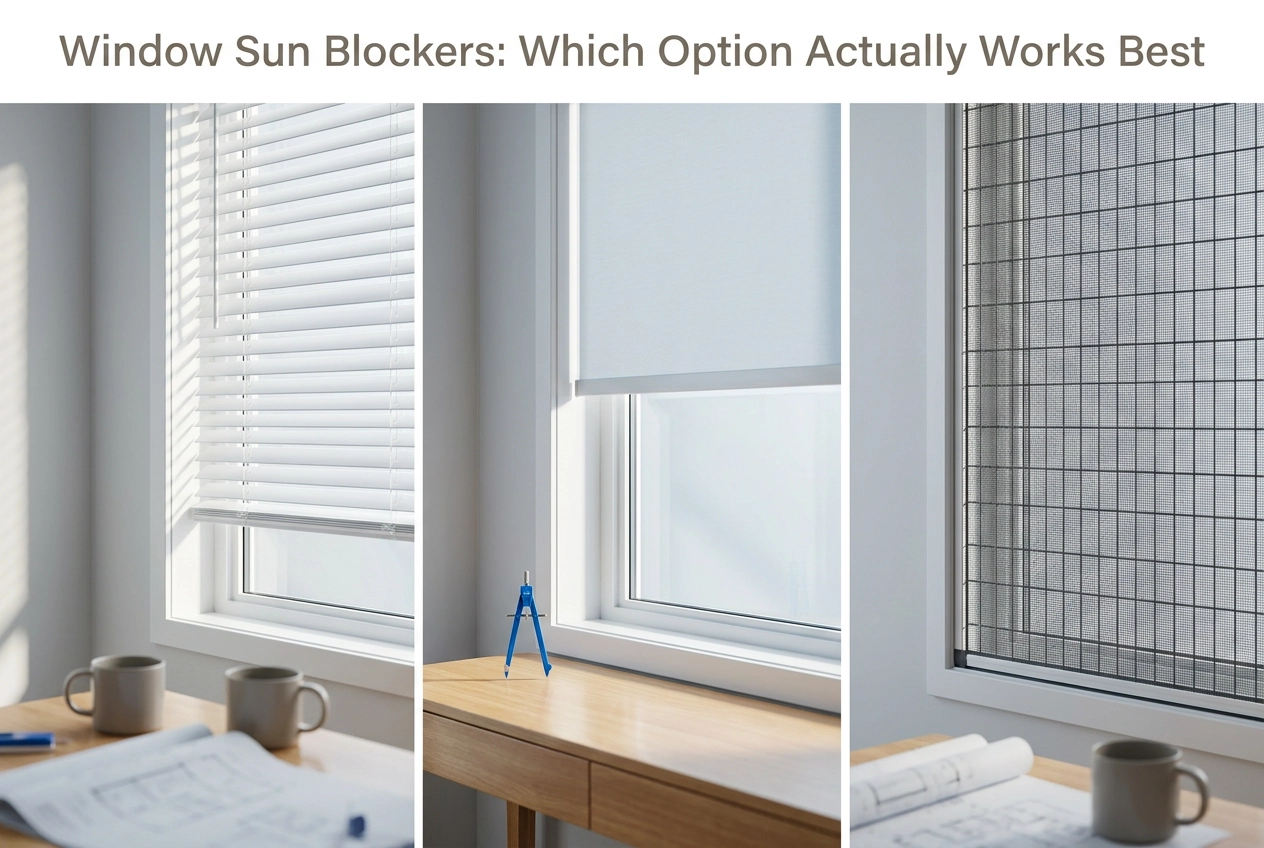
Most homeowners encounter three main solution types when they start shopping. First, there are interior blinds and shades, the roller shades, cellular shades, and solar sheers you hang on the inside of your window. Second, there are smart automated shades, motorized systems you can control from your phone or program to adjust automatically throughout the day. Third, and often overlooked, are exterior solar screens, mesh panels mounted on the outside of your windows that intercept sunlight before it even touches the glass.
That last distinction matters more than most beginners expect. Not all window sun blockers work at the same point in the heat transfer process. Interior and exterior solar screens differ significantly in how much heat they actually stop, and understanding that difference will shape every decision you make from here.
You’re definitely not alone in searching for answers. The window coverings market was estimated at USD 17.6 billion in 2025 and is projected to reach USD 36.9 billion by 2035, which tells you just how many homeowners are actively solving this same problem. If you know you have a sun and heat issue but haven’t landed on a solution category yet, you’re in exactly the right place to start comparing your options.
Option 1: Interior Blinds and Shades
When most people think “window sun blocker,” interior blinds and shades are the first thing that comes to mind. And honestly, that makes total sense. You can find them at virtually every hardware store, home goods retailer, and online shop imaginable. From basic vinyl mini-blinds to elegant Roman shades and flowing linen curtains, these products come in every style, color, and price point you could want. They’re the default solution most homeowners reach for, and the numbers back that up: the global curtains and window blinds market was valued at USD 23.6 billion in 2024 and is expected to grow at an 8.42% CAGR through 2035, nearly doubling in size despite some real performance limitations we need to talk about.
Here’s the thing most people don’t realize until they’ve lived with blinds through a hot summer: by the time your blinds or curtains do anything at all, the solar heat has already entered your home. Sunlight passes straight through the glass, converts to heat indoors, and then your blind tries to deal with it. Worse, closing your blinds traps that heat in the pocket of air between the glass and the covering, which can actually make the area near your window feel hotter. You’re not blocking heat; you’re just rearranging where it sits.
The Pros Worth Knowing
Interior blinds do have genuine advantages, especially for beginners working with a tight budget. The upfront cost is low, sometimes just a few dollars for basic options. Installation is typically a simple DIY project requiring nothing more than a drill and a measuring tape. You also won’t need to make any changes to the exterior of your home, which is a big deal for renters or anyone in a neighborhood with HOA restrictions. Curious about which styles actually perform best on heat? Resources like this guide on what blinds block heat can help you compare options.
The Cons to Consider
The downsides are practical and worth weighing carefully. Fully closing your blinds to maximize sun blocking means sacrificing natural light, which can make even a bright room feel dark and a little depressing. Interior coverings offer zero protection against insects since they sit completely inside the window, so bugs are still a separate problem to solve. On top of that, fabric shades need regular washing and slatted blinds collect dust surprisingly fast, adding an ongoing maintenance chore to your routine.
Interior blinds are a reasonable starting point, but if heat reduction is your primary goal, they’re working against some real physical limitations from the moment the sun hits your glass.
Option 2: Smart Automated Shades
If interior blinds are the classic, no-fuss option, smart automated shades are the flashy tech upgrade sitting at the other end of the spectrum. These are motorized window coverings you can control through a smartphone app, voice assistant, or programmed schedule. Some advanced models even use light sensors or AI to automatically adjust throughout the day based on real-time sunlight intensity. Basically, the shades do the thinking for you.
The market momentum behind these products is genuinely impressive. Smart solar tracking window shades are projected to reach USD 2.76 billion by 2030 at a 13.7% CAGR, which tells you this isn’t a passing trend. Tech-forward homeowners are clearly excited about the category. You can dig into expert tested picks for smart blinds in 2026 to get a sense of just how far the technology has come.
The Pros
The biggest draw is pure convenience. Once your shades are programmed, you never have to think about them again. They integrate with platforms like Amazon Alexa, Google Home, and Apple HomeKit, so they fit naturally into an existing smart home setup. For hard-to-reach windows or homeowners with mobility challenges, that automation isn’t just a luxury, it’s genuinely practical. If you’re curious whether the investment makes sense for your situation, this honest breakdown of motorized shade pros and cons is worth reading.
The Cons
Here’s where things get complicated for the average homeowner on a practical budget. Smart shades carry a significant upfront cost compared to most other window sun blocker options. They depend on consistent power and Wi-Fi connectivity, so any outage can knock out your automated features entirely. Setup and app configuration can also frustrate homeowners who aren’t especially tech-savvy.
There’s also one limitation that rarely gets mentioned: smart shades offer zero protection against insects or bugs. If you like opening your windows for fresh air, these shades won’t stop a single mosquito from wandering in.
For tech enthusiasts who already have a smart home system and want hands-free sun control, smart shades are genuinely exciting. But for homeowners whose main goals are cutting energy costs and keeping pests out without a steep learning curve, they’re simply not the right fit.
Option 3: Exterior Solar Screens
Here’s where things get genuinely interesting. While interior blinds and smart shades both work from inside the room, exterior solar screens flip the whole approach. Instead of trying to manage heat and light after it has already passed through the glass, exterior solar screens are installed on the outside of the window frame, stopping solar heat and UV rays before they ever make contact with the glass in the first place.
That positioning change is a bigger deal than it might sound. When sunlight hits your window glass, the glass absorbs that heat and radiates it inward, warming up the room even if you have blinds closed behind it. Exterior screens interrupt that process entirely. The glass itself stays cooler, which means significantly less radiant heat is being pushed into your living space, and your air conditioner doesn’t have to work nearly as hard to compensate. According to Phifer’s solar screen guide, solar screens can block anywhere from 65% to 97% of solar heat depending on the mesh you choose, making them one of the most effective sun-blocking products available for residential windows.
The Bonus Feature No Blind Can Offer
Here’s the part that surprises a lot of homeowners: exterior solar screens do double duty. Unlike interior blinds or smart automated shades, an exterior solar screen also functions as an insect and bug screen. You get sun blocking and pest protection in a single installed product, with no extra cost or hardware required. That’s a practical advantage that no interior option can replicate, especially during warmer months when you want airflow without inviting every bug in the neighborhood inside.
On top of that, quality solar screen mesh filters up to 98% of harmful UV rays while still letting diffused natural light into the room. As explained in this helpful breakdown comparing solar screens and insect screens, solar screens also provide daytime privacy while maintaining outward visibility, so you’re not trading your view for comfort.
It’s worth noting that the residential solar shades segment is growing at a 14.9% CAGR from 2026 to 2033, the fastest growth rate among all window covering sub-segments. Homeowners are clearly catching on to what exterior screens offer.
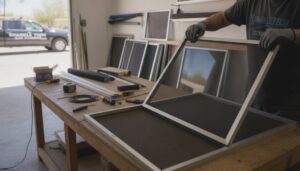
Professional installation matters here too. Choosing the right mesh openness factor for your specific sun exposure, getting a proper frame fit, and having the job done quickly are all things a local screen specialist handles for you, often with same-week availability right when summer heat peaks.
How the Three Options Compare Side by Side
Here’s a quick side-by-side look at all three options so you can make a fast, informed decision without having to dig through every section above.
| Feature | Interior Blinds/Shades | Smart/Motorized Shades | Exterior Solar Screens |
|---|---|---|---|
| Upfront Cost Range | Budget to mid ($20–$290+) | Premium ($500–$1,500+) | Mid-range (varies by window size) |
| Heat Blocked Before or After Glass? | After | After | Before |
| UV Protection Level | 90–99% | 90–99% | Up to 90% |
| Insect/Bug Protection | None | None | Yes |
| Smart Home Integration | Limited | Yes (app and automation) | Generally manual |
| Professional Installation Available | Yes | Yes | Yes |
The short version: interior blinds are the most affordable starting point but the least effective at stopping heat because they only act after sunlight has already pushed through the glass. Smart shades are the most convenient option with automation features, but they sit at the highest price point, still operate from inside the glass, and offer zero pest protection. Exterior solar screens block up to 90% of solar heat before it ever reaches your window, while also filtering UV rays and keeping bugs out, making them the strongest all-around value.
One thing worth flagging before you let sticker price make the final call: a cheaper blind that lets most of the heat through will quietly cost you more every single month on your cooling bill. Consumer Reports specifically frames window coverings as a tool for lowering energy costs, not just blocking light. Factor in what you spend running your AC all summer, and the math on exterior solar screens often looks a lot more attractive than the upfront price suggests.
What to Look for When Choosing a Solar Screen
If you’ve decided that a solar screen is the right move for your home, the next step is figuring out which one to actually buy. Not all solar screens are created equal, and a few key specs can make a big difference in how well your screen performs.
Start with the openness factor. Solar screen mesh is rated by the percentage of open space in the weave, and this number typically runs anywhere from 3% to 14% for residential use. A lower number means a tighter weave, which blocks more heat and UV rays but also reduces how clearly you can see outside. A screen rated at 5% openness, for example, will block significantly more sun than one rated at 10%, but your outward view will feel noticeably darker. You can learn more about how this works in this helpful breakdown of how to choose an openness factor and color.
Match your openness factor to your windows’ sun exposure. South- and west-facing windows that take the brunt of afternoon sun are best served by a tighter weave, ideally 5% or lower. North-facing windows, which get far less direct sun, can handle a more open mesh without sacrificing much comfort. This exterior solar screen guide explains how placement affects overall thermal performance.
Pay attention to material quality. Fiberglass and vinyl-coated polyester are the two most common options. Fiberglass tends to hold its shape better over time and resists UV degradation more effectively, making it a solid long-term choice for most homeowners.
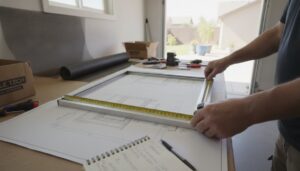
Don’t overlook fit and maintenance. A screen that gaps at the edges loses effectiveness fast, both for blocking sun and keeping bugs out. Professional measurement and installation eliminates that problem. Once your screens are up, plan to clean them periodically since dust and pollen build up in the mesh and can reduce airflow and clarity over time.
Why Installation Speed Matters More Than You Think
Let’s be real: nobody goes looking for a window sun blocker weeks in advance. Most homeowners start searching because a room is already unbearably hot, the afternoon glare is making it impossible to work, or they just opened an eye-watering electricity bill. When you’re in that situation, finding out that your order won’t ship for two weeks, and then you still have to install it yourself, is genuinely frustrating.
That’s why installation speed is actually one of the most important factors to consider, even if it’s not the first thing that comes to mind when comparing options.
With online retailers and DIY kit suppliers, the timeline adds up fast. You measure, you order, you wait for shipping, and then you figure out installation on your own. By the time everything is done, the heat wave that triggered the whole search has already come and gone. A local screen specialist like Sparkle Tech Sunscreens collapses that entire process. Same-week service means you can go from a single phone call to fully installed screens within days, not weeks, which is the only timeline that actually solves the problem you’re experiencing right now.
It’s also worth knowing that professional installation isn’t just for brand-new screens. If your existing frames are damaged, torn, or fitted with standard bug screen that offers zero sun protection, rescreening those frames is a fast, cost-effective fix that doesn’t require full replacements.
Beyond speed, a local professional brings expertise that an online configurator simply cannot replicate. Selecting the right mesh density for your specific window orientations, getting accurate sizing, and having access to ongoing services like screen cleaning and repairs are all things you get when you work with someone local who knows your climate and stands behind their work.
The Bottom Line on Window Sun Blockers
Here’s the simple truth: interior blinds are a solid starting point, smart shades are a premium tech upgrade for the right budget, but exterior solar screens deliver the best combination of heat rejection, UV protection, bug blocking, and practical value for most homeowners. Blocking heat before it hits the glass is always more effective than trying to manage it after it is already inside your home. That single principle is why exterior screens consistently outperform everything else on this list.
Ready to stop guessing and start staying cool? Contact Sparkle Tech Sunscreens for a same-week solar screen installation. The team will help you match the right mesh openness and frame fit for your home’s specific sun exposure, whether you’re dealing with a brutal west-facing living room or a sun-drenched back porch. And if you need more than just new screens, Sparkle Tech also handles rescreening, screen repair, screen door installation, and screen cleaning to keep your window sun blockers performing at their best all year long.
Conclusion
Keeping your home cool and comfortable does not have to be a mystery. Here are the key takeaways to remember: not every window sun blocker works the same way, so matching the right solution to your specific needs is essential. Your budget and installation preferences matter just as much as performance. And even a simple, affordable option can make a dramatic difference in temperature, energy costs, and furniture protection.
Now it is time to take action. Walk through your home, identify the rooms that get the most sun, and use what you have learned here to choose your best option. Start with one window if needed, then expand from there.
You deserve a home that feels cool, comfortable, and inviting no matter what the sun throws at it. The right window sun blocker can make that happen, starting today.