

Ever feel like your living room turns into a sauna the moment the afternoon sun hits? Or maybe you love the natural light but hate the glare on your TV screen? If any of this sounds familiar, you might want to get acquainted with solar shades for windows.
Solar shades have become one of the most popular window treatment options for homeowners, and honestly, it is easy to see why. They block heat, reduce glare, and protect your furniture from UV damage, all while keeping your view of the outside world intact. Pretty cool, right?
But here is the thing: not all solar shades are created equal. With so many styles, fabrics, and opacity levels out there, choosing the right one can feel a little overwhelming, especially if you are new to window treatments.
That is exactly why we put this guide together. We are going to walk you through the most common types of solar shades, break down how they compare, and help you figure out which option makes the most sense for your home and lifestyle. No confusing jargon, just simple and straightforward advice.
Solar Shades vs. Solar Screens: Are They the Same Thing?
If you’ve ever searched “solar shades for windows” and found yourself swimming in confusing product options, you’re not alone. The terms solar shades and solar screens get tossed around like they mean the same thing, but they actually describe two different products worth understanding before you make any decisions.
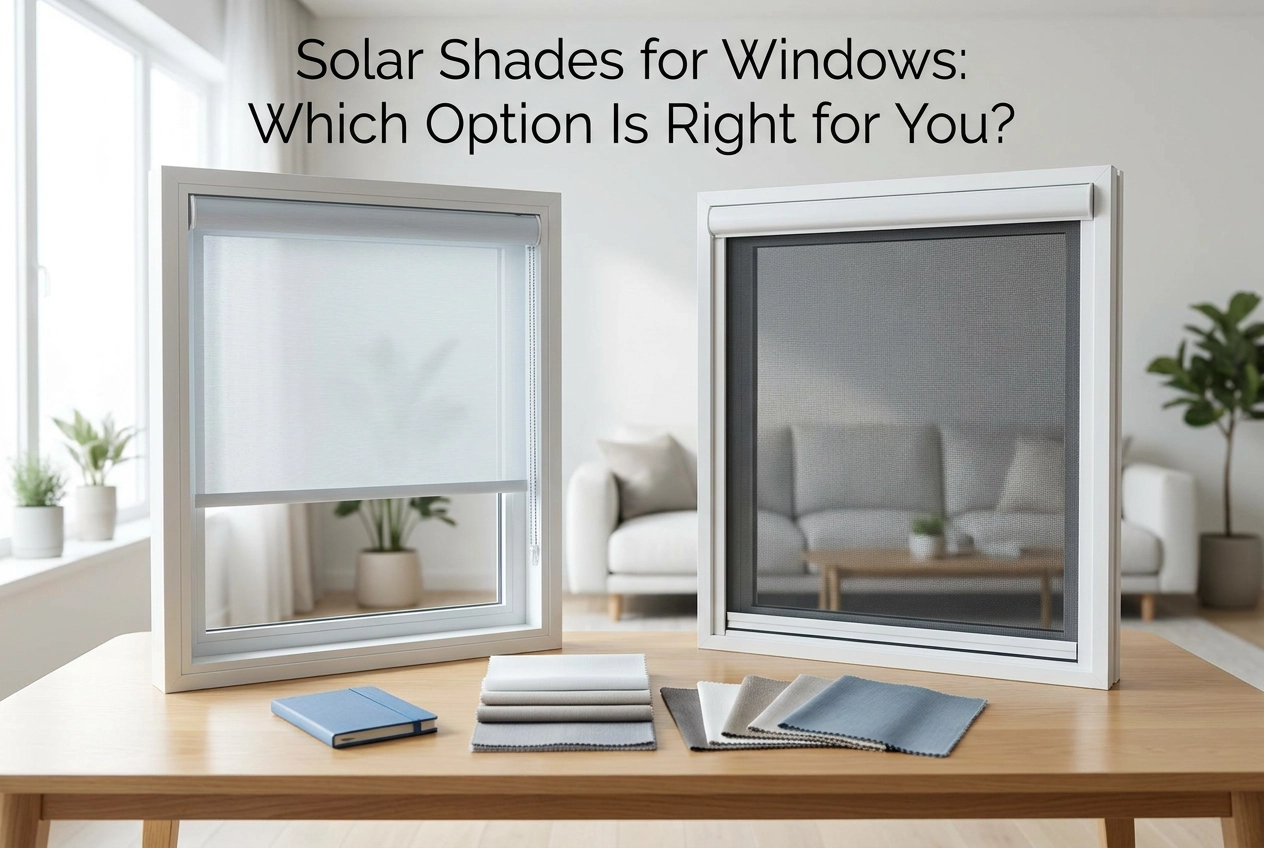
Solar shades are interior roller shades made from an open-weave mesh fabric. They mount inside or just outside your window frame and roll up and down like a standard pull-down blind. The fabric is woven with small gaps, called an openness factor, that filter sunlight rather than blocking it completely. This lets you reduce glare and UV exposure while still enjoying your outdoor view.
Solar screens, on the other hand, are framed mesh panels installed directly over the window opening, much like a traditional bug screen but engineered for sun and heat control. The big advantage of exterior solar screens is that they intercept solar energy before it ever passes through the glass, stopping heat at the source rather than reacting to it after the fact. As this breakdown of interior vs. exterior solar screens explains, that difference in placement has a real impact on thermal performance.
So why does the confusion happen? Both products use mesh fabric, both reduce heat and UV, and manufacturers sometimes blend the terminology in marketing. But the installation method, price point, and performance profile are meaningfully different. Comparing how solar shades differ from standard roller shades helps clarify where solar shades fit in the wider window treatment landscape.
At Sparkle Tech Sunscreens, the focus is squarely on exterior solar screen installation. These are custom-measured, professionally installed screens built to fit your specific windows, not something you grab off a retail shelf. Both product types share the same core goals, reducing heat, cutting glare, and protecting against UV damage, but exterior solar screens are built for homeowners who want maximum performance and a long-term solution.
How Solar Screens Actually Block Heat, Glare, and UV
Now that you know solar shades and solar screens are essentially the same thing, let’s dig into how they actually work. The science behind solar screens is simpler than it sounds, and understanding it will help you choose the right option for your home.
The Openness Factor: Your Most Important Spec
Every solar screen fabric is rated by something called the openness factor (OF), which is simply the percentage of the weave that is open space. Think of it like a t-shirt versus a mesh jersey: both are fabric, but one lets a lot more air and light through. A 1% openness factor means the weave is very tight and dense, blocking most incoming solar energy. A 15% or higher openness factor means the weave is looser, letting in more light and preserving your view but doing less heavy lifting on heat control.
The three most common options you’ll encounter are 3%, 5%, and 10%, and picking the right one really comes down to your window’s orientation and how much sun it takes in throughout the day.
- 3% openness is the right call for west- or south-facing windows that get hammered by intense afternoon sun. You’ll sacrifice some outward visibility, but your room will stay noticeably cooler.
- 5% openness is the most popular choice for a reason. It balances solid heat control with a reasonable view-through, making it a great fit for most residential windows.
- 10% openness works well for north-facing rooms or spaces where glare is minimal and preserving your view matters more than maximum heat blocking.
According to Phifer’s solar screen guide, quality solar screen fabrics are available in options ranging from 65% to 97% heat-blocking depending on the density and color you choose. Exterior installations perform especially well because the screen intercepts solar energy before it even reaches your glass.
The View-Through Tradeoff (And the Color Surprise)
Here is where most buyers hit their first real decision point. Denser screens block more heat but reduce how clearly you can see outside during the day. Looser screens keep your view crisp but let more heat sneak through. There is no way around this tradeoff, so it helps to prioritize which matters more in each room.
There is one counterintuitive fact worth knowing before you pick a color: darker screen fabrics actually give you better outward visibility than lighter ones at the same openness factor. Most people assume a lighter, more neutral color would be easier to see through, but the opposite is true. Lighter fabrics scatter more light inward, which creates a kind of visual noise that muddies the view. Darker fabrics absorb that light instead, making the weave itself less visually distracting and the view outside sharper and cleaner. If clear views matter to you, go darker before you go looser on the openness factor.
Interior Solar Shades vs. Exterior Solar Screens: Side-by-Side
Now that you understand how solar screens work, let’s talk about where they go, because location makes a bigger difference than most people expect. Here’s a straightforward side-by-side look at both options across the dimensions that matter most for everyday homeowners.
Heat Blocking Effectiveness
This is where the gap between the two options is most dramatic. Exterior solar screens intercept sunlight before it ever touches your glass, stopping solar heat gain at the source. Interior solar shades, by contrast, filter light that has already passed through the window and converted to heat inside your home. The result? Exterior screens can reduce heat gain by up to 80%, while interior shades typically top out around 40%. If keeping your home cool is the priority, exterior wins by a wide margin.
UV and Glare Reduction
Both options do a solid job here. Interior solar shades filter UV rays and soften harsh glare while still letting in that comfortable, diffused natural light. Exterior screens accomplish the same thing from outside. The key variable for both is the mesh openness factor: a tighter weave blocks more sun and UV but reduces your outward view, while a more open weave lets you see outside more clearly but sacrifices some solar protection.
Bug Protection
Interior solar shades offer exactly zero bug protection. They are window treatments, not barriers. Exterior solar screens, mounted on the outside of your window frame, physically block insects from reaching the glass entirely, giving you sun control and pest control in one solution.
View Impact, Installation, and Cost
Both options preserve your view to varying degrees depending on mesh density. For installation, interior roller shades are widely available as DIY products from big-box retailers, ranging from roughly $30 to $200 or more per window depending on quality and motorization. Exterior solar screens are custom-cut and professionally installed, priced per window with labor included. You can learn more about how interior versus exterior solar screens compare on heat blocking before making your decision.
Maintenance
Exterior screens are built for the outdoors using weather-resistant mesh that typically needs nothing more than an occasional rinse. Interior shades stay protected from the elements, so light dusting or vacuuming is usually all the upkeep required.
Which One Is Right for You?
Interior solar shades are a smart fit for renters, apartment dwellers, or anyone who wants a flexible, budget-friendly, good-looking window treatment without a permanent installation. Exterior solar screens are the better choice for homeowners who want the full benefits of exterior rolling window shades, including maximum heat reduction, dual sun-and-bug protection, and a durable low-maintenance solution built to last through years of direct sun exposure.
How Solar Screens Compare to Curtains, Shutters, and Smart Blinds
So you’ve seen how solar screens stack up against each other in terms of placement and performance. But how do they compare to the other window treatments already sitting in most homes? Let’s break it down category by category.
Solar Screens vs. Curtains and Drapes
Heavy curtains and drapes can absolutely reduce heat and light, but there’s a catch: they only work when fully closed. The moment you open them to enjoy the view or let in natural light, all that protection disappears. There’s also a less obvious problem. When thick curtains hang directly against warm glass, they trap radiant heat in the fabric between the textile and the pane, essentially creating a heat pocket inside your room. Solar screens avoid this entirely by filtering heat before it even enters your window opening, all while keeping your view clear and your room bright.
Solar Screens vs. Plantation Shutters
Plantation shutters look great, and they do give you some control over light and airflow through the louver angle. However, they offer zero UV filtering and zero bug protection, no matter how you position the slats. They’re also among the priciest per-window treatments available, with quality hardwood shutters running significantly more than a professional solar screen installation. For a deeper look at how these two options compare on energy performance, this breakdown of plantation shutters vs. solar shades is worth a read. You’re paying a premium for aesthetics, not for sun or insect protection.
Solar Screens vs. Smart Blinds and Motorized Shades
Motorized window shades are genuinely cool technology, and the market reflects that enthusiasm, growing at a 13.4% CAGR through 2033. But that innovation comes with a premium price tag, app dependencies, batteries or wiring, and occasional technical hiccups. Traditional exterior solar screens deliver comparable heat-blocking performance at a fraction of the cost, with no software updates required.
Here’s the important nuance though: solar screens don’t compete with smart shades. They complement them. A solar screen acts as a passive, always-on thermal barrier that keeps heat and UV out around the clock, reducing your HVAC workload whether your smart shades are open, closed, or somewhere in between. It’s a low-tech foundation that makes every other window treatment work more efficiently.
Where Solar Screens Uniquely Win
No curtain, shutter, or interior blind can simultaneously block solar heat, filter UV rays, cut glare, protect against insects, and still let you see outside. That specific combination is what makes solar screens genuinely unique. Every competing product requires a trade-off, typically your view or your bug protection or both. Solar screens give you all four benefits in one simple, durable solution.
The Benefit Most Solar Screen Buyers Do Not Expect: Bug Protection
Here is something most people never think about when shopping for solar screens: you are getting a bug screen at the same time.
Exterior solar screens are built exactly like standard insect screens. They use the same aluminum frame, the same installation method, and drop into the same window tracks. The only difference is the mesh itself. Standard insect screening uses a light, open weave that stops mosquitoes and flies but does almost nothing to block sunlight. Solar screen mesh is denser and engineered to intercept solar radiation before it passes through the glass. Because the mesh is tight enough to block heat and UV rays, it is also tight enough to block insects. You get both benefits from one screen, in one installation. Learn more about how solar and insect screens compare to understand why so many homeowners make the switch.
Interior solar shades cannot do this. They sit behind the glass, which means the heat has already entered your home before the shade does anything about it, and they offer zero insect protection since they are never in the actual window opening.
That is exactly where Sparkle Tech’s solar screens stand out. When Sparkle Tech rescreens your windows with solar mesh, you are not just replacing worn-out bug screens. You are upgrading your home’s energy performance at the same time, one installation, two problems solved.
If you live somewhere warm and open your windows regularly, this combination matters even more. You are dealing with heat, bugs, and glare all at once, and one solar screen handles all three simultaneously. Even better, screen doors can be fitted with the same solar mesh, extending that dual protection to every entry point in your home for a complete, consistent system.
DIY vs. Professional Solar Screen Installation: What to Know Before You Decide
DIY solar screen kits have never been more accessible. You can walk into a home improvement store or order online and find mesh rolls, aluminum frame channels, spline, and corner pieces all bundled together and ready to go. For a cost-conscious homeowner, the pitch is hard to ignore: buy the materials for a few dollars per screen, spend a Saturday afternoon on it, and skip the installation bill entirely.
The problem is that the savings often don’t hold up once the screen is actually on the window.
The most common DIY failure comes down to fit. Standard kit sizes are sold in fixed increments, and most homes have at least a few window openings that fall between those sizes. When the frame doesn’t match the opening precisely, you get gaps along the edges. Those gaps are exactly where heat sneaks in, glare cuts through, and insects find their way past a screen that was supposed to stop them. Mesh tension is another issue that catches a lot of first-timers off guard. Without the right spline roller technique and consistent pressure, the mesh sags, pulls away from the channel unevenly, and wears out much faster than it should, especially on windows that get heavy sun exposure through the day.
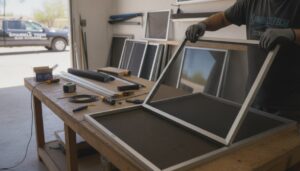
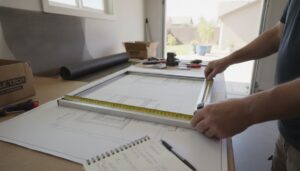
Professional installation solves these problems at the source. A local specialist measures each window opening individually and fabricates both the frame and the mesh to those exact dimensions, not to the nearest standard size. The result is a tight, gap-free fit that actually performs the way solar screens are supposed to.
Speed matters too. Ordering custom products online or waiting on a large retailer can stretch into weeks. Sparkle Tech offers same-week service, so you are not sitting in a hot house while your order works its way through a fulfillment queue.
The long-term cost math also tips toward professional installation. A DIY screen that sags, gaps, or lets bugs through after one season was never really a savings to begin with. Professionally installed screens are built with quality materials, fitted correctly from day one, and backed by repair and rescreening options if anything ever needs attention down the road. That kind of durability turns a window treatment into a long-term investment rather than an annual replacement project.
How to Choose the Right Solar Screen for Your Windows
Once you’ve decided to go with solar screens, the next step is picking the right combination of specs for your home. There are four things to nail down: openness factor, fabric color, sizing, and ongoing care.
Openness Factor: Match It to Your Window’s Direction
The openness factor is a percentage that describes how tightly the mesh is woven. A lower number means a tighter weave, more heat blocked, and less light coming through. For west- and south-facing windows that take the brunt of afternoon sun, a 3% or 5% openness factor is the smart choice. Those windows receive the most intense solar heat, so you want maximum blocking power. For east- or north-facing windows, where glare is the bigger concern but intense heat is less of a problem, a 10% openness factor gives you comfortable light filtering without making the room feel too dark. You can learn more about how to choose an openness factor and color to dig deeper into the specifics.
Fabric Color: Visibility vs. Frame Matching
Color is a separate decision from openness factor, and it affects two things: how well you can see outside and how the screen looks on your home. Charcoal and dark bronze fabrics reduce interior reflection, which actually makes it easier to see through the mesh clearly. They also deliver strong UV performance. Beige and silver options blend nicely with lighter-colored window frames and siding, but they can create a slightly washed-out view in bright conditions.
Custom Sizing and Professional Installation
A screen that doesn’t fit precisely leaves gaps at the edges, and those gaps let heat and UV sneak right past the mesh. Professional installation accounts for frame depth, mounting surface, and window type, whether you have single-hung, double-hung, sliding, or casement windows, to ensure a tight seal all the way around.
Maintenance and When to Replace
Solar screens are low-maintenance. A periodic brush-down or gentle rinse clears out dust, pollen, and debris that can clog the mesh over time. If you’d rather skip the ladder, professional screen cleaning handles a thorough refresh without removing the screens at all. That said, keep an eye out for bent frames, torn or sagging mesh, loose corner connectors, or visible gaps at the edges. When those signs show up, it’s time to consider rescreening the existing frame or replacing the screen entirely.
What Does Solar Screen Installation Cost — and Is It Worth It?
Let’s talk numbers, because for most homeowners, cost is the question that matters most before any home improvement decision.
Professionally installed exterior solar screens typically run $50 to $150 per window, depending on window size, frame material, and the mesh specification you choose. For a home with ten windows, you’re looking at a total investment somewhere in the $500 to $1,500 range. According to 2026 cost data from Angi, that positions solar screens as one of the more affordable permanent window treatment upgrades available to homeowners today.
How That Stacks Up Against the Alternatives
The value becomes even clearer when you compare solar screens side by side with other popular options. Plantation shutters typically run $200 to $350 or more per window once you factor in installation. Motorized smart shades can easily exceed $500 per window. Solar screens deliver comparable or often superior heat-blocking performance at a fraction of those costs, which matters a lot if you have a dozen sun-facing windows to cover.
The Energy Savings Side of the Equation
Beyond upfront cost, there’s real money to be recouped over time. Research from e-architect.com notes that the U.S. Department of Energy has found solar screens can reduce annual cooling costs by 7 to 15 percent. Since air conditioning is often the single biggest energy expense during warm months, reducing how hard your AC works translates directly into lower monthly bills. Screens built to 90% heat blockage specs are especially effective on south- and west-facing windows where solar gain hits hardest. Spread a modest installation cost across several summers of savings, and the payback period can be surprisingly short.
A Growing Market Built Around This Exact Decision
You’re also making this decision at the right time. The global window coverings market is projected to reach USD 44.1 billion by 2036, fueled largely by energy efficiency demand and residential renovation activity. Homeowners aren’t thinking of solar shading as a decorating choice anymore; they’re treating it as a home value and comfort investment.
One more practical advantage worth mentioning: local installation typically happens within the same week. There’s no waiting several weeks for custom fabrication and shipping from a national retailer. You make the decision on Monday, and you could be enjoying cooler rooms and lower energy use by Friday.
The Bottom Line on Solar Shades for Windows
Here is the simplest way to think about everything covered in this guide. If you rent or just want softer light control, interior solar shades are a solid, no-commitment option. If you own your home and want real heat reduction, UV protection, and bug control all in one product, exterior solar screens are the stronger choice by a wide margin. Exterior screens can cut heat gain by up to 80%, compared to roughly 40% for interior shades. That difference is not small.
Once you have settled on exterior screens, the single most important spec decision you will make is openness factor. Everything else follows from it. A 5% to 7% openness gives most homeowners the best balance of view, glare control, and heat blocking. Start there and adjust based on how much privacy or natural light your situation calls for.
On installation, precise fit matters more than most buyers expect. Gaps in the frame allow heat to sneak past the screen and cancel out much of the performance benefit. Professional installation removes that risk entirely, and with same-week service from a local specialist like Sparkle Tech Sunscreens, you are not waiting weeks to feel the difference.
Sparkle Tech is also more than a one-time installer. They handle screen repair, rescreening, and cleaning, making them a long-term partner for keeping your windows performing well season after season.
Ready to get started? Contact Sparkle Tech Sunscreens for a same-week solar screen installation quote.
Conclusion
Choosing the right solar shades does not have to be complicated. To recap the key points: solar shades block heat and glare while preserving your outdoor view, opacity levels determine how much privacy and light control you get, and the right fabric choice depends on your room’s specific needs and sun exposure. Factor in your lifestyle, and you will have a much clearer picture of what works best for your space.
Now that you know what to look for, you are ready to make a confident, informed decision. Browse our full collection of solar shades, request a few free fabric samples, or connect with one of our window treatment specialists for personalized guidance.
Your home deserves to be comfortable, stylish, and protected from the sun’s harsh effects. The perfect solar shade is out there waiting for you.