
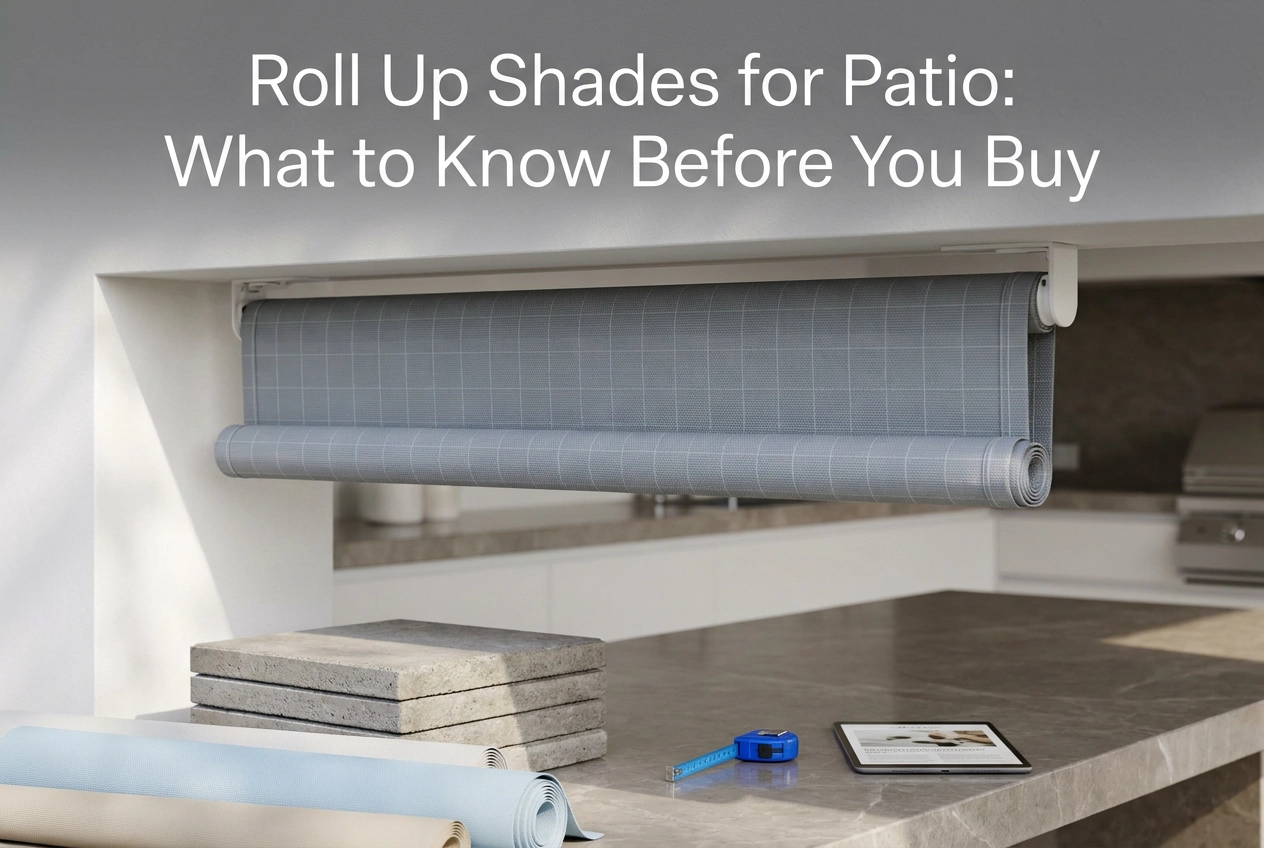

Your patio should be a place to relax, not a spot where you’re squinting through harsh sunlight or sweating through an afternoon that should feel enjoyable. The right window treatment can completely transform your outdoor space, and roll up shades for patio areas have become one of the most popular solutions for homeowners who want both function and style without a complicated installation.
But with so many options on the market, choosing the right product can feel overwhelming, especially if you’ve never purchased outdoor shades before. Should you go with solar fabric or solid blackout material? Manual or motorized operation? What size do you actually need?
This guide is designed specifically for beginners who want straight answers before spending their money. We’ll walk you through the most important factors to consider, compare the most common types of roll up patio shades available today, and help you understand exactly what separates a quality product from one you’ll regret buying. By the end, you’ll have the confidence to make a smart, informed purchase for your outdoor space.
What Are Roll-Up Patio Shades, Exactly?
Roll-up patio shades are exterior fabric panels that mount above a patio opening inside a compact housing unit, then retract vertically when not in use. Unlike fixed screen panels or permanent screen enclosures, the defining feature is the retractable roll mechanism, which lets you deploy or stow the shade on demand. This flexibility makes them fundamentally different from any stationary screening solution bolted into place around your patio perimeter.
The placement of these shades is what gives them a significant performance edge over conventional interior blinds. Interior blinds sit inside your home and can only reduce heat after solar energy has already passed through the glass. Exterior roll-up shades intercept sunlight before it reaches the glass, which means they can reduce heat gain by up to 80%, compared to roughly 40% for interior alternatives. As explained in this comparison of outdoor solar shades vs. regular shades, outdoor-rated products are also engineered to handle UV exposure, moisture, and temperature swings that would degrade standard interior roller shades quickly.
The terminology in this product category creates real confusion for first-time buyers. “Solar shades,” “sun shades,” “outdoor roller shades,” and “roll-up screens” are all used interchangeably in retail settings, but they can reference different mounting systems and material specs. Always confirm whether a product is rated for exterior use before purchasing.
Two core material types exist within this category. Solar screen mesh uses an open-weave fabric that blocks UV radiation and reduces glare while maintaining outward visibility and allowing airflow; it can also deter insects. Solid fabric delivers maximum shade and privacy with zero visibility through the panel, making it the right choice when full blockout or weather protection is the priority. Understanding which material fits your use case before shopping saves significant time.
Finally, professional-grade roll-up shades installed by a rescreening specialist use heavier-gauge mounting hardware and commercial-quality mesh designed for long-term exterior exposure. The benefits of exterior rolling shades vs. interior options become most apparent when the right materials and hardware are matched to the installation from the start, something box-store kits rarely guarantee.
Openness Factor Explained: 1% vs. 5% vs. 10%
The openness factor is the single most important specification you will choose when selecting roll-up shades for your patio. It refers to the percentage of open (void) space in the solar screen’s mesh weave. A tighter weave means a lower percentage, which blocks more sunlight, traps less heat on your patio, and provides greater privacy. A looser weave means a higher percentage, which allows more natural light and view to pass through while offering less thermal protection. Understanding this one number will guide every buying decision that follows.
1% Openness: Maximum Heat Blocking and Privacy
A 1% openness screen blocks approximately 99% of incoming UV rays, making it the strongest performer for heat reduction and daytime privacy. Outward visibility is reduced to general shapes and movement rather than crisp detail, which is an acceptable trade-off for homeowners whose primary concern is keeping afternoon heat out. This rating is the recommended default for south- and west-facing patios in hot climates, where direct sun exposure during the hottest hours of the day demands serious solar control. According to the Solar Screen Openness Factor Explained guide from Blindsgalore, fabrics at this tightness level deliver the strongest combination of glare reduction and energy performance available in a roll-up shade.
5% Openness: The Balanced, Most Popular Choice
A 5% openness shade blocks roughly 95% of UV rays while preserving a clear, softened outward view. Industry sources consistently describe this rating as the most common residential purchase because it delivers meaningful heat reduction without creating a closed-in atmosphere. You can still see your yard, garden, or street clearly; the harsh glare on a laptop or outdoor television is simply removed. This is the right starting point for homeowners who want genuine shade performance combined with an open, comfortable feel on their patio.
10% Openness: View First, Heat Reduction Second
A 10% openness fabric allows the most natural light through and delivers the best panoramic view of any option in this comparison, while still blocking around 90% of UV rays. However, its heat-blocking performance is noticeably lower than 1% or 5% options, making it a poor choice for patios with intense afternoon sun. It is best suited to north-facing patios, heavily shaded outdoor spaces, or climates with mild sun exposure where preserving the view matters more than aggressive thermal control. The 1% vs. 3% vs. 5% vs. 10% Solar Shade Openness Guide from Blinds Chalet reinforces that the 10% category trades heat performance for light transmission, a worthwhile trade only in lower-sun scenarios.
Practical Decision Guide
Homeowners in hot climates with afternoon sun hitting their patio directly should default to 1% or 5% for meaningful heat reduction. A 10% shade will block some UV rays but will underperform in intense conditions. For balanced everyday use, 5% is the most broadly recommended choice. For maximum privacy on a street-facing or urban patio, 1% is the clear answer.
One additional point worth understanding: exterior roll-up solar screens placed outside the patio opening are significantly more effective for heat reduction than interior blinds or shades. Exterior screens intercept solar energy before it enters your space, stopping heat at the source rather than managing it after it has already built up indoors. This is why a properly selected roll-up patio shade, regardless of openness rating, outperforms any interior solution for thermal comfort.
Roll-Up Shades vs. Fixed Solar Screens vs. Interior Blinds
Choosing the right patio shading solution comes down to three core options, each with distinct trade-offs across flexibility, protection, and cost. Understanding where each one excels, and where it falls short, makes the decision straightforward.
Exterior roll-up patio shades are retractable panels that mount above the patio opening and deploy on demand. When you roll them down, they simultaneously block UV radiation and create a physical barrier against insects, delivering dual protection that neither fixed screens nor interior blinds can match on their own. When retracted, they disappear into their housing, restoring the full open-air feel of your outdoor space. This makes them the clear winner for patios used across multiple seasons, where you want shade in August and an unobstructed breeze in October. Exterior solar shades intercept solar heat before it passes through any glass, reducing heat gain by up to 80 percent compared to roughly 40 percent for interior alternatives.
Fixed solar screens are permanent panels attached directly to a patio or window frame. Because they have no moving parts, they offer maximum structural stability and represent a lower upfront cost than roll-up systems. The trade-off is straightforward: they cannot retract. If year-round shading is always desirable on your patio and you never need to open the space fully, fixed screens are a durable, low-maintenance solution worth considering.
Interior blinds and solar shades are mounted inside the home, which means solar heat has already penetrated the glass before the shade can intercept it. According to interior vs. exterior solar shade discussions among homeowners, this placement difference is the most commonly misunderstood limitation of interior products. They provide zero insect protection and are not engineered for outdoor patio use at all.
The table below summarizes the key differences:
| Feature | Roll-Up Exterior Shades | Fixed Solar Screens | Interior Blinds |
|---|---|---|---|
| Retractability | Yes | No | Yes (indoor only) |
| Bug protection | Yes (when deployed) | Yes (always) | No |
| UV/heat blocking | Up to 80% | High, always active | Up to 40% |
| Installation complexity | Moderate to high | Low to moderate | Low |
| Maintenance | Periodic cleaning, motor servicing if motorized | Minimal | Easy |
For a deeper look at how outdoor shading products compare by category, this outdoor shade vs. awning guide offers additional context on mounting and use-case differences.
The recommendation is clear. Homeowners who want seasonal flexibility, bug protection, and maximum solar heat reduction in a single solution should prioritize exterior roll-up solar screen shades. Fixed screens suit always-shaded patios on a tighter budget, while interior blinds should be reserved for indoor window light control rather than any outdoor shading goal.
The Benefit Most Buyers Overlook: Bugs and UV Blocked at Once
Most homeowners shopping for roll-up shades for their patio focus entirely on sun control and heat reduction. The bug-blocking capability of quality solar screen mesh rarely makes it into the conversation, yet it may be the single most practical benefit you get from this type of installation.
Solar screen mesh is a tightly woven fabric engineered with small, consistent openings across its surface. When that mesh is specified at a sufficiently dense weave, such as a 20×20 opening-per-inch rating, the apertures are physically too small for mosquitoes, gnats, and common flies to pass through. This means a properly specified roll-up patio shade is simultaneously intercepting UV radiation, reducing heat gain by up to 80%, and forming a barrier against the insects that make summer evenings miserable. You are not choosing between sun protection and bug protection; you are getting both from a single installation. You can review rolls of solar screen mesh to understand how mesh density varies across product lines and how that affects performance.
Compare that to a patio umbrella or a shade sail. Both are legitimate tools for overhead sun blocking, but neither creates any kind of perimeter barrier. Insects approach from the sides, from ground level, and from every angle a flat overhead canopy leaves open. A family sitting under a shade sail on a July evening is still fully exposed to mosquito activity during peak dusk hours, and no amount of umbrella coverage changes that.
The consolidation benefit here is significant. A traditional screen enclosure is a permanent, expensive structure that requires permits and professional construction. A set of roll-up patio shades mounted on the perimeter of your outdoor space achieves comparable insect exclusion when deployed, then retracts completely when you want an open-air experience. Two problems, one installation.
This is precisely where professional expertise separates a high-performing result from a frustrating one. Mesh density directly affects three competing variables: insect exclusion, solar heat rejection, and outward visibility. Tighten the weave too aggressively and you sacrifice the view; open it up too much and insects find their way through. A professional rescreening specialist selects mesh density after evaluating all three factors for your specific patio orientation and use patterns. Generic big-box products typically optimize for one variable at the expense of the others. Outdoor solar screen fabric options from manufacturers like Phifer illustrate just how wide the specification range actually is across professional-grade materials.
The honest framing for this upgrade is not comfort. It is usability. A patio you abandon at dusk because of bugs or retreat from at noon because of heat is not functioning as living space. The right roll-up shade installation, properly specified by a rescreening professional, turns that underused square footage into a room you actually occupy.
DIY vs. Professional Installation: What the $400 Savings Claim Leaves Out
The appeal of DIY solar screen tutorials is real and understandable. A widely circulated YouTube guide has attracted over 107,000 views with the promise of saving $400 per installation, and that figure is not fabricated. For a single, standard-sized window screen on a flat exterior wall, a motivated homeowner with basic tools can genuinely capture savings in that range. The problem arises when that same benchmark gets applied to a full patio roll-up shade system. Patio installations involve custom sizing, heavier mounting hardware, side track alignment, tensioning mechanisms, and often multiple panels spanning a large opening. These are fundamentally different projects, and treating them as equivalent sets up a cost comparison that simply does not hold.
What DIY Tutorials Leave Off the Invoice
The hidden costs that tutorial videos rarely address are where the savings evaporate. The most common and expensive failure point is incorrect measurement. Patio roll-up shades are manufactured to specification, which means a measurement error does not result in a minor adjustment. It results in a full material reorder, at full price. That single mistake can consume the entire projected savings before a single bracket is mounted.
Beyond measurement, there are four additional costs that tutorials routinely omit:
- Substandard mounting hardware: Generic retail hardware is typically rated for interior use. Outdoor patio shades face sustained wind load, UV exposure, and seasonal temperature swings. Hardware that cannot handle those conditions will fail, often pulling fasteners from the mounting surface entirely.
- No tensioning system: Roll-up shades require calibrated tension to deploy evenly and retract cleanly. Without it, fabric sag develops within a season or two, creating uneven shading and accelerated wear at stress points.
- Voided warranties: Most manufacturers void warranty coverage on DIY installations. If the fabric tears or the roller mechanism fails, the homeowner absorbs the full replacement cost.
- Missed structural issues: A professional installer observes what is behind and around the mounting surface. Frame rot, corroded anchor points, and deteriorating stucco are routinely caught during professional installation and addressed before they become expensive structural repairs. A DIY install proceeds over those problems without ever identifying them.
What Professional Installation Actually Delivers
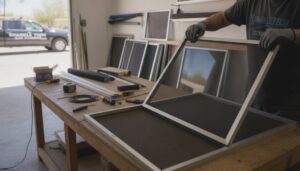
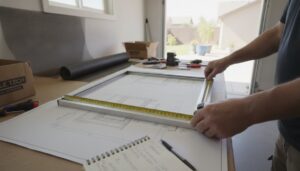
Professional installation begins with precision measurement before any material is ordered, eliminating the reorder risk described above. Installers also select hardware matched to the specific mounting substrate. Wood pergola posts, aluminum framing, poured concrete, and stucco exteriors each require different anchor types and fastener specifications. A single generic hardware approach appropriate for one surface type may be wholly inadequate for another. This expertise is detailed in Your Complete Guide to Patio Roller Shades, which frames sizing, material selection, and installation methodology as interdependent decisions, not separate steps.
Tension calibration at installation also ensures that the roll-up mechanism operates smoothly for years, not just weeks. That upfront precision directly extends system lifespan, which matters significantly over a 5 to 10 year ownership window. A professionally installed system using commercial-grade mesh and properly rated hardware will consistently outperform a DIY system assembled with retail-grade components. When a DIY install fails and requires a full redo, including new materials and a second round of labor, the total expenditure frequently exceeds what professional installation would have cost at the outset. For more complex configurations, motorized outdoor shades with side tracks represent a product category where installation variables are substantial enough that professional measurement and mounting represent a proportionally small share of total project cost.
The Honest Total Cost Comparison
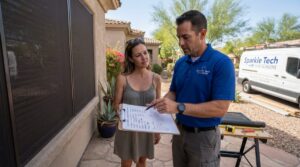
For a single small window screen, DIY can be a reasonable choice. For a full patio roll-up shade system with custom sizing, multi-panel coverage, and outdoor wind exposure, the calculation changes entirely. Rescreening specialists like Sparkle Tech Sun Screens bring measurement precision, substrate-specific hardware selection, tensioning expertise, and structural observation to every installation. When total cost of ownership is the metric, rather than day-one savings, professional installation consistently delivers better value for patio-scale projects.
What to Look for When Choosing Roll-Up Patio Shades
Once you understand openness factors and installation methods, the next step is evaluating the physical components that determine whether a roll-up patio shade holds up or breaks down within a season or two.
Mesh Material Quality
Not all shade fabric is built for the outdoors. Look specifically for PVC-coated polyester or fiberglass mesh that is rated for exterior UV exposure. These materials resist the degradation that direct sun, humidity, and temperature swings cause over time. Indoor-grade fabrics may look similar on a product page, but they will fade, warp, and lose structural integrity quickly when used outside. Solar screen openness factors typically range from 1% to 14%, and choosing an exterior-rated mesh ensures that rating stays accurate over years of use, not just the first summer.
Frame and Mounting Hardware
The fabric is only as reliable as the hardware holding it. Aluminum tracks and powder-coated steel rollers resist rust and maintain structural integrity in humid or high-heat environments. Plastic mounting components, which appear frequently in budget-tier products, crack under UV exposure and fail at connection points over time. For any permanent exterior installation, metal hardware is the minimum acceptable standard.
Retention System
Wind is the variable most buyers underestimate. Without a proper retention system, even a well-made shade panel will billow, flap, and eventually tear at its edges. Zip-track systems physically lock the fabric edge into an aluminum side channel, preventing wind from getting underneath the panel. This is especially critical for open or elevated patios. Cable guides offer a cleaner aesthetic in low-wind settings, but zip tracks deliver measurably superior wind resistance where it matters.
Motorization
The automated shades market is forecast to grow steadily through 2033, and motorized roll-up systems with remote or smart-home integration are increasingly treated as a standard feature rather than a premium upgrade. Power options now include hardwired, battery, and solar-panel-powered motors, removing the outlet-access barrier that previously limited motorization on patios.
Custom vs. Standard Sizing
Standard roll-up shades from home improvement retailers are cut to generic dimensions that rarely match real patio openings precisely. Gaps at the sides or bottom undermine both sun blocking and bug protection simultaneously. Professional measurement and custom-cut screens eliminate those gaps entirely, ensuring the shade performs the function you purchased it for. According to the Best Outdoor Shades for 2026 buyer’s guide, precision fit is one of the defining factors separating a functional outdoor shade from one that simply looks the part.
How to Keep Your Patio Roll-Up Shades Working and Looking Good
Protecting your investment starts with a few non-negotiable habits. The first is retracting your roll-up shades before heavy wind or storm events. Wind stress is the leading cause of torn fabric at attachment points and bent or loosened mounting hardware. When sustained winds pick up, the hem bar acts like a sail, transferring significant force directly to the brackets and roller housing. Rolling the shade up takes thirty seconds and prevents damage that often costs hundreds to repair or replace.
Cleaning the solar screen mesh at least twice per year is equally important. Dust, pollen, and airborne debris work their way into the mesh weave over time, and the buildup quietly degrades both UV-blocking performance and outward visibility. A dirty screen is a less effective screen, regardless of its original openness factor. The correct method matters: start with a low-pressure hose rinse to dislodge loose particles, then work a mild soap solution into the mesh using a soft brush. Rinse thoroughly and allow the shade to air dry completely before rolling it up. Rolling up a damp screen traps moisture inside the housing and creates the exact conditions mildew needs to grow. For additional guidance, Blindsgalore’s outdoor roller shade care guide outlines seasonal cleaning and winterizing steps worth reviewing.
Once a year, inspect the roller mechanism, mounting brackets, fasteners, and hem bar connections for corrosion, loosening, or fraying. Small issues caught early are inexpensive fixes; left unaddressed, they escalate to full system failure. For deeper cleaning of upper hardware, tracks, and roller tube housings that are difficult to reach safely from ground level, scheduling professional screen cleaning every one to two years is a smart investment. Sparkle Tech Sun Screens offers exactly this type of thorough service, handling the components most homeowners cannot safely access on their own.
The Bottom Line on Roll-Up Patio Shades
Three decisions determine whether your roll-up patio shades deliver long-term satisfaction or fall short within a season. Choose your openness factor first: 1% mesh for south-facing and west-facing patios where afternoon heat and privacy are priorities, and 5% mesh where you want balanced outward visibility without sacrificing meaningful solar control. Choose your product type second: roll-up solar screen shades outperform both fixed screens and interior blinds for any patio where you need flexibility and insect protection together. Choose professional installation third, particularly for full patio systems where precise fit and secure mounting hardware determine how long your investment lasts.
No other single product matches what solar screen mesh roll-up shades accomplish simultaneously. Heat, UV radiation, glare, and insects are all addressed by one retractable panel. Fixed screens handle bugs but cannot be raised when weather is mild. Interior blinds block some light but intercept heat indoors rather than at the exterior, where blocking it matters most.
Before contacting anyone for a quote, take two minutes to measure each patio opening width and height, then note which direction your patio faces. South and west exposures receive the most intense afternoon sun and benefit from 1% openness fabric.
Sparkle Tech Sun Screens offers same-week service for patio solar screen installation and screen cleaning. Contact us today for a free quote and get your patio ready without waiting weeks for an appointment.
Conclusion
Choosing the right roll up shades for your patio does not have to be complicated. Keep these key points in mind: match your fabric type to your privacy and light-filtering needs, measure carefully before purchasing, and decide early whether manual or motorized operation fits your lifestyle and budget. Quality materials and proper installation will always outlast a cheaper shortcut.
Your outdoor space deserves the same attention you give your indoor rooms. The right shades can reduce heat, protect your furniture, and turn an uncomfortable patio into your favorite spot in the house.
Now that you know what to look for, take the next step. Measure your space, set your budget, and use this guide as your checklist when comparing products. The perfect patio shade is closer than you think, and so is the outdoor retreat you deserve.