

Have you ever looked at your home’s exterior and thought, “Wow, when did everything get so dirty?” You’re not alone. Between the green algae creeping up your siding, the grime caked onto your driveway, and the streaky windows blocking your view, it can feel overwhelming. The good news? Power washing and window cleaning can transform your home in just a few hours.
But before you grab your phone and start calling the first company you find, there are a few things worth knowing. Booking these services without doing a little homework first can lead to surprise costs, unsatisfactory results, or even damage to your property. Nobody wants that.
Whether you’re a first-time homeowner or just someone who has never hired out for this type of work before, this guide is for you. We’ve put together five simple, practical things to know before you book power washing and window cleaning services. By the time you finish reading, you’ll feel confident, informed, and ready to make the best choice for your home.
Why Bundling Exterior Cleaning Makes Sense (and Why Timing Matters)
If you’ve ever power washed your driveway and then realized your windows still look grimy, you already understand the core argument here. Exterior dirt doesn’t stay in one place. Spring pollen settles across every surface at once. Post-winter grime coats siding, screens, and glass equally. In desert climates, dust storms leave a fine layer of sediment on everything facing outside, and monsoon season just pushes that buildup deeper into your window frames and screen mesh. A single-service visit handles one surface while the others stay dirty. Bundling power washing and window cleaning in the same appointment solves the whole picture at once.
From a purely practical standpoint, booking both services together saves you time and typically reduces your total cost. You’re paying for one trip, one setup, and one scheduling window instead of coordinating two separate appointments across two different weeks. Seasonal changes are already a recognized driver of professional exterior cleaning demand, which is why smart homeowners plan bundled visits around spring, pre-monsoon, and pre-listing season rather than reacting after the fact.
The numbers back up why this matters. The residential window cleaning market was valued at $3.52 billion in 2025 and is projected to reach $5.2 billion by 2035, growing at a steady 3.9% annually. The pressure washing industry is experiencing similar momentum heading into 2026, confirming that homeowners increasingly treat professional exterior cleaning as routine maintenance, not a one-time splurge.
Property managers, real estate agents, and sellers prepping for listing season are especially motivated to bundle. Curb appeal is measurable and buyers notice dirty exteriors immediately. If you’re in that group, timing your bundled exterior cleaning before your home hits the market is one of the highest-return preparation steps you can take.
One more thing worth knowing: same-week service availability is increasingly rare among larger companies. Local providers who can turn around an estimate and schedule your visit quickly have a genuine edge in 2026, when clients expect responsiveness, not a two-week waitlist.
What Pressure Washing Actually Does to Your Window Screens
Here’s something most homeowners don’t realize until it’s too late: window screens and power washers are a genuinely bad combination, and the damage often doesn’t show up until days after the job looks “done.”
Standard residential power washers operate anywhere from 1,500 to 3,000+ PSI. That’s enough force to strip paint, etch concrete, and yes, warp aluminum screen frames in a single pass. The safe rinsing pressure for window screens maxes out at around 30 PSI, which is roughly what a garden hose on a gentle shower setting produces. The gap between those two numbers explains almost everything. Fiberglass mesh tears, aluminum frames bend, and the spline (the small rubber cord that holds the screen mesh inside its frame) gets blown right out of its channel before you’ve even moved on to the next window.
What makes this trickier is that even lower PSI settings don’t solve the problem. When water pressure hits a screen, it doesn’t flush debris out through the mesh. It pushes loose dust, pollen, and grime deeper into the warp and weft intersections of the weave, essentially packing it in. The screen looks cleaner on the surface, but it’s actually filtering worse than before because the mesh openings are now partially blocked from the inside.
The structural damage follows a similar delayed pattern. Mesh displacement from pressure washing isn’t always visible right after the job. As the screen dries and the material settles under tension over the next few days, that’s when you start to see sagging, bowing, and small pinhole tears that bugs are happy to use as entry points.
This is exactly why screen damage from pressure washing is one of the most common drivers of early rescreening calls. What felt like a time-saving shortcut ends up creating a repair cost that could have been avoided entirely.
It also explains why [screen cleaning is treated as a completely separate service category](https://store.millasur.com/wash-window-screens-cvvw.html) within the professional window cleaning industry, with its own tools, techniques, and pressure parameters. Grouping it with a standard power wash job is like using a power sander where you need a soft cloth. The intent might be the same, but the outcome is very different.
Bug Screens vs. Solar Screens: They Do Not Clean the Same Way
Not all window screens are created equal, and this distinction matters a lot when you’re planning any kind of exterior cleaning. Let’s break down exactly why these two screen types need to be treated as completely different products.
Standard bug screens use an 18×16 mesh weave, meaning 18 strands per inch running horizontally and 16 running vertically. That configuration is intentionally open and airy. Its whole job is to let a breeze through while keeping mosquitoes and flies out. Solar screens, on the other hand, are built from a dense, PVC-coated polyester mesh rated at an 80 to 90 percent shade factor. That means they block up to 90 percent of incoming solar radiation before it ever reaches your glass. The tradeoff is that this denser material is heavier, stiffer, and significantly more sensitive to rough cleaning methods. What works fine on a standard bug screen can permanently destroy a solar screen.
Because solar screens are so tightly woven, they also act almost like an air filter sitting on your window. Dust, pollen, and fine debris get caught in the mesh rather than passing through, which means they get dirty faster than bug screens and need more frequent cleaning cycles. Here is the catch though: that same tightly packed debris requires a gentler touch to remove. If you scrub aggressively or blast it with force, you crush the mesh fibers rather than cleaning them. Professionals in the window cleaning industry community have noted for years that even mechanical screen-cleaning machines make barely a dent on heavily soiled solar screens, with experienced technicians recommending specialty chemical solutions applied by hand instead.
There is also a real energy cost to neglecting solar screen maintenance. A clogged solar screen loses its ability to intercept infrared radiation effectively, which means more heat gets through to your glass, your indoor temperatures rise, and your air conditioner works harder. This is not just a curb appeal issue. It is a home energy issue with a direct line to your utility bill.
Pressure washing makes all of this dramatically worse. The dense mesh on a solar screen resists water penetration, so instead of water flowing through evenly, the force of a pressure stream concentrates against the weave and bends or creases the fibers. PVC-coated polyester does not spring back from that kind of deformation. Once the mesh is crushed, the shade performance drops permanently, and the only fix is full rescreening. You can learn more about how to clean window screens safely from manufacturer guidance that consistently points toward low-force, gentle methods for any screen type.
When you book an exterior cleaning service, do not assume your provider knows what kind of screens you have. Most general pressure washing and window cleaning companies do not ask, and they will apply the same method across every window on your home. Before anyone arrives, walk your house and make note of which windows have standard bug screens and which have solar screens. Solar screens are typically darker, noticeably stiffer, and you can tell from inside the room because they visibly reduce the amount of light coming through. Telling your provider upfront protects you from damage that often shows up well after the crew has left and the invoice is already paid.
What a Complete Exterior Cleaning Bundle Should Actually Include
So what does a truly complete exterior cleaning visit actually look like? Most homeowners assume that booking power washing and window cleaning covers everything on the outside of their home. The reality is that a thorough job breaks down into four distinct categories, and most service providers only handle two of them well.
The four categories every complete bundle should cover:
- Surface pressure washing covers driveways, sidewalks, patios, and siding. This is the heavy-lifting category where high-pressure equipment shines.
- Window cleaning means both exterior and interior panes, not just a quick exterior rinse during the pressure washing pass.
- Screen cleaning requires low-pressure, screen-safe methods specifically. Using standard pressure washing equipment on screens causes mesh tears and bent frames, which earlier sections of this post covered in detail.
- Screen condition assessment is a visual inspection to flag mesh damage, sagging, oxidized frames, or anything that needs repair or rescreening before the next season hits.
Most companies offering power washing and window cleaning handle categories one and two without any trouble. Categories three and four are where the gap appears. Screen cleaning is typically listed as a priced add-on rather than a default inclusion, meaning if you do not ask about it directly, it gets skipped entirely or handled with the wrong equipment. This is a consistent pattern across the industry, not an exception.
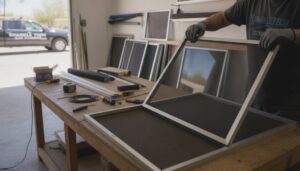
Sparkle Tech Sunscreens fills that gap by combining screen cleaning with rescreening and solar screen installation, making it possible to complete all four categories in a single week without coordinating multiple vendors.
This bundled approach is especially valuable for post-construction cleaning, one of the fastest-growing service niches heading into 2026. Construction dust infiltrates screen mesh, coats window frames, and settles on every surface at once, so addressing each category separately rarely produces clean results.
Recurring seasonal packages are also worth considering. Scheduling screen cleaning alongside your regular window and surface cleaning is the most practical way to keep solar screens performing efficiently year-round, without scrambling to catch up before summer.
How to Choose the Right Exterior Cleaning Company for the Full Job
Not all exterior cleaning companies are built the same, and asking the right questions upfront can save you a lot of frustration. Here are five things to check before you book anyone for the full job.
1. Ask specifically how they handle screens
Don’t assume screen cleaning is included just because it sounds obvious. Ask directly whether they clean screens as a separate step using screen-safe methods, or whether they simply point their existing equipment at the window and call it done. A pressure washer that works great on siding can push water through mesh, bend frames, and loosen spline in seconds. You want a clear, specific answer here, not a vague “we take care of everything.”
2. Find out if they can repair or rescreen on the spot
A company that can only clean but not fix leaves you in a tough spot if damage turns up during the visit. Screen tears, bent frames, and detached spline are common discoveries during any thorough cleaning. If the company has no repair or rescreening capability, you’re looking at a second service call and potentially a long wait before the job is truly finished.
3. Check their scheduling window
In 2026, same-week availability is a real differentiator. Larger operations often book weeks out due to route density and staffing constraints. Local specialists tend to move faster and can often get to you within days of your call.
4. Ask about their cleaning solutions
Eco-friendly and low-chemical methods are quickly becoming the standard expectation, not a bonus. This matters especially for solar screens, where harsh chemicals can break down UV-blocking coatings over time and reduce their effectiveness.
5. Choose local specialists for anything screen-related
Screen repair, rescreening, and solar screen work require specific hands-on expertise and parts inventory that generalist cleaning companies simply don’t carry. A local specialist who focuses on screens brings tools, materials, and knowledge to the visit that a national franchise operation typically cannot match.
The Bottom Line on Bundling Exterior Cleaning the Right Way
Bundling power washing and window cleaning is genuinely one of the smartest moves you can make for your home’s exterior, but only when screens get the dedicated attention they deserve as their own service category. Treating screens as a quick afterthought at the end of a pressure washing visit is exactly how homeowners end up paying for repairs that a better plan would have prevented entirely.
The core rule to remember is simple: pressure and screens do not mix. Whether you have standard bug screens or solar screens, high-pressure water can tear mesh, bend frames, and push debris deeper into the material. A proper exterior cleaning plan accounts for this upfront, not after the damage is already done.
The right provider handles all three categories, power washing, window cleaning, and screen care, in a single coordinated visit or within the same week. They use screen-safe cleaning methods and can repair or rescreen on the spot if they find any damage during the visit.
Sparkle Tech Sunscreens offers same-week service for screen cleaning, rescreening, solar screen installation, and screen repair, making it a straightforward complement to your existing exterior cleaning schedule.
Before your next appointment, do a quick screen audit. Walk your home, note which windows have solar screens versus bug screens, look for any visible mesh tears or bent frames, and ask your provider directly how they handle each type. That one conversation can save you a lot of money.
Conclusion
Booking power washing and window cleaning does not have to be stressful or complicated. By knowing what to look for in a reputable company, understanding realistic pricing, preparing your property ahead of time, and asking the right questions upfront, you set yourself up for results you will actually love.
Your home deserves to look its best, and now you have the knowledge to make that happen with confidence. Do not settle for the first option you find. Take a few extra minutes to research, compare, and choose a service provider who meets your standards.
Ready to get started? Reach out to a trusted local company today, request a quote, and take that first step toward a cleaner, fresher home. You will be amazed at the difference a single afternoon of professional cleaning can make.