
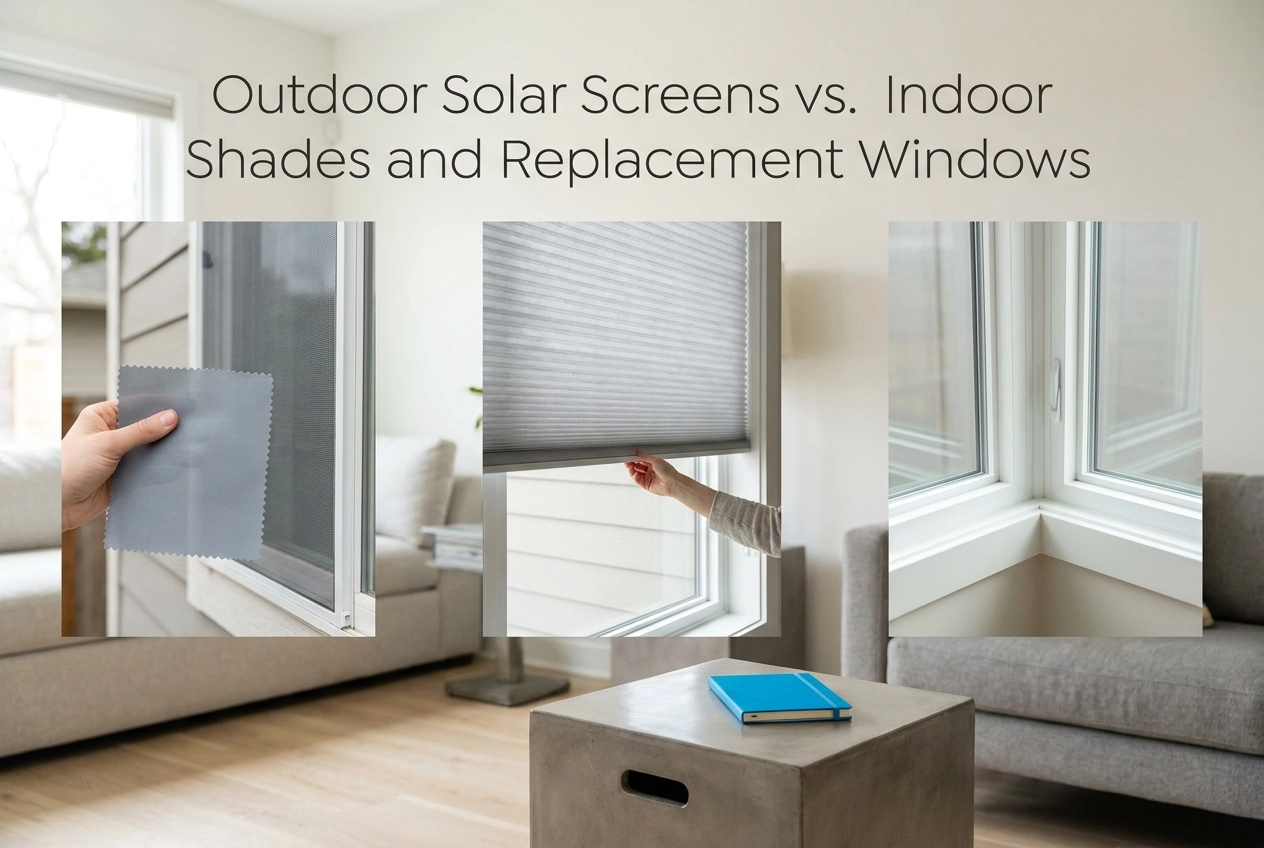

Rising energy bills and uncomfortable rooms bathed in harsh sunlight are problems that nearly every homeowner faces at some point. The good news is that several practical solutions exist, but choosing the right one can feel overwhelming, especially if you are new to home improvement. Outdoor window solar screens have become an increasingly popular option, yet many homeowners are still weighing them against indoor shades and full window replacements before making a decision.
Each solution promises to reduce heat, improve comfort, and potentially lower your energy costs. However, they work in very different ways, come with very different price tags, and deliver very different long-term results. Understanding those differences is the key to making a smart investment for your home.
In this guide, we will break down how outdoor window solar screens compare to indoor shades and replacement windows across several important categories, including cost, energy efficiency, installation, and overall effectiveness. By the end, you will have a clear picture of which option best suits your needs, your budget, and your home.
What Are Outdoor Window Solar Screens?
Outdoor window solar screens are exterior mesh panels mounted directly on the outside of your window frames, purpose-built to intercept solar heat and UV radiation before it ever makes contact with the glass. Think of them as a physical shield positioned at the outermost layer of your home’s envelope. They are typically constructed from PVC-coated polyester or fiberglass woven into a structured mesh, and they install much like a standard window screen, only with significantly more sun-blocking capability. According to Efficient Window Coverings, exterior solar screens are available as fixed-panel installations or retractable systems, and they offer shading performance far superior to anything mounted inside the home.
The reason exterior placement matters so much comes down to a simple but critical principle: stopping heat at the source rather than after it has already entered the room. Interior treatments such as blinds and roller shades act on solar energy that has already passed through the glass and converted to heat inside your living space. Exterior solar screens interrupt that process entirely. Research from Efficient Window Coverings shows that interior solar screen installations carry a shading coefficient ranging from 0.50 to 0.70, while exterior installations achieve a dramatically lower range of 0.14 to 0.33, meaning exterior screens can block significantly more heat gain at the point of entry.
What makes outdoor solar screens a particularly strong value proposition is their dual functionality. A single exterior screen serves simultaneously as a solar heat barrier and a fully functional insect screen, a combination no interior blind, shade, or window film can replicate. You get bug protection and sun control in one product, with no interior hardware required.
It is also worth being clear about what outdoor solar screens are not. They are not interior roller shades, which perform a different and weaker function. They are not solar films bonded to the glass surface, which offer no insect protection and require entirely different installation. They are not smart automated shading systems, though screens can be incorporated into retractable setups. As Phifer explains, solar screens are available across a wide range of woven mesh patterns and heat-blocking ratings from 65% to 97%.
When you begin shopping, the primary specification you will encounter is the openness factor, which describes how tightly the mesh is woven and determines how much solar energy is blocked. In consumer-facing terms, this translates to the common 80%, 90%, and 95% block rates you will see advertised. A tighter weave blocks more heat and glare but reduces outward visibility slightly, so choosing the right rating involves balancing sun control with your preference for natural light.
Outdoor Solar Screens vs. Indoor Solar Shades: What Is Actually Different
When shopping for sun control solutions, beginners often assume that solar shades and solar screens are just two names for the same thing. They are not, and understanding where each product sits relative to your window glass is the single most important concept in this comparison.
Where the Heat Gets Stopped
Outdoor solar screens intercept solar radiation before it reaches the glass surface. This is a building-envelope intervention, meaning heat is turned away at the outer boundary of your home rather than after it has already crossed inside. Interior solar shades, by contrast, are installed on the room-facing side of the glass. By the time sunlight reaches an interior shade, it has already passed through the window, heated the glass, and begun radiating warmth into your living space. The shade then tries to manage heat that is already indoors. This positional difference sounds simple, but its performance implications are substantial. Research on shading coefficients shows exterior screens can reduce solar heat gain to a level roughly two to four times better than comparable interior products, precisely because exterior placement stops the heat before the glass becomes a radiator.
Energy Performance and Your HVAC System
Because exterior solar screens reduce heat at the envelope level, your air conditioning system faces a measurably lower cooling load on hot days. Interior shades primarily reduce glare and visible light, which improves comfort perception but does not eliminate the radiant heat that has already transferred from the glass into the room. For homeowners focused on lowering electricity bills, this distinction matters considerably. Exterior screens deliver quantifiable reductions in solar heat gain that translate directly into reduced HVAC run time, while interior shades serve more as a comfort and ambiance tool than a thermal performance product.
UV Protection, Insects, and Dual-Purpose Performance
Both product types reduce UV transmission to interior furnishings, protecting fabrics, flooring, and artwork from fading. However, only exterior solar screens shield the glass itself and its rubber seals from direct UV exposure and repeated thermal stress cycling. Over years of use, this protection can slow seal degradation and reduce the risk of window edge failures. Beyond UV, outdoor solar screens carry an advantage that interior shades simply cannot match: they function as insect barriers. A quality exterior solar screen replaces your standard bug screen entirely, consolidating sun protection and pest exclusion into one product. Interior shades offer zero insect protection.
Maintenance, Durability, and What It Costs to Fix
Exterior solar screens are built to withstand outdoor conditions. When the mesh fabric wears or gets damaged, the screen can be rescreened, meaning just the mesh material is replaced within the existing frame rather than discarding the whole unit. Interior roller shades typically require full unit replacement when they fail. This repairability gives exterior screens a long-term cost advantage that is easy to overlook at the point of purchase.
Outward Views and Appearance
Interior shades offer more decorative variety and finish options suited to interior design preferences. Exterior solar screens present a clean, uniform exterior appearance and, when the correct openness factor and color are selected, can maintain comfortable outward views even at higher blocking rates. Darker mesh colors tend to provide better visibility through the screen while still controlling glare, a counterintuitive trade-off worth understanding before you choose a product. For homeowners who want strong sun control without heavy, layered interior window treatments, exterior screens consistently preserve a more open, unobstructed sightline.
Outdoor Solar Screens vs. Replacement Windows: The Cost Reality
For homeowners weighing their options against rising energy bills and uncomfortable indoor temperatures, the cost comparison between replacement windows and outdoor solar screens is one of the most important calculations you can make before spending a single dollar.
Full window replacement for a typical home runs between $8,000 and $15,000 or more, depending on window count, frame material, and installation complexity. Professionally installed exterior solar screens address the exact same problems, specifically solar heat gain and UV penetration, at a fraction of that investment. When the core problem is heat entering through your glass, it makes financial sense to evaluate the least invasive and least expensive solution first.
How Each Option Actually Blocks Heat
The technical distinction here matters enormously for beginners. Replacement windows improve thermal performance through upgraded seals that reduce air infiltration and low-emissivity (low-E) coatings that reflect infrared radiation from inside the glass assembly. These are genuine improvements, but they work primarily at the glass level and after solar radiation has already reached your window.
Exterior solar screens operate on a fundamentally different principle. They intercept solar radiation before it ever contacts the glass, regardless of what type or quality of glass sits behind the screen. As research on window solar screen energy efficiency confirms, solar screens block heat gain at the source, preventing it from building up inside the home entirely. This exterior-first interception is especially effective on west- and south-facing windows, where direct afternoon sun drives the highest cooling loads. Even older, single-pane windows perform dramatically better with a quality exterior solar screen installed in front of them.
A Mainstream Strategy, Not a Niche Workaround
Some homeowners hesitate, wondering whether solar screens are a legitimate long-term solution or simply a temporary patch. Market data answers that question clearly. The global solar shades market is valued at $7.23 billion in 2026 and is projected to reach $11.20 billion by 2034, growing at a compound annual rate of 5.5%. This level of sustained investment signals that exterior sun control is a validated, mainstream home improvement strategy embraced by millions of homeowners and builders worldwide.
Driving that growth is a single dominant motivator: energy efficiency. The broader window coverings market, valued at $18.9 billion in 2026 and growing at a 7.7% CAGR, is fueled primarily by consumers seeking lower HVAC costs and reduced electricity consumption. Comparing solar screens against energy-efficient windows consistently shows that exterior screens deliver meaningful, measurable cooling cost reductions, which is exactly what the market is demanding.
The Smart First Intervention
Positioning solar screens as a smart first step rather than a permanent compromise gives homeowners real strategic leverage. Install exterior screens now, monitor your summer utility bills through one or two full cooling seasons, and then make an informed, data-backed decision about whether full window replacement is still warranted. In many cases, the energy savings from screens eliminate the urgency entirely.
There is an additional financial benefit worth noting. By shielding your existing window frames, seals, and glazing compounds from direct UV exposure and thermal cycling stress, exterior solar screens can slow the degradation that makes replacement necessary in the first place. Protecting your current windows extends their usable service life, which effectively pushes out the timeline for that $10,000-plus replacement project and maximizes the return on what you have already invested in your home.
What to Look for When Choosing Outdoor Solar Screen Installation
Once you understand how outdoor solar screens work and why they outperform interior alternatives, the next step is selecting and installing the right product for your specific situation. Several factors determine whether a solar screen delivers on its promise or underperforms from day one.
Density and Openness Factor
The single most important specification to understand is the openness factor, which refers to the percentage of open space in the screen’s weave. A 90% block rate screen (roughly 10% openness) is the most common residential choice, offering strong heat and UV rejection while still allowing clear outward visibility during daylight hours. An 80% block rate screen (approximately 20% openness) is better suited to situations where preserving your view is the top priority and heat reduction needs are moderate. According to how to choose an openness factor and color, color and openness factor work independently, so a lighter-colored screen reflects more thermal energy while a darker screen improves view-through clarity by reducing interior and exterior contrast. Understanding this trade-off helps you match the right screen to each window’s orientation and function.
Frame Material and Precision Fit
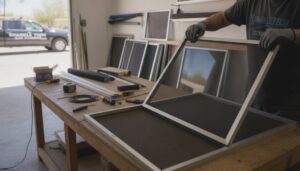
Aluminum is the standard frame material for exterior solar screens because it resists corrosion and holds its dimensions through temperature cycling. More importantly, every screen must be measured and cut to fit its specific window opening precisely. Even small gaps at the frame edges create bypass paths for both radiant heat and insects, which directly undercuts two of the product’s primary benefits.
Screen Doors and Entryways
Solar screens are not limited to fixed windows. They can be installed on screen doors to extend sun control and insect protection to entryways and patios, a practical application that most national product guides overlook entirely.
Professional Installation vs. DIY
DIY solar screen kits are available, but professionally measured and installed screens seat flush against the frame with no gaps. Professional installers also inspect frame condition during the process, identifying repair issues before they become more costly problems.
Rescreening as a Cost-Effective Alternative
If your existing screen frames are structurally sound, rescreening them with solar mesh costs significantly less than full replacement. Sparkle Tech Sun Screens offers same-week service, meaning your project does not sit in the multi-week backlog that big-box retailer installations typically carry. For homeowners who have been tolerating excessive heat because scheduling felt burdensome, local same-week service removes that barrier entirely.
How to Keep Your Outdoor Solar Screens Performing Year After Year
Protecting your investment in outdoor solar screens comes down to three consistent habits: clean them regularly, inspect them each season, and address small problems before they grow into larger ones.
Routine Cleaning
Outdoor solar screens face constant exposure to dust, pollen, airborne debris, and pollution, all of which gradually clog the mesh weave and reduce both airflow and solar-blocking efficiency. For most climates, rinsing screens with a garden hose and a soft brush two to four times per year is sufficient to maintain peak performance. Homes near busy roads, wooded areas, or coastal environments may benefit from more frequent attention. Always use gentle water pressure; pressure washers are universally discouraged by screen specialists because high-force water can stretch, distort, or tear the mesh permanently. For stubborn buildup, a solution of mild dish soap and warm water applied with a microfiber cloth works well, followed by a thorough rinse and complete air drying before reinstallation. Per Longhorn Solar Screens’ maintenance guide, properly maintained solar screens can block up to 90% of solar heat gain, and neglected screens fall measurably short of that threshold.
Seasonal Inspection and Repair vs. Replacement
Once per season, walk the perimeter of your home and give each screen panel a close visual check. Run your fingers along the spline, the rubber cord that holds the mesh tightly inside the frame, to confirm it is fully seated with no lifting or gaps. Loose spline is the most common cause of premature screen failure and is inexpensive to correct when caught early. Scan the mesh itself for small tears or fraying, especially at corners, where stress concentrates. Minor damage caught in autumn is a quick repair; the same tear left through months of wind can unravel an entire panel by spring.
When damage is present, the decision between rescreening and full frame replacement is straightforward. Mesh that is torn, sagging, or significantly faded can be replaced with fresh solar mesh while keeping the original frame intact, which lowers cost considerably and eliminates unnecessary material waste. Frames showing corrosion, bowing, or broken corners have compromised structural integrity and warrant full replacement rather than a mesh-only repair.
Professional Cleaning and Seasonal Storage
For multi-story homes or properties with a high window count, professional solar screen cleaning services offer meaningful advantages beyond what a garden hose reaches. Trained technicians remove embedded buildup from the mesh weave and can identify early-stage frame or spline issues before they require more costly repairs. In severe winter climates, some homeowners remove exterior solar screens during the cold months to allow maximum solar heat gain through glass when the sun sits low in the sky. If you take this approach, store screens flat or upright in a clean, dry space to prevent warping. Professional reinstallation each spring ensures correct fit, proper spline seating, and restored performance heading into the high-heat season.
The Bottom Line on Outdoor Window Solar Screens
Outdoor window solar screens deliver a clear, physics-backed advantage: they stop heat and UV radiation before it ever touches your glass, blocking up to 80% of solar heat gain compared to just 40% for interior shades. No blind, shade, or curtain mounted inside your home can replicate that performance, because interior products are managing heat that has already entered your living space. Exterior solar screens also double as insect barriers, a combination no interior product can offer.
The cost argument is equally straightforward. Solar screens deliver measurable, comparable heat reduction at a fraction of what window replacement costs, making them the logical first move for any homeowner struggling with hot or glare-heavy rooms. You get real energy savings without the expense or disruption of a full window overhaul.
For homeowners researching interior vs. exterior solar screens, the performance difference is well-documented and significant. Unlike national retailers that require self-measurement, self-installation, and weeks of shipping time, Sparkle Tech Sun Screens is a local specialist offering same-week installation, rescreening, repair, and screen cleaning, so you get expert results fast.
Ready to solve your heat and glare problem this week? Contact Sparkle Tech Sun Screens today for a same-week quote on outdoor solar screen installation or rescreening.
Conclusion
Choosing the right window solution does not have to feel overwhelming. Outdoor solar screens consistently outperform indoor shades in energy efficiency and glare reduction while costing a fraction of what full window replacements require. Indoor shades offer convenience and style, but they simply cannot block heat before it enters your home. Replacement windows deliver lasting structural benefits, yet the steep upfront cost puts them out of reach for many budgets.
If your primary goals are comfort, lower energy bills, and smart spending, outdoor solar screens deserve serious consideration as your first move. They install quickly, perform immediately, and pay for themselves over time.
Ready to take control of your home’s comfort and energy costs? Start by evaluating your most sun-exposed windows and explore solar screen options designed for your climate. A cooler, more comfortable home is closer than you think.