

Your outdoor spaces deserve the same level of comfort and control as your interiors, and exterior solar shades are one of the smartest upgrades you can make to achieve that balance. Whether you’re dealing with intense afternoon glare, rising energy costs, or simply want more privacy without sacrificing your view, these window treatments deliver on multiple fronts.
But not all exterior solar shades are created equal, and walking into this purchase without the right knowledge can lead to costly mistakes. From understanding openness factor ratings to choosing the correct mounting style for your home, there are several key considerations that separate a well-informed buyer from someone who ends up with the wrong product.
In this guide, we’ve put together the essential things you need to know before making your decision. You’ll learn how to evaluate fabric density, frame compatibility, motorization options, and more. By the end, you’ll have a clear picture of exactly what to look for so you can invest with confidence and get the performance you’re actually paying for.
Exterior vs. Interior Solar Shades: What’s the Actual Difference?
The distinction between exterior and interior solar shades comes down to a single, critical principle: where heat interception happens. Exterior solar shades mount outside the window frame and block solar radiation before it ever contacts the glass. Interior shades, by contrast, can only absorb or redirect heat that has already penetrated the glass and entered your living space. Once solar energy passes through a window, it converts into longer-wave heat that is significantly harder to expel, which is why interior-only solutions consistently underperform on cooling load reduction.
The performance gap is substantial. Research shows exterior shading can reduce solar heat gain by up to 80 to 90%, while interior shading products typically achieve reductions closer to 40%. One peer-reviewed study found that exterior movable solar shades reduced building energy demand by nearly 31% and improved summer thermal comfort by 21%. Interior shades simply cannot replicate those numbers, regardless of material quality.
Exterior screens deliver a second advantage that interior products cannot match at all: they function as a physical barrier against insects and outdoor debris. Because the screen spans the window opening from outside, it combines solar protection with pest control in a single installation, a genuine dual-function benefit.
As noted in this comparison of interior vs. exterior solar screens, the market treats these as distinct product categories because buyers treat them that way. Homeowners searching specifically for exterior solar shades are typically further along in the decision process, already past the research phase and actively evaluating professional installation options.
The Two Main Material Types: Fabric vs. Aluminum
Fabric Solar Shades: The Residential Standard
Fabric solar shades dominate the residential market for good reason. They strike a practical balance between UV protection, glare reduction, and preserved outward visibility, making them an appropriate fit for living rooms, patios, and bedrooms where homeowners want solar control without completely sacrificing the view. Depending on the fabric selected, solar screen mesh can block up to 95% of UV radiation while still allowing diffused natural light to pass through. This makes fabric the default recommendation for spaces where aesthetics and view-through clarity are priorities alongside performance.
Aluminum Solar Shades: Performance-First for Demanding Conditions
Aluminum solar screen material takes a different approach, prioritizing maximum heat reflection and long-term durability over view-through quality. This makes aluminum better suited for west-facing exposures that absorb intense afternoon sun, extremely hot climates, or commercial applications where thermal performance matters more than maintaining a sightline. The tradeoff is reduced visibility and a more utilitarian appearance, which is often acceptable in performance-driven or non-residential contexts.
Understanding the Openness Factor
For fabric shades, the single most important specification is the openness factor. Rated typically from 1% to 14%, this number reflects how tightly the fabric is woven. A lower percentage means a tighter weave, blocking more heat and UV but reducing view-through clarity. A higher percentage lets in more light and preserves more of the outdoor view, but provides less solar protection. According to guidance on choosing an openness factor and color, color selection also independently affects performance; lighter fabrics reflect more thermal energy, while darker fabrics improve outward visibility despite absorbing more heat. Matching the right openness factor to a specific window orientation and room use is a decision best made with a professional installer.
UV Protection Applies to Both Materials
One frequently overlooked benefit shared by both fabric and aluminum solar screens is interior UV protection. Blocking UV rays prevents the gradual fading of flooring, furniture, and artwork, which represents real long-term value beyond energy savings. For more context on how outdoor solar shades differ from standard interior options, material durability and UV-blocking performance are key differentiators that justify the exterior installation investment.
Sparkle Tech works with both fabric and aluminum solar screen materials. During a same-week service visit, the team can assess your window orientation, climate exposure, and aesthetic goals to recommend the right material and openness factor for your specific situation.
Energy Savings: What the Numbers Mean for Your Home
The numbers behind exterior solar shades tell a clear story about why homeowners are actively investing in this upgrade. The global solar shades market is valued at $7.23 billion in 2026 and is projected to reach $11.20 billion by 2034, expanding at a 5.5% CAGR. Markets do not grow at that pace based on aesthetics alone. That trajectory reflects millions of homeowners experiencing real, measurable reductions in their monthly utility bills after installation.
The mechanism is straightforward. Windows account for roughly 45% of a home’s heat gain or loss despite representing only about 8% of exterior surface area. Exterior solar screens intercept solar radiation before it reaches the glass, which prevents heat from ever entering your living space. The result is a direct reduction in how frequently your air conditioning system cycles on, and that translates to lower electricity consumption during the months when cooling costs peak. Research from the Residential Solar Shading Systems Market confirms that renovation and retrofit projects dominate this market at 58.6% of sales, meaning the majority of buyers are existing homeowners upgrading specifically to cut energy costs.
The residential segment is outpacing the overall market, growing at a projected 9.1% CAGR through 2033. That faster growth rate reflects a homeowner base responding to rising utility rates by seeking practical, lower-cost solutions before committing to major renovations.
At the household level, west- and south-facing windows are the primary contributors to afternoon heat buildup. Reducing solar gain through those exposures directly lowers thermostat demand during peak afternoon hours, which is particularly valuable for homeowners on time-of-use electricity pricing structures where rates climb during high-demand periods.
Compared to full window replacement or HVAC system upgrades, exterior solar screens are a substantially lower upfront investment with a faster path to measurable savings, making them one of the most accessible energy efficiency upgrades available to homeowners today.
They Also Block Bugs: A Benefit Most Buyers Miss
Most solar shade content leads with heat reduction percentages and UV ratings, and stops there. What that content consistently omits is a practical benefit that exterior placement makes possible automatically: insect exclusion.
Because exterior solar screens are installed as a physical mesh panel outside the window frame, they cover the same entry points that insects exploit, including gaps at window edges, worn screen tears, and open vents. The mesh physically intercepts bugs before they reach the window, not as a designed feature that costs extra, but as a direct result of where the screen sits in relation to the building envelope.
This dual function carries real weight in warmer climates and during peak mosquito and fly season. Homeowners in high-heat regions are often managing both solar gain and pest pressure at the same time, yet they are typically offered two separate product conversations. An exterior solar screen addresses both pressures with a single installation.
Interior window treatments offer no version of this benefit. Blinds, drapes, and roller shades sit behind the glass and do nothing to stop insects from entering through gaps or compromised screens. An exterior solar screen functions similarly to a traditional insect screen, but with the added thermal and UV performance that standard fiberglass bug mesh cannot deliver.
Sparkle Tech’s service covers both solar screens and bug screens, which means a single visit can resolve heat, glare, UV exposure, and pest protection across multiple windows simultaneously. Homeowners replacing aging standard bug screens with solar mesh get a measurable performance upgrade without adding a second product, a second installation appointment, or additional hardware to maintain.
Professional Installation vs. DIY: Why It Matters More Outside
The outdoor environment is unforgiving, and exterior solar shades face conditions that interior treatments never encounter. Wind load, driving rain, UV degradation, and temperature cycling create year-round mechanical stress on every component of the system. When installation produces even minor gaps at the frame edges, the consequences compound quickly: thermal performance drops, insects find entry points, and the mesh and frame hardware begin to fail ahead of schedule. These are not cosmetic problems. They are structural failure modes that begin at the moment of improper installation.
Retail channels offer exterior shade products sized to nominal window dimensions, and most include DIY measurement guides to support self-installation. The practical limitation is that nominal sizing does not account for real-world variation in residential window frames. Most homes have at least minor dimensional inconsistencies across their windows, and for an exterior application, those inconsistencies translate directly into fit gaps. Unlike interior shades, where a small gap affects appearance, an exterior gap creates a pathway for moisture intrusion, pest entry, and wind-driven deflection that degrades both thermal performance and screen longevity.
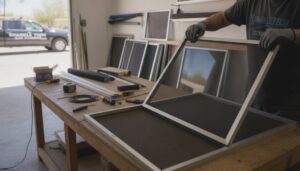
Professional installation addresses the variables that retail kits cannot. Correct mesh tension prevents fabric sag and edge abrasion over time. Proper frame seating ensures the screen sits flush against the mounting surface under wind load. Hardware rated for outdoor exposure, including powder-coated frames and corrosion-resistant fasteners, determines whether the system holds up through multiple seasons or requires early repair. These are competencies applied on-site based on the actual opening geometry and local exposure conditions, not average dimensions from a product specification sheet.
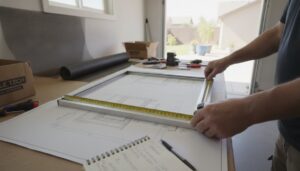
A professional installation also creates something with lasting practical value: a documented baseline of your window dimensions and screen specifications. That record makes future repairs, replacements, or additional screens significantly faster and less expensive, because the measurement and fabrication work does not need to be repeated from scratch. Most online content in this category focuses on product comparisons and buyer guides for outdoor shades, leaving the professional installation advantage largely unaddressed. For homeowners focused on long-term performance rather than upfront convenience, a local installer who measures, fabricates, and mounts on-site delivers results that a retail kit simply cannot replicate.
Maintenance, Cleaning, and When to Repair vs. Replace
Exterior solar screens take on everything the outdoors delivers: dust, pollen, wind-carried debris, hard water mineral deposits, and continuous UV exposure. That sustained environmental contact means buildup occurs significantly faster than on any interior window treatment. Cleaning at least once or twice per year is the baseline recommendation, though homes in high-pollen areas, coastal environments with salt air, or dusty climates may benefit from quarterly attention. A clogged mesh does more than look dirty; restricted airflow through the screen’s open weave reduces its ability to dissipate heat effectively, undermining the energy performance you installed it for.
The Right Way to Clean Solar Screen Mesh
The correct cleaning process for solar screens starts with a soft-bristle brush or vacuum attachment to lift loose debris without grinding particles into the mesh. Follow with a low-pressure garden hose rinse on both sides, then wash using mild dish soap, warm water, and a soft brush or microfiber cloth. Allow screens to air dry completely in shade before reinstalling. Pressure washing is a firm no; the force distorts mesh tension and can compromise frame corners over repeated use.
Seasonal Inspection: What to Look For
Each season, inspect for small tears, frayed edges, bent frame sections, loose or dried-out spline, and early signs of hardware corrosion on mounting brackets or tension components. The spline is the rubber cord that holds mesh tight within the frame channel; when it dries out or loosens, the mesh sags and the screen loses its structural integrity. Catching these issues early matters because minor damage that costs relatively little to fix can progress to full screen replacement if left unaddressed.
Repair vs. Replace: The Decision Framework
The core question comes down to two components: mesh condition and frame integrity. If the frame is structurally sound and only the mesh is torn or degraded, rescreening is the cost-effective path; the existing frame is reused, new mesh is stretched and locked with fresh spline, and the screen performs like new. If the frame is bent beyond a minor correction, warped from heat cycling, or showing significant corrosion, full replacement delivers better long-term value because a compromised frame will shorten the lifespan of any new mesh installed into it.
Sparkle Tech handles both scenarios in a single service call. Screen cleaning, mesh repair, and hardware inspection are addressed together, so homeowners avoid sourcing parts separately or managing multiple service visits to resolve what is often a straightforward set of issues.
Same-Week Service: Why Timing Matters for Exterior Solar Screens
Timing is one of the most underestimated factors in getting real value from exterior solar screens. Demand spikes sharply in late spring and early summer as temperatures climb and pest activity accelerates. Homeowners who wait until peak heat has arrived to schedule service frequently discover that appointment slots are already backed up, meaning they absorb preventable cooling costs and uncomfortable indoor temperatures during the exact weeks when protection matters most.
The residential solar shades segment is the fastest-growing category in the broader shading market, projected at a 9.1% CAGR through 2033. That growth rate has a direct, practical consequence: installer capacity fills faster each season. As more homeowners prioritize energy efficiency upgrades, the window for securing a timely appointment narrows. Choosing a provider with confirmed same-week availability is not a convenience perk; it is a strategic advantage that determines whether screens are working before peak heat arrives or after it has already driven up your energy bills.
Pest season timing adds a second layer of urgency. Mosquito and fly activity peaks during summer months, and a delayed installation or an unrepaired screen tear aligns that vulnerability directly with the period when bug pressure is highest. A screen with a compromised edge or a tear along the spline offers essentially no protection precisely when you need it most.
Sparkle Tech offers same-week service for solar screen installation, rescreening, and repair, so homeowners avoid multi-week backlogs entirely. Compare that to the professional installation process through online DIY retailers, where shipping lead times, component assembly, and the installation workload itself can extend the timeline by several weeks, particularly for first-time installers working with larger openings or damaged frames.
Making the Right Call on Exterior Solar Shades
The decision ultimately comes down to three variables: placement, material, and installation quality. Exterior placement wins on heat reduction because it intercepts solar radiation before it enters your home, material selection should reflect your window orientation and local climate, and professional installation consistently delivers tighter fits and longer service life than DIY alternatives. Combine those factors correctly and the performance gap over interior-only treatments is substantial.
Exterior solar screens also serve double duty that single-purpose products cannot replicate. They reduce heat and glare while simultaneously acting as a pest barrier, a benefit that makes exterior solar shades a genuinely smart upgrade for households that want one solution handling multiple seasonal problems.
The real-household impact is concrete: lower AC loads during peak summer months, UV protection that preserves furniture and flooring, and noticeably more comfortable living spaces. As detailed sources confirm, solar shades meaningfully enhance energy efficiency by addressing the window as the primary thermal weak point in any home.
Sparkle Tech offers same-week solar screen installation, rescreening, and professional cleaning. Peak season fills installer schedules fast, so contact Sparkle Tech now for a fast local quote before availability closes out.
Conclusion
Investing in exterior solar shades is a decision that pays off in comfort, energy savings, and everyday livability. Before you buy, keep these key takeaways in mind: openness factor ratings determine how much light and visibility you get, mounting style must match your home’s architecture, motorization can dramatically improve convenience, and fabric quality directly impacts long-term durability.
Armed with this knowledge, you’re no longer guessing. You’re making a confident, informed choice that protects your home and enhances your outdoor experience for years to come.
Ready to find the perfect fit? Browse our full selection of exterior solar shades or speak with one of our window treatment specialists today. The right shades are out there, and now you know exactly what to look for.