

Picture this: a crack suddenly appears in your window, or your screen door is hanging off its hinges right before a swarm of mosquitoes decides to move into your neighborhood. Not ideal, right? The good news is that you do not have to haul everything to a repair shop or wait weeks for a technician to show up. That is exactly where mobile window and screen repair services come in, bringing the fix straight to your front door.
But before you pick up the phone and hire the first service you find online, there are a few things worth knowing. Like any home service, not all providers are created equal, and going in without a little knowledge can lead to wasted money or disappointing results.
This post is here to help, especially if this is your first time exploring this type of service. We have put together seven practical things every beginner should know before hiring a mobile window and screen repair professional. By the end, you will feel confident, informed, and ready to make the best choice for your home.
What ‘Mobile’ Screen Repair Actually Means
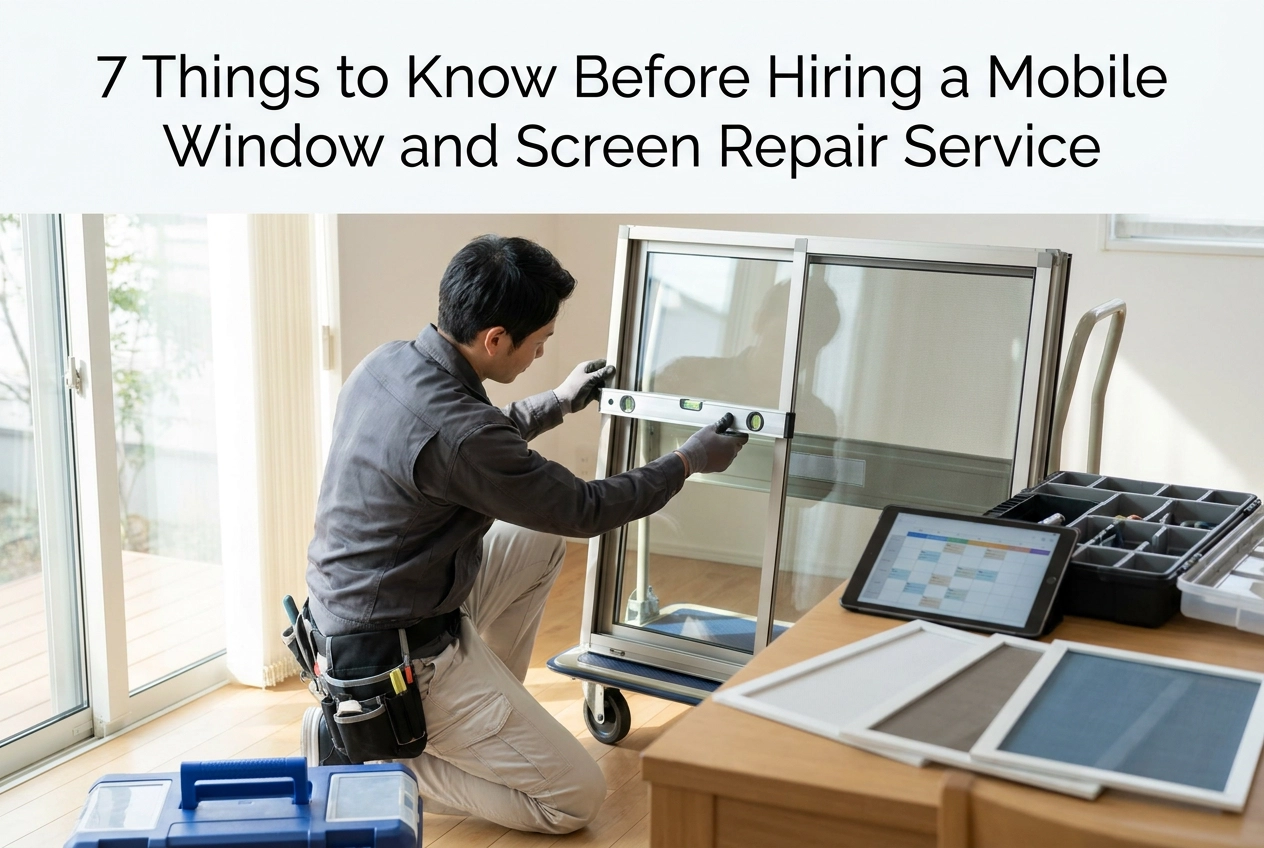
If you’ve ever searched for “mobile window and screen repair” and wondered what makes it different from just calling a regular handyman, you’re not alone. The word “mobile” here has nothing to do with your phone. It means a fully equipped technician drives directly to your home, ready to handle everything on the spot.
Here’s what that looks like in practice:
The technician comes to you. You don’t remove your screens, wrap them up, and haul them somewhere. A mobile repair pro shows up with tools, materials, and everything needed to get the job done right in your driveway or backyard.
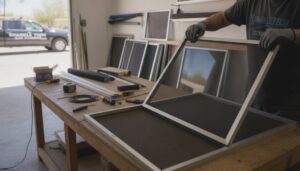
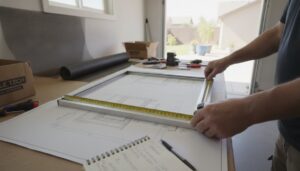
Custom screens get built on-site. Many mobile units carry portable fabrication equipment, so if your window takes an odd size, the technician can measure, cut, and build a custom screen during that same visit. No waiting a week for a special order to come in.
Same-week scheduling is standard. Because mobile operators don’t manage a storefront or walk-in customers, they have more flexibility to get you on the calendar fast, often within just a few days.
Large jobs are no problem. Pool enclosures, lanai panels, and oversized porch screens are physically impossible to transport to a shop. A mobile specialist handles all of it on location.
Specialists vs. handymen is a real difference. A dedicated mobile screen technician brings the right tools, proper mesh materials, and focused expertise. A general handyman who “does screens sometimes” typically can’t match that level of service or consistency. You can browse the full range of what a mobile service covers at Screenmobile’s service overview.
The Full Range of Services a Mobile Unit Can Handle
So now that you know what mobile service is, let’s talk about what it can actually do for your home. You might be surprised by how much a single mobile unit can handle in one visit.
1. Window Rescreening
This is the bread and butter of mobile screen repair. When your window frames are still in good shape but the mesh itself is torn, sagging, or full of holes, rescreening is the smart move. A technician measures your existing frames on-site, cuts fresh mesh to fit, and installs it before leaving your driveway. Professional rescreening typically runs between $45 and $85 per screen, making it a much friendlier option than full window replacement.
2. Screen Door Repair
Screen doors take a beating. Between kids, pets, and daily use, they’re often the first thing to go. Mobile technicians can fix bent frames, replace broken rollers that make your sliding door stick and drag, and swap out torn mesh on both sliding and hinged door styles, all without you hauling anything to a shop.
3. Solar Screen Installation
Solar screens are having a moment right now. Homeowners dealing with intense afternoon heat and fading furniture are increasingly adding solar screens to their rescreening visits. These specialized screens block a significant portion of UV rays and heat gain before they ever reach your glass.
4. Pool Enclosure and Lanai Panel Replacement
Large-format jobs like pool cages and lanai enclosures are actually where mobile service shines brightest. Every panel is a non-standard size, so on-site measurement and fabrication isn’t just convenient, it’s essentially required. Trying to pre-order panels without measuring first is a recipe for ill-fitting screens.
5. Screen Cleaning
This one flies under the radar, but it matters. Dirty screens restrict airflow, look dingy, and break down faster from trapped debris and moisture. A professional cleaning, often available as an add-on service from mobile screen specialists, extends screen life and restores the fresh-air feel you want from open windows, no full replacement needed.
Repair vs. Replace: The 50% Rule Explained
Once a mobile technician shows up, one of the first things they’ll do is help you answer a question that trips up a lot of homeowners: should this screen be repaired or fully replaced? The good news is there’s a simple guideline that takes the guesswork out of it.
The 50% Rule works like this: if the cost to repair a screen climbs above 50% of what a full replacement would cost, you’re better off just replacing it. Here’s a quick way to think about it. Standard professional screen replacement typically runs $70 to $120. So if a repair quote on that same screen comes in above $55 or $60, replacement is almost always the smarter long-term investment, according to Window Screen Repair vs Replacement Cost Guide 2026.
Small damage with a solid frame? Repair it. A single tear under three inches in a frame that’s still straight and sturdy is a textbook repair candidate. Professional rescreening in that situation typically falls in the $45 to $85 range per screen, which is meaningfully cheaper than replacement. The frame is doing its job; only the mesh needs refreshing.
Bent frames and brittle mesh tell a different story. If the frame is warped, it won’t sit flush in the window opening, meaning insects can still get in even after you fix the mesh. Sun-rotted mesh that crumbles when you touch it, or screens with damage in three or four spots, will cost more to repeatedly patch than to simply replace.
A whole-home assessment is where the real savings happen. A 20-screen home that gets evaluated all at once can avoid a $2,000-plus blanket replacement bill by mixing targeted rescreening with selective replacements only where needed.
Finally, if you live somewhere with intense sun, don’t wait for visible damage. UV exposure breaks down mesh fibers quietly, so scheduling an evaluation every three to five years keeps small problems from becoming expensive ones.
Solar Screens vs. Standard Bug Screens: What Is the Difference?
Not all window screens are created equal, and if you’ve been treating them like they are, you might be missing out on some real comfort and savings at home. Let’s break down the key differences in plain terms.
Standard bug screens are exactly what the name suggests. They use a fine fiberglass or aluminum mesh with openings just small enough to keep insects out while still letting a breeze flow through. They do their job well when it comes to bugs, but here’s the thing: they offer almost no protection against UV rays or heat gain. Sunlight passes right through them like they’re barely there, which means your home can still heat up significantly on sunny afternoons.
Solar screens, on the other hand, are built for an entirely different purpose. They’re made from a much tighter, denser weave, typically from PVC-coated polyester or fiberglass, and are specifically engineered to intercept solar radiation before it ever hits your glass. According to Phifer’s solar screen guide, solar screens can block anywhere from 65% to 97% of solar heat, which translates to a noticeably cooler interior and less strain on your air conditioner.
The performance of a solar screen is measured using something called the openness factor, which is simply the percentage of the screen that is open space. Per Efficient Window Coverings, openness factors range from about 1% to 25%. A screen with a 5% openness factor has a very tight weave and blocks a much greater share of solar energy than one with a 20% openness factor. The trade-off is visibility; the denser the screen, the less light comes through.
If your home faces south or west, upgrading those windows to solar screens is a financially smart move, especially when a mobile technician is already at your home handling other repairs. You can mix and match screen types across your windows based on sun exposure, and a mobile tech with on-site fabrication equipment handles both in a single visit.
What Mobile Screen Repair Actually Costs
Let’s be honest: cost is usually the first question on everyone’s mind, and mobile window and screen repair is no exception. The good news is that professional screen repair is genuinely affordable, especially when you understand what drives the price.
Rescreening a screen with an intact frame is the most budget-friendly route. In 2026, professional rescreening runs approximately $45 to $85 per screen, according to current window screen cost data. This option works beautifully when your aluminum frame is still straight and solid. You get brand-new mesh without paying for an entirely new unit.
When a full replacement is necessary, the price naturally climbs a bit. A standard replacement screen with professional installation typically falls between $70 and $120. Upgrade to something like a solar screen or pet-resistant mesh, and you’re looking at $150 to $300 or more per screen. Those upgraded options deliver real long-term value, particularly solar screens that can noticeably reduce indoor heat gain.
Several factors push prices up or down. Screen size, mesh material, frame condition, and the total number of screens you’re having serviced in one visit all play a role. Volume discounts are very common; servicing 10 screens in one appointment almost always costs less per screen than a single-screen job.
Here’s where smart planning pays off. A homeowner with 20 screens who rescreens where possible and only fully replaces the damaged frames can realistically avoid a blanket replacement bill exceeding $2,000. That kind of targeted strategy is exactly why the global door and window repair service market hit $82.4 billion in 2025 and is forecast to reach $138.6 billion by 2034. Homeowners everywhere are choosing repair over costly full replacement, and the numbers prove it.
Why Same-Week Service Matters More Than You Think
Here is something most homeowners do not realize until it is too late: a torn or missing screen is not just an eyesore. It is an open door. Insects, airborne debris, and in storm-prone areas like Florida and the Gulf Coast, wind-driven rain can push straight through even a small gap in the mesh. Every day that repair gets delayed extends that exposure window, and moisture intrusion in a humid climate can quietly start a mold problem that costs far more to fix than a simple rescreening ever would.
That urgency multiplies fast after a weather event. In high-UV sunbelt and hurricane-adjacent markets, a single storm can damage several screens on the same property at once. You are not dealing with one inconvenient opening; you are dealing with five or six. A provider that cannot get to you within the week leaves your home compromised across multiple rooms for an extended stretch, which is why same-week scheduling shifts from a nice perk to a genuine necessity.
Consumer expectations are moving in the same direction. Residential repairs account for 52.3% of the global door and window repair market, and the on-demand home services market is projected to nearly triple by 2035. Homeowners are increasingly used to booking services quickly, and slow scheduling has become a dealbreaker when choosing a provider.
Mobile operators have a structural edge here. Because they carry materials and fabrication tools on-site, there is no drop-off, no fabrication queue, and no return pickup. The job gets done in one visit, which is exactly why same-week availability is achievable.
For pool enclosures and lanai screens, the stakes are even higher. A tiny gap does not just let in a few bugs; it effectively shuts down the entire outdoor space until repairs are made.
What to Look for in a Local Mobile Screen Repair Company
Not every mobile screen repair company is created equal, and picking the right one upfront saves you time, money, and frustration. Here are five things worth checking before you book.
1. They fabricate on-site and can schedule you fast. The whole point of mobile service is convenience. If a company needs to take your frames back to a shop and return days later, you lose that advantage entirely. Look for providers who carry materials on their truck and build screens right in your driveway. Pair that with same-week availability and you have a genuinely stress-free experience.
2. They offer a complete service menu. A company worth calling should handle window rescreening, screen door repair, solar screens, pool enclosure panels, and screen cleaning all in one visit. Juggling two or three separate providers for the same home gets old fast. One crew, one call, one trip out.
3. They give you clear pricing upfront. A trustworthy provider should be able to quote you a per-screen cost range right away and explain what moves that number, such as screen size, frame condition, or a mesh upgrade to solar or pet-resistant material. Professional rescreening typically runs $45 to $85 per screen, so if a company won’t give you even a ballpark before arriving, that is a red flag.
4. They have strong local reviews. Local operators who have built their reputation neighborhood by neighborhood tend to be more responsive and personally accountable than larger chains. Search Google, Yelp, or Nextdoor and prioritize companies with recent, specific reviews that mention actual screen work.
5. They stand behind their work. Ask directly whether the company offers a workmanship guarantee or warranty on rescreening. Quality mesh installed correctly should hold up for several years under normal conditions, and reputable providers are confident enough in their work to say so.
Make the Right Call for Your Home’s Screens
You now have everything you need to make a confident decision about your home’s screens. Use the 50% Rule to guide repair versus replace choices, lean on same-week scheduling when damage is active, and take advantage of the full service range a mobile provider brings to your door in a single visit.
If a technician is already coming out for a rescreen, that is the perfect time to bundle a solar screen upgrade. You get the sun protection and heat reduction without paying for a separate appointment. And if your screens are still structurally sound but looking grimy, a professional cleaning is the most affordable way to extend their life before a full replacement becomes necessary.
When it comes to choosing who does the work, local trust matters most. An established local mobile provider with strong reviews and transparent, per-screen pricing will almost always serve you better than a large national chain for residential screen work.
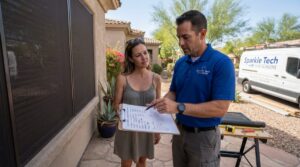
Ready to get it handled? Request a same-week quote from Sparkle Tech Sunscreens for rescreening, solar screens, screen door repair, or cleaning. They come to you, bring everything on the truck, and price it clearly from the start. That is exactly the kind of low-friction, trustworthy service your home deserves.
Conclusion
Hiring a mobile window and screen repair service does not have to feel overwhelming. By knowing what to look for, you are already ahead of the game. Remember to verify credentials and insurance, compare quotes from multiple providers, ask about warranties, and read reviews before committing to anyone.
The right service will save you time, protect your home, and deliver quality results without the hassle of hauling anything anywhere. That convenience is worth a little upfront research.
Now that you are armed with these seven key tips, you are ready to make a smart, confident choice. Start by searching for reputable mobile repair services in your area today. Ask the right questions, trust your instincts, and do not settle for less than you deserve. Your home is worth it, and so is your peace of mind.