

We’ve all been there. You pick up your phone, tablet, or laptop and your heart sinks when you see it: a cracked, shattered, or completely unresponsive screen. Before you panic or rush out to buy a brand new device, take a breath. The good news is that a damaged screen doesn’t always mean you need to start over from scratch.
When it comes to screen repair and replacement, knowing which option is right for your situation can save you a lot of time, money, and unnecessary stress. But if you’re not a tech expert, figuring out the difference can feel pretty overwhelming.
That’s exactly why we put this guide together. In the next few minutes, you’ll learn how to assess the damage on your screen, understand the key differences between repairing and replacing it, and figure out which choice makes the most sense for your budget and your device. No technical jargon, no confusing steps, just straightforward advice to help you make a smart decision with confidence. Let’s dive in!
The 50% Rule: Your Starting Point for Every Screen Decision
Before you call anyone or start pulling up mesh samples, there’s one simple rule worth knowing: the 50% Rule. The idea is straightforward. If repairing a screen costs more than half of what a full replacement would run, you’re better off replacing it. This rule has been a trusted guideline across home repair decisions for years, and according to Window Screen Repair vs Replacement Cost Guide 2026, it applies directly to screen work.
Here’s how the math plays out in practice. Professional re-screening, which means swapping out the mesh while keeping your existing frame, runs about $45 to $85 per screen. That’s the smart move when your frames are square, solid, and undamaged. A full replacement, frame included, costs roughly $70 to $120 per screen installed. So the crossover point where repair stops making financial sense lands at about $35 to $60 per screen. If a repair quote creeps into that range, replacement deserves a serious look.
Use this rule as a triage tool before you schedule anything. Walk your home, count the damaged screens, and estimate the repair cost per screen. If several screens are approaching that threshold simultaneously, a phased replacement plan spread across one or two seasons will almost always cost less than scrambling to fix everything at once. Older homes with ten or more aging screens are especially prone to hitting that 50% crossover on multiple windows at the same time. Knowing that ahead of the conversation puts you in a much stronger position when it’s time to discuss options with a professional. For a deeper look at how this rule applies across repair categories, this breakdown of the 50% rule is worth a quick read.
When Repair Is the Right Call
So you’ve run through the 50% Rule and repair is looking like the smarter move. But how do you know for sure? There are a few clear signals that point directly toward repair, and once you know what to look for, the decision gets a lot easier.
Start with the damage itself. A single hole smaller than three inches is the most obvious green light for repair. The mesh surrounding that hole is still doing its job; it’s keeping bugs out, holding its shape, and sitting firmly in the frame. There’s no reason to scrap the whole screen over one small breach. Pet scratches, a stray branch, or an accidental poke with something sharp all fall into this category, especially on screens that are five years old or newer. The rest of the mesh is still strong, so repairing rather than replacing is the practical call.
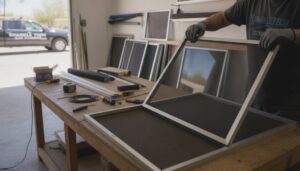
Next, check the frame. Set it on a flat surface or hold it up and look at the corners. If it sits flat, shows no bending or warping, and the corners are snug and tight, that frame is perfectly reusable. Re-screening a solid frame is one of the most cost-effective repairs in home maintenance.
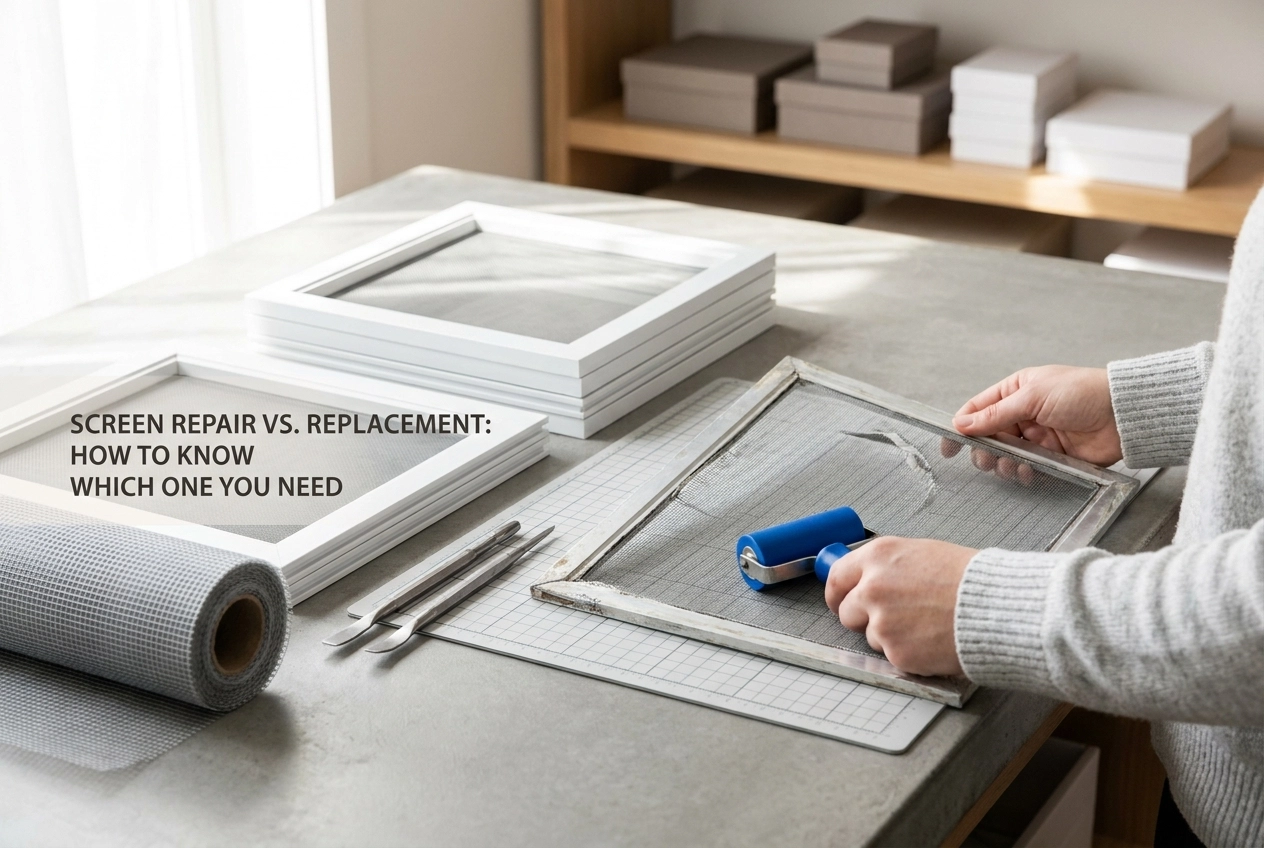
Then take a look at the spline, which is the thin rubber cord running along the groove around the frame’s edge that holds the mesh in place. If it’s still flexible and mostly intact, re-screening is straightforward and affordable, typically running $45 to $85 per screen for professional service.
Fixing one or two screens rather than replacing an entire home’s worth saves significant money and can usually be handled in a single same-week visit.
When Full Replacement Makes More Sense
Sometimes repair just isn’t the right answer, and recognizing those situations early saves you time, money, and frustration.
Brittle or crumbling mesh is the clearest replacement signal there is. If you touch the screen and it flakes, crumbles, or tears without any real pressure, no patch is going to save it. The surrounding material has already broken down from UV exposure, a condition sometimes called “sun rot,” and any repair you apply will outlast the original mesh by only a few weeks at best. At that point, you’re paying for a repair twice when one replacement would have done the job.
Bent, warped, or bowed frames are a similar dead end. Re-screening into a compromised frame means the new mesh won’t sit flat or seal properly against your window opening. Bugs will still find their way in, defeating the entire purpose. If the frame is visibly bent or the corners have separated, full replacement is the only fix that actually works.
The math shifts when multiple screens are damaged. If three or more screens in your home need significant work, the individual re-screening costs start adding up fast. According to 2026 window screen cost data from Angi, a bulk replacement project often makes more financial sense than scattered repairs handled one at a time.
Age alone is a legitimate trigger. Screens older than 10 years have likely oxidized and weakened throughout, even where damage isn’t obvious yet. A fresh installation will simply outlast any repair made to aging mesh.
Finally, if you want to upgrade to solar or pet-resistant mesh, skip the patch entirely. The cost difference between standard and upgraded screening is modest, and there’s no point repairing old material when a functional improvement is right there on the table.
What Screen Repair and Replacement Actually Costs
Now that you understand when to repair versus replace, the next question is obvious: what’s this actually going to cost you? Here’s a straightforward breakdown of what to expect at each pricing tier.
Professional re-screening runs $45 to $85 per screen. This is your most affordable professional option, and it covers labor plus new mesh pressed into your existing frame. The catch is that your frames need to be in decent shape. If the aluminum is straight, the corners are tight, and the spline channel is clean, re-screening is almost always the smart move.
Standard full replacement lands between $70 and $120 per screen when professionally installed. That price bump over re-screening makes sense once you factor in the cost of a new frame assembly. The good news is that the gap between re-screening and full replacement shrinks considerably when frames are already bent or corroded, since you’re paying for new frames either way. According to Colfax Glass’s 2026 window screen cost guide, basic fiberglass-in-aluminum setups sit at the lower end of this range.
Custom and specialty screens, like solar and pet-resistant mesh, run $150 to $300 or more per screen. That premium reflects the materials involved, and it’s frequently worth it. Solar screens that block 70 to 90 percent of heat gain pay for themselves over time, especially in sun-heavy climates.
DIY re-screening costs $20 to $40 per window for materials and tools. The savings are real, but improper mesh tension leads to sagging or mesh popping out of the spline channel before the season ends.
For multi-screen projects, always ask about per-job pricing. Many local providers offer better rates when handling five or more screens in a single visit, which can meaningfully reduce your total budget.
Upgrading During Replacement: Solar Screens and Pet-Resistant Mesh
If you’re already replacing screens, this is genuinely the best time to consider stepping up to something better. The extra labor is already accounted for, a technician is on-site, and the incremental cost of upgrading the mesh itself is far more reasonable than scheduling a separate visit later.
Solar Screens: Block Heat, Protect Your Home
Solar screens are built from a tighter, denser weave than standard fiberglass mesh, with an openness factor typically in the 80 to 90 percent range. That tighter construction is designed specifically to intercept UV rays before they pass through your windows, reducing heat transfer into the room. For homeowners in warm, sun-heavy climates, especially those in the South or Southwest, this matters quite a bit during summer months when west- and south-facing windows take the full force of afternoon sun.
Standard mesh does almost nothing to slow that heat down. The result is indoor temperature spikes, higher cooling bills, and gradual fading of furniture, flooring, and curtains over time. Solar screens act as a first line of defense, blocking a meaningful portion of solar heat gain before it ever reaches the glass. As a bonus, many homeowners discover that solar screens also provide daytime privacy, letting air in while making it harder for neighbors to see inside.
Pet-Resistant Mesh: Built for Claws and Kids
Pet-resistant mesh is manufactured from heavier-gauge vinyl-coated polyester, which is significantly stronger than standard fiberglass. It resists puncture and claw damage far better, and because it handles UV exposure without deteriorating as quickly, it tends to outlast standard mesh even in households without pets. It is also worth noting that families with young children find it equally useful since the tougher material holds up against rough handling.
The trade-off is a slightly more opaque look and a modest price difference, but considering the longer functional lifespan, it is often the smarter long-term choice.
Why the Timing of the Upgrade Matters
The cost premium for upgraded mesh runs roughly $150 to $300 or more per screen compared to $70 to $120 for a standard replacement. That gap sounds significant until you realize that most of that difference is materials, not labor. When a technician is already on-site rescreening your windows, adding solar or pet-resistant mesh costs very little in additional labor versus scheduling a separate appointment months later.
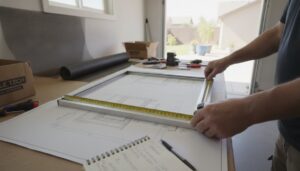
Sparkle Tech Sunscreens specializes in solar screen installation alongside standard rescreening work, which makes a replacement appointment a natural moment to talk through which windows would benefit most from the upgrade. South- and west-facing rooms are usually the best candidates for solar mesh, while high-traffic doors and patio screens tend to be top priorities for pet-resistant material. A quick conversation during your appointment can help you prioritize without overcommitting your budget.
Screen Doors: Repair or Replace?
Screen doors take a beating that window screens simply don’t. Every time someone walks through, the frame flexes. Every time a dog pushes against the mesh, the bottom corner absorbs pressure. Every time the door swings shut, the closer mechanism cycles through another repetition. Because of this, it helps to evaluate a screen door as three separate components: the frame, the hardware, and the mesh. A problem in one area doesn’t automatically mean the other two are compromised.
Repair is the right call when the damage is limited to the mesh itself and the rest of the door checks out. Run your hands along the frame corners; if nothing is separating or visibly bowed, that’s a good sign. Test the latch and closer; if the door swings shut smoothly and latches without force, the hardware is fine. A door that passes both checks is a strong repair candidate, and rescreening it through Sparkle Tech typically falls in the same $45 to $85 range as a standard window screen job.
Full replacement becomes necessary when the frame is warped or no longer fits the opening squarely. A bowed frame will continue to gap or bind no matter how well new mesh is installed; the geometry problem doesn’t go away with fresh screening.
The most common screen door damage patterns worth knowing:
- Bottom mesh tears from pets or foot traffic (usually a repair)
- Bent or separating corners from impact (a frame integrity flag)
- Worn or missing spline causing mesh to sag away from the channel (repairable with new spline and mesh)
- Broken closer springs causing the door to slam (a hardware fix only, no frame or mesh work needed)
Sparkle Tech handles both rescreening and full door replacement, so whichever direction your door points toward, same-week service is available to get it sorted.
Screen Cleaning: The Maintenance Step Most Homeowners Skip
Here’s something most homeowners never think about: screens can fail you long before they actually fall apart. Dust, pollen, pet dander, and oxidation build up inside mesh fibers gradually, and that buildup restricts airflow and dims natural light even when the mesh looks perfectly fine from a distance. A screen that appears intact may be significantly underperforming simply because it’s clogged. Over time, that trapped debris also accelerates mesh degradation by holding moisture against the fibers, shortening the lifespan of an otherwise healthy screen. Window screen maintenance is one of the simplest ways to protect that lifespan.
Professional screen cleaning is more involved than a quick garden hose rinse. It means carefully removing each screen from its frame, washing both sides of the mesh with a mild solution that won’t damage fiberglass or solar mesh coatings, rinsing thoroughly, and reinstalling everything correctly. Ammonia-based cleaners are a problem here because they break down fiberglass over time, which is why getting this step right actually matters.
There’s another benefit that often goes unnoticed: clean screens are much easier to inspect accurately. Grime hides small tears, spline gaps, and frame corrosion that would otherwise be easy to catch early. A dirty screen masks the kind of minor damage that’s cheap to fix now but expensive to ignore for another season. Screen maintenance done right includes a proper inspection every time.
Bundling a cleaning visit with any needed repairs is genuinely the most cost-efficient approach, especially before peak bug and pollen seasons when you actually need your screens performing at their best. Sparkle Tech includes screen cleaning as part of its service lineup, so it’s easy to schedule a seasonal inspection, a thorough clean, and any repairs in a single same-week visit rather than spreading it across multiple calls.
Why Fast Turnaround Service Changes the Equation
Timing isn’t just a convenience factor when it comes to screen repair. It’s the difference between a functional home and weeks of mosquitoes flying freely through a torn mesh during the height of summer. Every day a damaged screen goes unfixed, you’re either dealing with bugs, losing the energy savings your solar screens should be delivering, or watching a small repairable tear stretch wider under wind pressure.
The screen repair market breaks down into two camps: large national service networks and agile local operators. National chains bring brand recognition and polished marketing, but their centralized scheduling systems create real delays. Jobs often route through regional dispatch queues before anyone even calls you back. Local providers operate differently. They control their own calendars, which means scheduling lead times are dramatically shorter and same-week appointments are genuinely possible rather than a marketing promise.
Same-week service matters most for busy homeowners who can’t carve out multiple days waiting around for an appointment window. It also prevents a manageable problem from becoming a bigger one. A small tear left alone for three weeks can expand significantly, pushing a simple repair into full replacement territory.
Here’s a practical tip when you’re comparing providers: ask about scheduling lead times upfront, before you even discuss price. Saving ten dollars per screen is meaningless if the appointment sits three weeks out during peak bug season.
Local operators who handle quality directly and stay personally accountable to their customers consistently earn stronger satisfaction ratings. Speed and communication compound together. When a provider responds fast and keeps you informed throughout, trust follows naturally.
Making Your Decision: A Quick Action Plan
Here is your quick action plan, pulled together from everything covered above.
Start with the 50% Rule as your financial anchor. If a repair quote comes in at more than half the cost of a full replacement, skip the repair and replace. Then do a quick physical check: press your finger along the spline to feel whether it is still pliable or has gone hard and brittle, and look at the frame corners for any bending or warping. Those two checks confirm whether repair or replacement is even physically worthwhile.
Apply the condition triggers from there. Small, isolated damage on a sound frame means repair. Brittle mesh, bent frames, or screens older than 10 to 15 years point toward full replacement. Putting fresh mesh on a failing old frame is a short-term fix that costs you twice.
If you are already replacing, use the appointment as an upgrade opportunity. Solar screens and pet-resistant mesh add real long-term value, and the labor cost difference is minimal when a technician is already on-site measuring and installing.
Book a screen cleaning alongside any repair or replacement visit. A professional cleaning catches hidden damage, loosened splines, and early mesh deterioration before small problems become expensive ones.
Ready to figure out exactly what your screens need? Contact Sparkle Tech Sunscreens for a same-week assessment. Whether it is a single patch, a full re-screen, a solar upgrade, or a screen door replacement, the right answer always starts with a proper in-person look.
Conclusion
A damaged screen doesn’t have to mean the end of your device or your budget. By keeping a few key principles in mind, you can make a confident, informed decision every time. Remember to assess the full extent of the damage before acting, apply the 50% rule to weigh repair costs against replacement value, and consider your device’s age and overall condition as part of the equation.
Armed with this knowledge, you’re no longer at the mercy of a cracked screen or a pushy sales pitch. You have the tools to choose wisely and save money in the process.
Ready to take the next step? Reach out to a trusted repair specialist for a free diagnostic today. A smarter, more affordable solution might be closer than you think, and your device may have a lot of life left in it yet.