

Cracked screens happen to the best of us. One accidental drop, one moment of bad luck, and suddenly you are staring at a spiderweb of broken glass wondering what to do next. If you have never dealt with this situation before, figuring out your next steps can feel a little overwhelming.
That is where a screen replacement service comes in. But here is the thing: not all screen replacement services are created equal, and walking in without any knowledge can leave you overpaying, waiting longer than expected, or ending up with a repair that does not last.
The good news is that you do not need to be a tech expert to make a smart decision. You just need to know the right questions to ask and the right things to look out for. In this post, we are breaking down seven important things every beginner should know before hiring a screen replacement service. By the time you finish reading, you will feel confident, informed, and ready to get that screen fixed the right way.
Wait — What Kind of Screen Replacement Do You Need?
Before we dive in, let’s make sure you landed in the right spot. If you searched “screen replacement service” hoping to fix a cracked phone or tablet screen, this isn’t quite your destination — your nearest electronics repair shop has you covered. But if you’ve got a torn window screen, a screen door that’s seen better days, or you want to block some of that brutal summer sun with solar screening, you are absolutely in the right place.
Here’s the thing: the phrase “screen replacement service” actually belongs to two completely separate industries that happen to share the same words. On one side, you’ve got consumer electronics repair shops fixing cracked glass on smartphones and laptops. On the other, you’ve got home service specialists who work with the mesh screens on your windows, doors, and patios. Search engines mix these results together constantly, which is why homeowners often end up scrolling through phone repair content when all they wanted was someone to fix a hole in their bug screen.
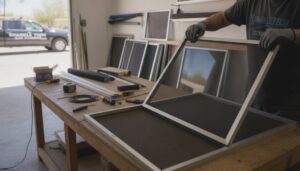
A home screen replacement service handles things like rescreening torn or damaged mesh, building brand-new screen frames, installing solar screens that block 70 to 90 percent of heat gain, and repairing sliding or hinged screen doors. According to this homeowner’s guide to window screen replacement, a qualified local provider should be comfortable working across multiple mesh types, including standard fiberglass, aluminum, solar screening, pet-resistant mesh, and basic insect screen. You can also explore your options for replaceable window screens to get a sense of the variety available before you call anyone out to your home.
Signs Your Home Screens Need Replacing (Not Just Cleaning)
Not sure if your home screens need a full replacement or just a good cleaning? Here are the key signs that tell you it’s time to stop scrubbing and start rescreening.
1. Visible Tears, Holes, or Sagging Mesh
This one is the most obvious, but it’s worth taking seriously. Even a small tear or pinhole is all it takes for mosquitoes and other insects to find their way inside. Tears are especially common after storms, and if you have pets, you’ve probably already seen what a determined dog or cat can do to a screen door. Sagging mesh is another red flag; when the mesh loses its tautness and starts to droop or bulge, it means the material has given out. No amount of cleaning will pull that mesh back into shape or close up a hole.
2. Bent, Warped, or Corroded Frames
A screen is only as good as the frame holding it. If your frame is bent, warped, or showing rust and corrosion, it likely won’t sit flush in the window or door track anymore. That gap around the edges lets in bugs, dust, and outside air just as easily as a hole in the mesh would. Metal frames are especially vulnerable in humid or coastal climates where moisture accelerates corrosion. According to When Should You Replace Window Screens?, a frame that’s difficult or impossible to remove cleanly is often a sign that warping has already set in.
3. UV-Degraded Mesh That Looks Fine but Isn’t
This is the sneaky one. A screen can look perfectly intact from across the room while the mesh has actually become brittle and structurally weak from years of sun exposure. You can do a quick field test: press your thumb gently against the mesh from the outside. If it feels stiff, crackly, or the weave separates under light pressure, that’s UV degradation, not dirt. Cleaning a brittle screen can actually make things worse by accelerating the breakdown. Discoloration and fading are also warning signs that the material is deteriorating and losing its ability to block UV rays effectively.
4. Screens That Are 7 to 10 Years Old
Age alone is a valid reason to take a closer look, even when there’s no dramatic damage to point to. According to industry guidance, screens over ten years old should generally be evaluated for rescreening or replacement. Mesh gradually loses tensile strength, UV resistance, and pest-blocking ability over time, even without a specific incident. If your screens are approaching that range and showing any of the subtler signs above, replacement is likely the smarter move.
5. When Cleaning Helps vs. When It Doesn’t
Professional screen cleaning is genuinely valuable. It removes dust, pollen, pet hair, and grime that blocks airflow and traps allergens, and regular cleaning can meaningfully extend your screen’s lifespan. But cleaning has a clear limit. It fixes appearance and airflow; it cannot restore a mesh or frame that has physically failed. If a screen still looks dingy or grayish after a thorough professional clean, the problem is likely oxidation or material breakdown, not surface dirt. That’s the point where a screen replacement service becomes the smarter, more cost-effective call.
The 4 Main Types of Home Screen Replacement Services
Once you know your screens need replacing, the next step is figuring out which type you actually need. Home screens are not one-size-fits-all, and choosing the right mesh for the job makes a big difference in comfort, durability, and long-term savings. Here are the four main types you will encounter.
1. Bug and Insect Screens
These are the classic screens most homeowners picture when they think about window screens. Standard bug screens use fiberglass or aluminum mesh with small enough openings to block mosquitoes, flies, gnats, and other pests while still letting fresh air flow freely through your home. They are the most common replacement trigger after storm damage or general wear. If your current screens have small holes or sagging mesh, a simple rescreen with standard bug mesh is usually all you need.
2. Solar Screens
Solar screens look similar to bug screens at first glance, but the mesh is significantly denser and heavier. That density is the key: solar screens are engineered specifically to block UV rays and reduce heat coming through your windows. Depending on the mesh density you choose, a quality solar screen can block anywhere from 65 to 90 percent of incoming solar energy. For homeowners in warm climates, that translates directly into lower air conditioning bills throughout the summer months.
3. Pet Screens
If you have dogs or cats, standard fiberglass mesh is no match for claws and persistent pushing. Pet screens solve that problem by using vinyl-coated polyester mesh, which is significantly stronger than conventional screen materials. They are a very common replacement request in households with active pets.
4. Screen Doors
Sliding, swinging, and retractable screen doors handle far more daily abuse than any window screen. Every open-and-close cycle puts stress on the frame and mesh, which means screen doors often need rescreening or full replacement sooner.
The good news is that a full-service provider like Sparkle Tech Sunscreens handles all four types under a single same-week service model. Instead of tracking down separate vendors for your solar screens, pet screens, and screen doors, one call covers everything.
Rescreening vs. Full Frame Replacement: Which Do You Actually Need?
Now that you know what type of screen you need, the next question is whether your existing frame can stay put or whether it needs to go entirely. This is where a lot of homeowners get confused, so let’s break it down simply.
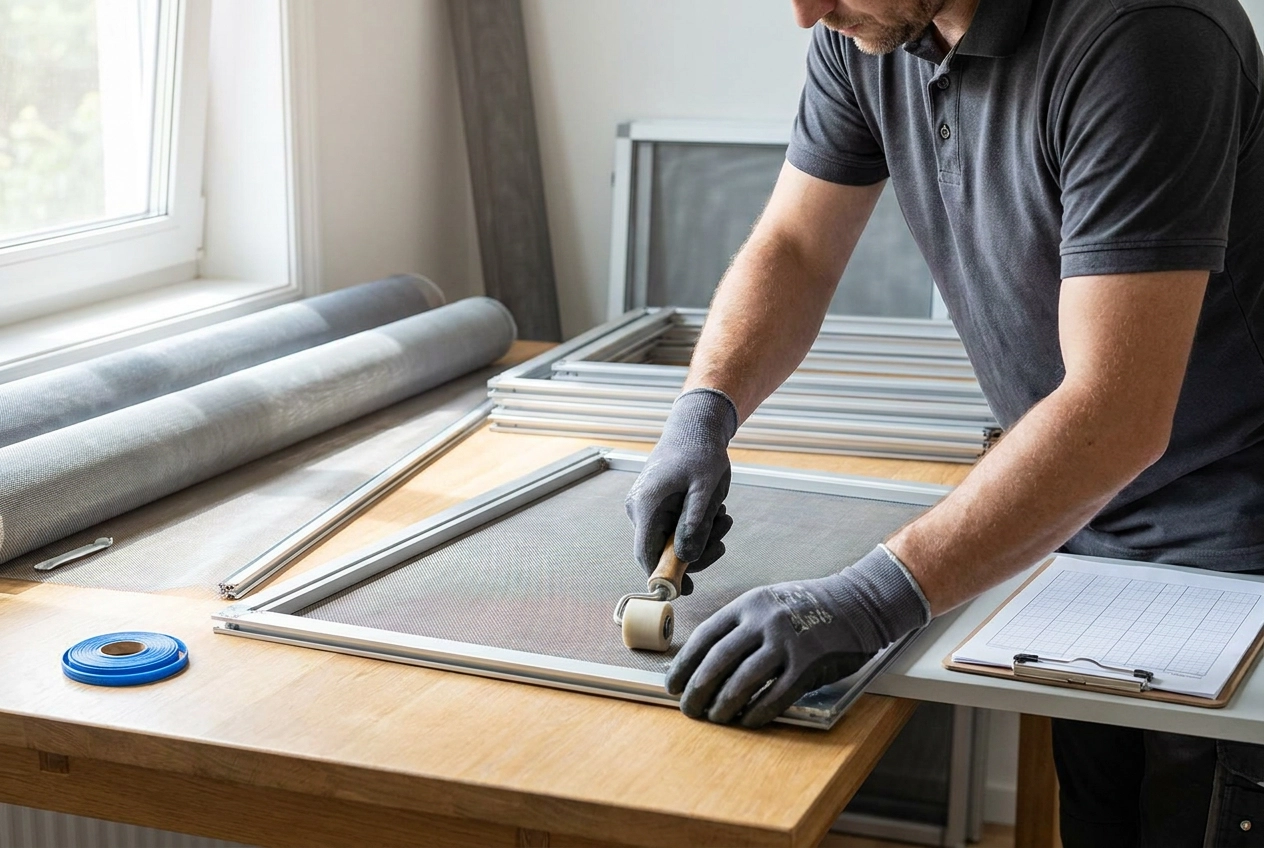
Rescreening means a technician removes the old mesh and the rubber spline holding it in place, cuts fresh mesh to fit, and presses everything back into your existing frame. The frame never leaves your window or door. This works beautifully when the frame is straight, the corners are still tight, and the channel groove is clean and intact. Since torn or sagging mesh accounts for roughly 90% of all screen damage, rescreening is far and away the most common outcome when a professional comes out to take a look.
Full frame replacement is a different story. If your frame is bent beyond straightening, the corners have cracked or separated, or corrosion has eaten into the channel so badly that new spline simply will not grip, then the whole unit needs to come out. Frames that no longer match your window track dimensions, which sometimes happens after a window upgrade, also fall into this category.
Think of it the same way cost-conscious homeowners now think about appliance repair versus appliance replacement. Increasingly, people are choosing repair first because the savings are real. That same logic applies here. According to a 2026 window screen repair and replacement cost guide, rescreening typically runs $25 to $75 per screen, while full frame replacement can cost $75 to $300 or more. That is a savings of 50 to 70 percent when your frame is still structurally sound.
The practical decision rule is straightforward. Pull the screen out and lay it flat on the floor or a table. If it lies flat without rocking, holds its shape, and the corners feel solid, rescreening is almost certainly the right call. If it wobbles, bends, or the corners feel loose or gritty with corrosion, a new frame is likely worth the extra cost.
A qualified technician can confirm this on-site in just a few minutes. And because same-week service is available, you do not have to sit on the phone for weeks waiting for an estimate before anything gets done.
What Solar Screen Replacement Can Do for Your Energy Bills
If you have single-pane windows that turn your living room into a greenhouse every afternoon, solar screens might be the most practical upgrade you haven’t tried yet. Here’s what they actually do for your home’s comfort and energy use.
How Solar Screens Stop Heat at the Source
Most window treatments work from the inside. Blinds, roller shades, and curtains all intercept sunlight after it has already passed through the glass and converted into heat inside your room. By that point, the damage is done. Your air conditioner has to work harder to compensate.
Solar screens flip that equation. Because they sit on the exterior of the window, they intercept solar radiation before it ever contacts the glass. Less heat gets through in the first place, which means your home stays cooler without your AC running as long or as hard. And despite what some people assume, a good solar screen does not turn your windows dark. Natural light still comes through; the harsh, heat-carrying rays are what get filtered out.
Mesh Density Actually Matters
Not all solar screen mesh is the same. Higher-density mesh, commonly rated at 90% blockage, stops the vast majority of UV and solar radiation coming through the window. This makes the biggest difference on south- and west-facing windows, which take the heaviest beating from direct afternoon sun. If your home’s hottest rooms face those directions, higher-density solar screen replacement is where you’ll feel the most immediate relief.
You can compare how solar shades differ from other interior options to understand why exterior placement outperforms even the best indoor products for heat reduction.
A Bonus You Might Not Expect
Solar screens also block up to 90% of UV rays, which protects everything inside your home from fading. Hardwood floors, upholstered furniture, area rugs, and artwork all degrade faster under prolonged UV exposure. Replacing a sofa or refinishing a floor costs significantly more than rescreening a window, so the protective benefit is a real long-term financial win on top of the energy savings.
Taken together, solar screen replacement is both a comfort upgrade and a genuine home investment. Sparkle Tech Sunscreens handles professional solar screen installation as part of their same-week service window, so you don’t have to wait weeks to start seeing results.
How Much Does Professional Screen Replacement Cost?
One of the first questions homeowners ask is a simple one: what’s this going to cost me? The good news is that professional screen replacement services are genuinely one of the more affordable home maintenance investments you can make.
Standard window rescreening typically runs between $25 and $55 per screen for most homes, with the final number depending on screen size, frame condition, and the mesh material you choose. If your frame is in solid shape and only the mesh needs swapping out, you’re looking at the lower end of that range. According to 2026 window screen cost data from Angi, national averages have held fairly steady, making this one of the rare home services where the bill rarely comes as a shock.
Solar screen rescreening costs a bit more, typically running $40 to $60 per window due to the denser, UV-blocking mesh material involved. That premium is real, but so is the payoff. Solar mesh blocks 70 to 90 percent of solar heat gain, and on west-facing windows the energy savings can recover that added cost within just a couple of summers.
Pet screen rescreening carries about a 30 percent premium over standard fiberglass, landing most jobs in the $35 to $50 per window range. That’s still a fraction of what you’d pay to replace a full window unit or door assembly, and pet-grade mesh lasts up to 25 years compared to 10 for standard material.
Screen door rescreening tends to run slightly higher than window screens given the larger surface area and additional hardware like rollers, tension springs, and handle sets that sometimes need attention alongside the mesh.
Finally, ask any provider upfront about bundling. Combining screen repair with a cleaning visit during the same appointment can reduce your total cost and help your new screens stay in great shape longer. It’s a small question that can make a real difference on the final invoice.
Why Same-Week Service Matters and What to Look for in a Local Provider
A torn or missing screen is more than an eyesore. Every gap in your mesh is an open invitation for mosquitoes, gnats, and other insects to move right into your living space. Beyond bugs, damaged screens allow debris, pollen, and dust to drift indoors freely. If you have solar screens, a tear also means unfiltered UV rays and heat are pouring through your windows again, which chips away at the comfort and energy efficiency you installed them for. That makes fast repair a practical necessity, not just a cosmetic preference.
The challenge is that not every service provider treats screen work as urgent. Many general contractors schedule it weeks out because it falls low on their priority list compared to bigger jobs. If you have called around and heard “we can get you in next month,” you already know the frustration. Providers who offer same-week availability stand out for a real reason, and it is worth seeking them out specifically.
What to Look for When Choosing a Provider
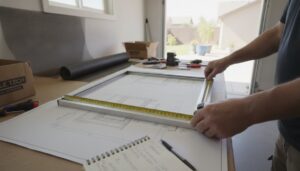
When comparing your options, keep a short checklist in mind. First, look for a provider who handles all screen types in a single visit: bug screens, solar screens, pet-resistant mesh, and screen doors. Scheduling multiple contractors for different screen types wastes time and money. Second, ask for an on-site assessment rather than a ballpark quote over the phone. Frame condition, mesh type, and screen dimensions all affect the final cost, so guesswork quotes rarely hold up. Third, check for verifiable reviews on Google or local review platforms before booking.
One often-overlooked question is whether the provider offers screen cleaning as part of the service. Having frames properly cleaned before new mesh is installed ensures a tighter fit and a longer-lasting result. It is a small detail that makes a noticeable difference.
Sparkle Tech Sunscreens is a local independent specialist built around exactly this kind of full-service, fast-turnaround model. They offer same-week rescreening, solar screen installation, bug and pet screen repair, screen door service, and screen cleaning, all handled without the extended wait times that come with larger general contractors.
Ready to Get Your Screens Replaced This Week?
By now, you have everything you need to make a smart decision. You know how to spot real screen damage, you understand the difference between rescreening and full frame replacement, and you know that upgrading to solar or pet-resistant mesh is worth serious consideration if you are still running standard fiberglass. The core takeaway is simple: when your frames are straight and solid, rescreening is almost always the smarter financial move. Professional rescreening typically runs $25 to $75 per screen, compared to $75 to $300 for full frame replacement. That gap adds up fast across a whole house.
Do not wait on this one. Damaged screens get worse with every storm, sunny afternoon, and curious pet that brushes against them. What starts as a quick rescreen job can turn into a full frame replacement if the damage spreads.
Sparkle Tech Sunscreens offers same-week screen replacement, solar screen installation, screen door repair, and bundled screen cleaning to make the whole process easy. As a local independent specialist, Sparkle Tech brings focused expertise and fast turnaround that general contractors simply do not prioritize. Reach out today and get it handled this week.
Conclusion
A cracked screen does not have to turn into a stressful or expensive ordeal. By knowing what to look for, you can walk into any screen replacement service feeling prepared and in control. Remember the essentials: verify the repair shop’s credentials and reputation, ask about the quality of replacement parts, confirm the warranty coverage, and get a clear price estimate before agreeing to anything.
These simple steps can mean the difference between a repair that lasts for years and one that fails within weeks.
Now that you have the knowledge, it is time to put it to use. Start by researching a few local or trusted screen replacement services near you, compare your options, and ask the right questions. Your device deserves a quality fix, and with the right information, you are fully equipped to make that happen.