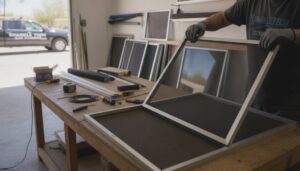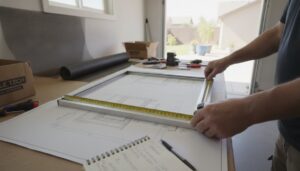

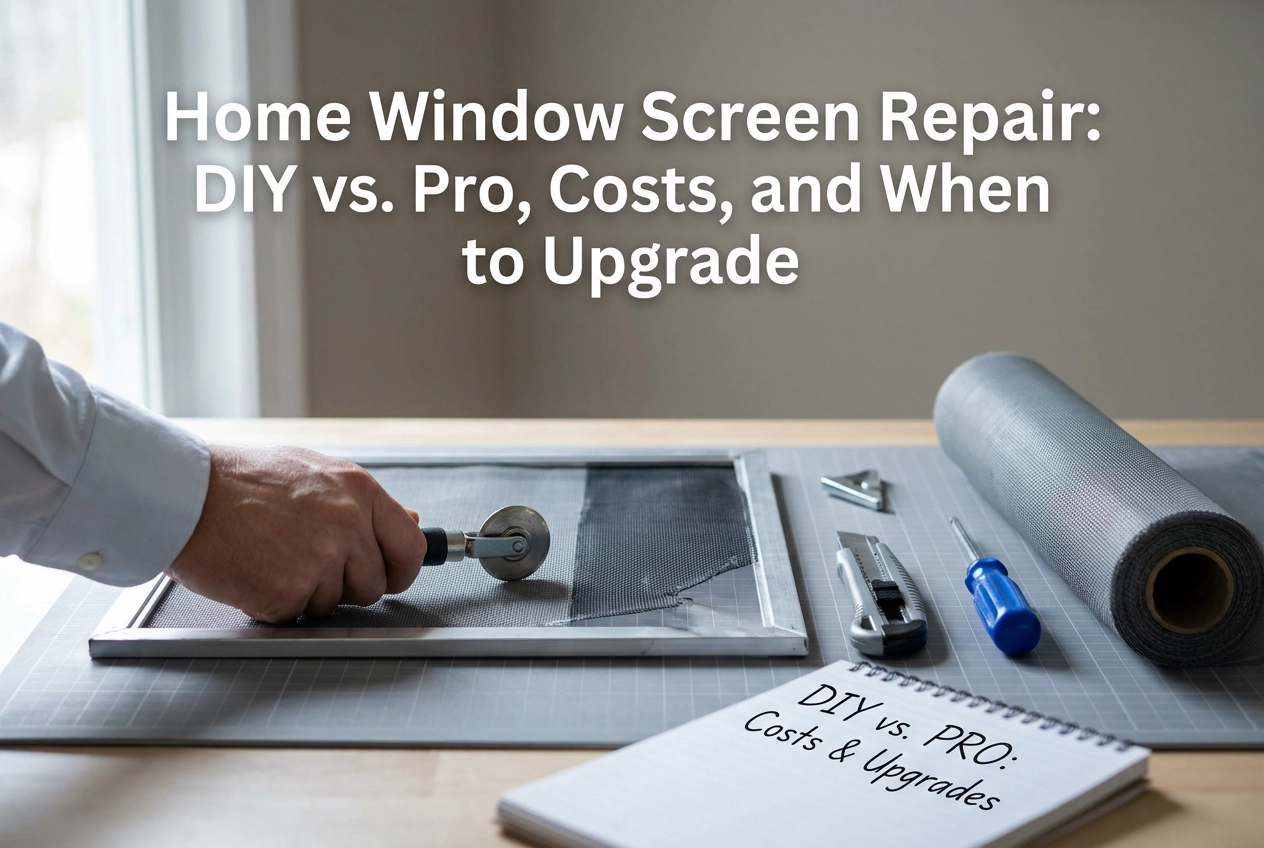

There is nothing quite like a warm breeze flowing through your windows on a perfect spring day. But when your window screen has a hole, a tear, or is barely hanging on, that refreshing breeze comes with some unwanted guests like bugs, debris, and frustration.
The good news? Home window screen repair is one of those home maintenance tasks that does not have to be overwhelming or expensive. Whether you are dealing with a small puncture from a curious pet or a full frame that has seen better days, you have options.
In this post, we are breaking down everything a beginner needs to know. You will learn the difference between tackling repairs yourself versus hiring a professional, what each option actually costs, and how to figure out when it might be time to stop patching and just upgrade your screens entirely.
By the end, you will feel confident making the right call for your home and your budget. So let’s start simple and work through it together, one screen at a time.
What Counts as Repairable vs. What Needs Full Rescreening
Not every damaged screen tells the same story, and knowing the difference between a quick patch and a full rescreening job can save you both time and money. The good news is that the decision is usually pretty straightforward once you know what to look for.
Hole and tear size is your first checkpoint. Small holes under about an inch in diameter are generally good candidates for a patch, especially when the surrounding mesh is still flexible and intact. Once a tear stretches beyond two to three inches, though, patching creates an uneven, stressed surface that tends to fail quickly. Damage located near the frame’s edge is an even bigger red flag; if the mesh is torn close to where the spline holds it in place, no patch can restore proper tension. According to Window Screen Repair vs Replacement Cost Guide 2026, mesh that feels brittle or crumbles at the edges, sometimes called “sun rot,” is a full replacement trigger regardless of hole size.
Frame condition matters just as much as the mesh itself. A bent, warped, or corroded aluminum frame will not seat properly in the window opening, leaving gaps that insects can easily find. Repatching mesh over a compromised frame almost always leads to repeat failures within a single season, making it a frustrating waste of effort and money.
Multiple small holes scattered across one panel are a warning sign too. As East Side Glass notes, screens over ten years old often show age-related mesh breakdown across the entire surface. Patching each spot individually ends up costing more than one rescreening appointment.
Finally, never overlook the spline, the rubber cord that locks mesh into the frame groove. Dried, shrunken, or cracked spline must be replaced alongside the mesh during any rescreening job; skipping it is the single most common reason DIY repairs fall apart within a few weeks.
The Real Cost Comparison: DIY, Professional Repair, and Full Window Replacement
Once you understand what your screen actually needs, the next question becomes pretty simple: what’s it going to cost? Let’s break down all three options side by side so you can make a confident decision without any guesswork.
DIY Rescreening: The Budget Route
If you’re handy and your window frame is in good shape, DIY rescreening can run as little as $20 to $40 per window. That estimate covers a roll of fiberglass mesh, a length of spline, and a spline roller tool. The catch is that this assumes a standard rectangular frame with no bends, no corrosion, and a spline channel that’s still clean and intact. If any of those conditions aren’t met, your savings shrink fast and your results may disappoint. It’s also worth noting that the spline roller is a one-time purchase, so if you’re tackling five or more screens, your per-screen cost drops closer to $5 to $15 once the tool is paid for.
Professional Rescreening: Quality That Holds Up
Professional rescreening typically runs $45 to $85 per screen, and that price includes proper mesh tensioning, full spline replacement, and a finished result built to handle repeated opening and closing without sagging or pulling loose at the corners. For specialty needs like oversized windows, arched frames, or solar mesh upgrades, professional installation runs $150 to $300 or more per screen. Even at that higher price point, you’re still getting a fraction of what window replacement would cost you. You can explore current pricing details in this window screen replacement and repair cost guide to get a clearer picture before committing.
Full Window Replacement: A Very Different Conversation
Here’s where the numbers really put things in perspective. A single window replacement runs $450 to $1,500 installed, and mid-to-large exterior window or door replacement projects average around $14,000 total. Compared to professional rescreening, that’s not even a close call. The repair market backs this up: the global door and window repair service market hit $82.4 billion in 2025 and is projected to reach $138.6 billion by 2034, growing at a 5.9% CAGR. Residential repairs account for 52.3% of that market, which tells you that homeowners everywhere are increasingly choosing smart, targeted repairs over expensive full replacements. When your screen is the problem, replacing the entire window is like buying a new car because a tire went flat.
Is This a Repair Opportunity or an Upgrade Opportunity? The Case for Solar Screens
Here’s something worth considering while you’re already scheduling a screen repair: what if the same appointment could also lower your energy bill?
Solar screens are made from a heavier, tightly woven UV-blocking mesh that works differently from standard fiberglass. Instead of just keeping bugs out, the material intercepts solar radiation before it ever makes contact with the glass. According to Phifer, one of the leading screen fabric manufacturers, solar screen options can block anywhere from 65% to 97% of solar heat. That means significantly less heat entering your home during the hottest months of the year, which translates directly to reduced strain on your air conditioning system.
The timing matters here. The residential energy-efficient windows market is growing from $13.45 billion in 2026 toward $30.42 billion by 2036, at an 8.5% CAGR driven by rising energy costs and tightening building efficiency codes. Solar screens are genuinely the lowest-cost entry point into that trend. You’re not replacing windows at $450 to $1,500 per unit; you’re upgrading the mesh during a repair you were already going to make.
And that brings up the smartest financial angle in this whole conversation. When a standard fiberglass screen needs rescreening anyway, the labor involved is identical regardless of which mesh goes in. The spline gets removed, the frame gets prepped, and new mesh gets installed. The only real difference between a standard repair and a solar upgrade is the material itself. You’re essentially getting an energy-efficiency improvement at the cost of a mesh upgrade, nothing more.
The comfort benefits go beyond temperature, too. Homeowners consistently report that solar screens cut glare on televisions and monitors noticeably, without blocking natural light entirely. It’s one of those upgrades people feel immediately after installation, not months later.
Sparkle Tech’s solar screen rescreening service is specifically designed to combine both needs into one visit. You get the repair handled and the upgrade installed at the same time, with no second appointment required.
Screen Door Repair Deserves Its Own Checklist
Screen doors are in a different category than window screens, and they deserve to be treated that way. A window screen sits quietly in its frame and mostly just deals with wind and rain. A screen door gets slammed, kicked, scratched by pets, and opened hundreds of times a year. That kind of repeated physical contact creates damage patterns that are completely different from standard window screen wear, which means the repair approach needs to be different too.
One of the most common mistakes homeowners make is replacing just the mesh on a sagging or dragging screen door without looking at the frame first. If the frame is misaligned from seasonal expansion and contraction, the new mesh gets put under the same stress that destroyed the original. The result? Another torn screen within a few months. Frame adjustment is not optional; it is part of the repair.
If you have dogs or cats, pet-resistant mesh is genuinely worth the upgrade on screen doors specifically. It is made from thicker, vinyl-coated fiberglass and holds up significantly longer than standard mesh under the kind of repeated scratching and pawing that screen doors attract. Community feedback and dedicated pet screen product lines from manufacturers like RiteScreen both confirm that pet households need a different material specification for doors than they do for windows.
Hardware is the other piece that often gets skipped. Rollers, latches, and tension springs should be inspected every time the mesh is replaced. Roller failure alone is one of the most common reasons a screen door gets taken out of service entirely, and it often goes unnoticed because the visible damage looks like a mesh or alignment issue.
Professional screen door repair through a service like Sparkle Tech handles all of it in a single same-week visit: mesh, spline, frame adjustment, and hardware. That kind of comprehensive approach is what breaks the cycle of piecemeal fixes that cost more in the long run.
What DIY Screen Repair Guides Usually Leave Out
Most DIY guides walk you through the basics: pop out the old spline, roll in new mesh, trim the edges, and you’re done. What they skip over are the details that actually determine whether your repair lasts one season or five.
Mesh tension is the hardest part, and no tutorial can fully teach it. If the mesh is too loose, you’ll see sag and wrinkles within a few months. If it’s pulled too tight, the frame bows under the stress, and when summer heat causes the frame material to expand, the spline pops right out of the channel. Getting tension right requires consistent, calibrated pressure across all four sides of the frame at once. That’s a tactile skill built through repetition, not something a five-minute YouTube video can hand you.
Hardware store kits are also structurally limited. They typically include standard 18×14 fiberglass mesh, which works fine for a basic like-for-like replacement. But if you’re hoping to upgrade to solar-blocking mesh or pet-resistant material during your repair, those products simply aren’t available in kit form. Solar screens and pet-resistant screens require specialty materials and different tensioning techniques, making them a professional-only upgrade path.
Custom or non-standard frames add another layer of difficulty. Casement windows with tight tolerances, bowed frames, or arched transoms require frame-specific tensioning and custom-cut mesh you won’t find on a hardware store shelf. A frame that isn’t perfectly square won’t seat properly regardless of how carefully you roll the spline.
The bigger picture worth knowing: according to research on DIY versus professional repairs, homeowners regularly attempt DIY first and end up calling a professional anyway after unsatisfactory results. Professional window services are on track to be more than twice the size of the consumer DIY market by 2030, and that gap reflects a real pattern.
The cost math matters here too. A detailed time, cost, and quality comparison makes clear that a failed DIY repair doesn’t just cost you the $20 to $40 in materials; it costs you the time, the repeat supply purchase, and ultimately the professional fee you’ll pay anyway. A repair that fails before the first cold snap effectively costs more than professional rescreening would have from the start.
The 50% Rule: How to Decide When You Have Multiple Aging Screens
Here’s a simple rule that makes the whole “repair or replace?” question a lot easier to answer: if fixing a single screen costs more than 50% of what a full rescreening would run, the math is telling you to rescreen. Professional rescreening typically runs $45 to $85 per screen in 2026, so any patch or repair estimate that creeps past $40 on a moderately worn screen has already crossed that threshold.
Where this rule gets really powerful is when you apply it across an entire home at once. Think about a house with 15 or 20 original screens, all aging at roughly the same pace. Fixing each one individually as it fails sounds manageable until you realize you’re paying separate service fees, scheduling multiple visits, and still ending up with mismatched mesh by the end of the year. A window screen replacement cost guide walks through exactly this scenario, showing how a bulk rescreening appointment almost always beats the drip-drip cost of reactive repairs. The 64.1% replacement segment share in the energy-efficient windows market backs this up; homeowners who look at the total picture consistently choose full upgrades over incremental patches.
A professional assessment also opens the door to smarter triage. One visit can flag which screens need immediate attention, which are fine for another season, and which are good candidates for a solar mesh upgrade while everything is already pulled apart. That kind of organized approach prevents the worst-case scenario: three screens failing in the same week in July, when every screen repair service in town has a backlog. Booking a multi-screen appointment before summer hits keeps you ahead of peak-season demand and means your home is fully protected right when you need it most.
Screen Cleaning: The Maintenance Step Most Homeowners Skip
Here’s something most homeowners never think about until a screen is already torn: cleaning your screens regularly is one of the simplest ways to make them last longer.
Dust, pollen, and airborne debris build up inside screen mesh over time, and that buildup physically blocks airflow. If your home relies on open windows for ventilation instead of air conditioning, a clogged screen makes a noticeable difference in how much fresh air actually moves through. It is not just a cosmetic issue; it is a functional one.
That debris also speeds up wear. Moisture gets trapped in dirty mesh, and combined with UV exposure, it breaks down screen fibers faster than clean screens facing identical conditions. In other words, two screens installed the same day can age at very different rates depending on how well they are maintained.
How you clean matters just as much as whether you clean. Blasting screens with a high-pressure garden hose can loosen the spline (the rubber gasket holding the mesh in the frame) and distort the mesh weave itself. Professional screen cleaning uses gentle, low-pressure methods that remove buildup without stressing the materials.
Sparkle Tech offers screen cleaning as a standalone service, which makes it easy to pair a cleaning visit with a quick inspection. That combination catches repair or rescreening needs early, before a small issue becomes an urgent replacement. Scheduling a cleaning once or twice a year is genuinely the lowest-cost preventive step available between repair cycles.
Why Turnaround Time Matters More Than You Might Think
A torn screen in warm weather is not a problem you can schedule for next month. Mosquitoes, gnats, and flies do not wait for a convenient repair window. Once a tear opens up, insects find it quickly, and every day without a working screen means more heat pouring directly into your living space through an unshielded opening. That daily heat gain adds up on your cooling bill and on your comfort level, especially through July and August when temperatures are already pushing their peak.
Here is where the market reality makes things more complicated. North America accounts for 34.1% of the global window and door repair services market, and that demand does not spread evenly across the year. It spikes hard in late spring and stays elevated through early fall. Generalist contractors who handle dozens of different home repair categories get overwhelmed exactly when screen calls are highest, which means booking a repair in June can easily turn into a three-week wait.
That is the core reason same-week service matters so much. Sparkle Tech offers same-week scheduling on rescreening, solar screen installation, screen door repair, and screen cleaning. A call placed today moves toward resolution this week, not sometime next month after the hottest stretch of summer has already passed.
There is also a practical efficiency advantage to bundling services into a single visit. If your window screens need rescreening, your screen door needs a hardware fix, and you want to schedule screen repairs before summer heats up, handling everything in one appointment eliminates repeat service-call fees and repeat scheduling headaches.
Preparing before bug season is the single most effective move a homeowner can make. Reaching out in early to mid-spring gives you the best shot at same-week availability before backlogs build. Waiting until you are already living with a broken screen in July means competing with every other homeowner who also waited.
Making the Right Call on Home Window Screen Repair
The decision really comes down to three numbers: $20–$40 for a DIY rescreen, $45–$85 for professional rescreening, and $450–$1,500 for a full window replacement. Most damaged screens fall comfortably into the first two categories, meaning you can restore your home’s insect barrier and airflow for a fraction of what a window replacement would cost. Professional screen repair consistently ranks among the highest-value home maintenance services available precisely because the cost is low and the impact is immediate.
Before you call, do a quick walkthrough using the 50% Rule. Count your screens, note any bent frames, flag visible tears, and check your screen doors separately. Arriving at that conversation with a documented scope means Sparkle Tech can give you an accurate estimate and often schedule you within the same week.
That single appointment can also accomplish more than just patching holes. It’s a natural opportunity to upgrade sun-facing windows to solar mesh, get your screen doors assessed, and add a professional cleaning to the visit. Compressing those improvements into one call saves time and eliminates the need for follow-up appointments. Understanding when repair makes sense versus full replacement is the first step; acting on that knowledge quickly is what keeps insects out and your home comfortable all season.
Conclusion
Window screen repair does not have to be a source of stress or confusion. Here is what to keep in mind as you move forward: small holes and minor damage are almost always DIY-friendly and budget-conscious; larger frame damage or multiple screens often justify calling a professional; and when repairs start adding up, upgrading to better screens can actually save you money long term.
The right choice always comes down to the size of the damage, your comfort level, and your budget.
Now it is your turn to take action. Walk around your home today, inspect each screen, and honestly assess what you are working with. Start with the worst offender and go from there. One repaired screen leads to another, and before you know it, that perfect spring breeze is exactly what it should be, pure and pest-free.