
Table of Contents
- Sun Screens vs Standard Insect Screens: Quick Comparison
- What Are Solar Screens and How Do They Work
- What Are Standard Insect Screens
- Heat Reduction and Energy Efficiency
- Visibility Differences in Window Screens
- Solar Screen Benefits and UV Protection
- How to Choose Window Screen Mesh for Your Home
- Durability, Airflow, and Installation Considerations
Last Updated: August 9, 2026
Sun Screens vs Standard Insect Screens: Quick Comparison
The difference between sun screens and standard insect screens comes down to one fundamental trade-off: heat reduction versus visibility and airflow. Sun screens block 75-90% of the sun’s rays using dense, tightly woven PVC-coated polyester, while standard insect screens prioritize airflow and clear views with looser fiberglass or polyester mesh. For homeowners in Phoenix and Scottsdale dealing with brutal summer heat, that distinction affects your energy bills, interior comfort, and natural light.
At SPARKLE TECH SUN SCREENS, we help homeowners understand this choice every day. Sun screens and standard insect screens solve different problems. Neither is universally "better", the right choice depends on what you’re optimizing for: solar heat reduction, insect protection, visibility, or some combination.
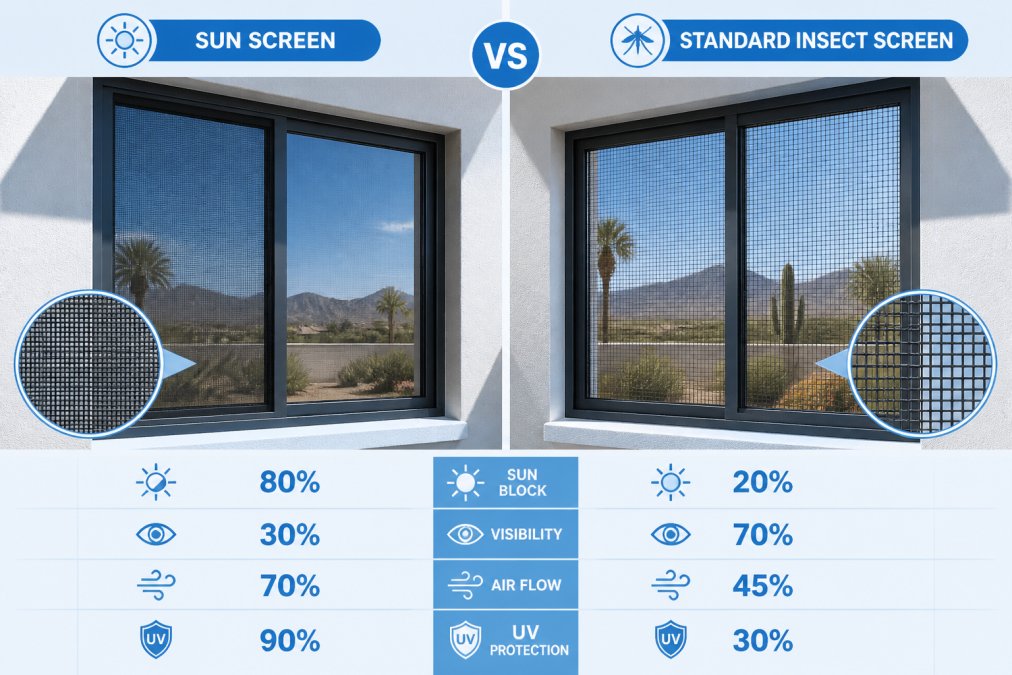
| Feature | Sun Screens | Standard Insect Screens |
|---|---|---|
| UV Blockage | 75-90% | 0-10% |
| Heat Reduction | Significant | Minimal |
| Visibility | Reduced (daytime privacy) | Clear, unobstructed |
| Airflow | Restricted | Excellent |
| Insect Protection | Yes | Yes |
| Material | PVC-coated polyester | Fiberglass or polyester |
| Mesh Density | Very dense (high count) | Loose (low count) |
| Best For | Heat/UV protection, energy savings | Clear views, maximum airflow |
| Typical Cost | Higher | Lower |
What Are Solar Screens and How Do They Work
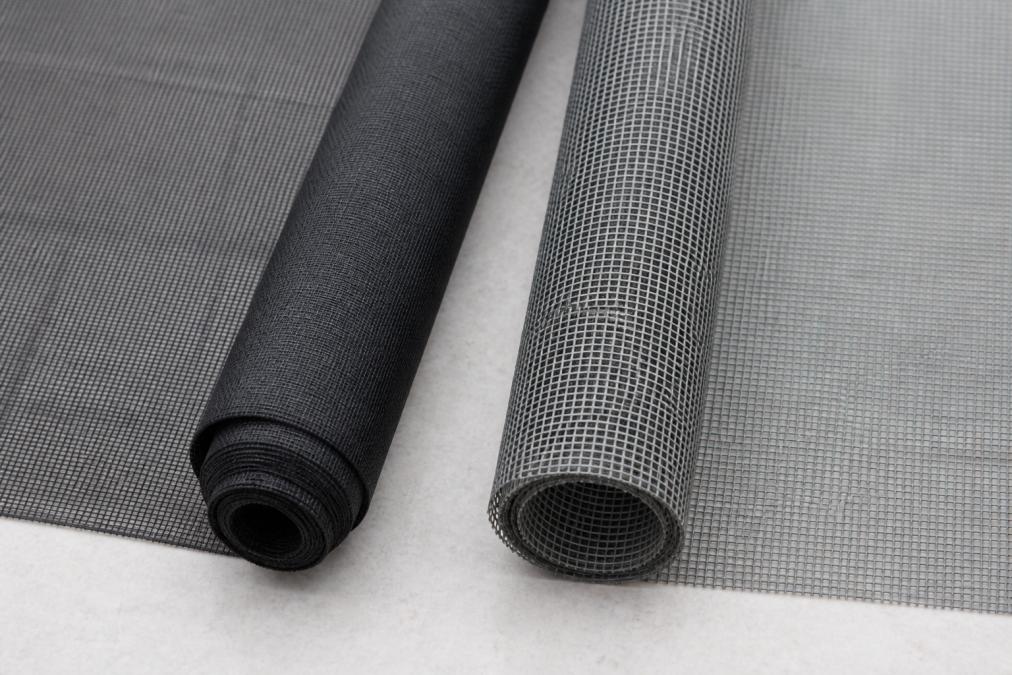
Solar screens function as exterior shading devices that intercept the sun’s rays before they reach your windows. The key is mesh density, the number of threads per inch woven into the fabric. A sun screen’s tightly woven PVC-coated polyester construction creates a physical barrier that reflects and absorbs solar radiation, preventing heat transfer into your home.
The most common solar screen options block either 80% or 90% of the sun’s rays. An 80% screen reduces solar heat gain while maintaining slightly better visibility and airflow than a 90% option. A 90% screen maximizes heat reduction but makes interiors noticeably darker and restricts airflow more significantly.
Solar screens work through reflection and absorption. The dense weave reflects incoming solar radiation back outdoors, while the material absorbs additional heat that would otherwise penetrate the glass. This reduces the solar heat gain coefficient (SHGC) at your windows, directly lowering cooling costs during Arizona’s brutal summers. Homes with solar screens typically experience cooler interior temperatures without running air conditioning as aggressively.
Solar screens also protect your interior furnishings and flooring from UV damage. They block the ultraviolet rays responsible for fading upholstery, hardwood floors, and artwork, preserving the appearance and value of your interior spaces.
The 80% solar screen is the sweet spot for most Arizona homeowners. It delivers substantial heat reduction while preserving enough visibility and airflow that you won’t feel confined. The 90% option is best reserved for rooms with western or southern exposure that get blasted with afternoon sun.
What Are Standard Insect Screens
Standard insect screens are designed with one primary purpose: keeping insects, dust, and debris out while allowing maximum airflow and visibility. They use a loose, open mesh pattern, typically fiberglass or standard polyester, with mesh counts ranging from 14×14 to 20×20 threads per inch. The lower density means air moves freely through the screen, and you can see clearly outside without obstruction.
The fiberglass mesh is lightweight, affordable, and easy to repair. If a pet tears a hole or a branch punctures it, patching costs almost nothing and takes minutes. Standard screens have been the default window treatment for decades because they solve the basic problem: bugs out, airflow in.
However, standard insect screens provide virtually no solar heat reduction. They don’t block UV rays or lower your cooling costs. In a Phoenix summer, a window with a standard insect screen lets the same amount of solar heat through as a window with no screen at all.
The visibility advantage of standard screens is substantial. Looking out through a standard insect screen, the view is nearly as clear as looking through an open window. The loose weave is barely noticeable.
Standard insect screens excel at one job: keeping bugs and debris out while preserving airflow and views. They’re not designed for heat reduction, and expecting them to cool your home is a common misconception.
Heat Reduction and Energy Efficiency
Solar screens deliver measurable heat reduction. The exact savings depend on your home’s orientation, window size, local climate intensity, and direct sun exposure. A window with southern or western exposure benefits most from solar screens because those exposures receive the most intense afternoon and evening sun.
By blocking 75-90% of solar radiation before it reaches your glass, solar screens reduce the amount of heat your air conditioning system must remove from your home. This translates to lower cooling costs, especially during peak summer months. Some homeowners report noticeable reductions in their energy bills within the first month of installation.
Standard insect screens have minimal impact on energy efficiency. They don’t meaningfully reduce heat gain or lower cooling costs. If energy savings are your primary goal, a standard screen won’t get you there.
In Arizona’s intense climate, the investment in solar screens often pays for itself through reduced cooling expenses within a few years, especially for homes with extensive south-facing or west-facing windows.
Don’t assume that any window screen will reduce your energy costs. Standard insect screens provide almost no thermal benefit. If you’re installing screens specifically to lower your cooling bills, you need solar screens, not standard insect screens.
Visibility Differences in Window Screens
The visibility trade-off is the most noticeable difference between sun screens and standard insect screens. Looking through a standard insect screen, the view is sharp and clear. The loose mesh is barely perceptible.
Looking through a solar screen, the view is noticeably different. An 80% solar screen reduces visibility by approximately 20-30%, creating a slightly hazy view of the outside. A 90% solar screen reduces visibility more significantly, the view becomes noticeably obscured, almost like looking through tinted glass.
However, solar screens provide daytime privacy as a trade-off. From outside during daylight hours, it’s difficult to see into your home. This is why many Arizona homeowners appreciate solar screens on ground-floor windows or windows facing the street. At night, when interior lights are on, solar screens become more transparent from outside.
The visibility difference matters most for rooms where you spend time looking out: living rooms, home offices, kitchens with window views. For bedrooms, bathrooms, or utility areas, the reduced visibility of a solar screen is less of a concern.
Some manufacturers, like Phifer with their UltraVue and BetterVue lines, have developed improved visibility insect screens that offer better optical clarity than standard fiberglass while maintaining excellent airflow. These are a middle ground, not solar screens, but clearer than basic insect screens.
Solar Screen Benefits and UV Protection
The primary benefit of solar screens is heat reduction and energy savings, but UV protection is equally important for preserving your home’s interior. Ultraviolet radiation damages upholstery, carpets, hardwood floors, and artwork. A quality solar screen blocks 75-90% of UV rays, dramatically slowing this deterioration and extending the life of your furnishings.
Solar screens also reduce glare, which improves comfort and reduces eye strain when working near windows. The dense weave diffuses incoming light, softening harsh glare without completely darkening the room. This is particularly valuable in home offices or media rooms.
Another significant benefit is daytime privacy. Solar screens obscure the view into your home during daylight hours. For ground-floor windows or windows facing busy streets, this privacy benefit is substantial.
The durability of solar screen materials is superior to standard fiberglass. PVC-coated polyester resists fading, mildew, and UV degradation. A quality solar screen maintains its appearance and performance for many years, even in Arizona’s harsh climate.
Solar screens are ideal for homeowners prioritizing energy savings, UV protection, and daytime privacy. They’re the right choice if you have significant south-facing or west-facing windows, valuable furnishings you want to protect from fading, or if you’re willing to accept reduced visibility in exchange for measurable heat reduction and comfort improvements.
How to Choose Window Screen Mesh for Your Home
Choosing between sun screens and standard insect screens requires honest assessment of your priorities. Start by identifying which windows get the most direct sun exposure. In Arizona, south-facing and west-facing windows receive intense afternoon and evening sun, these are where solar screens deliver the most noticeable benefit.
Next, consider what you use each room for. If you spend hours looking out a particular window, your home office, kitchen, or living room, visibility matters. For bedrooms or bathrooms, visibility is less critical.
Evaluate your energy costs and cooling patterns. If your AC runs constantly in summer and your energy bills are high, solar screens are a strong investment. Consider your home’s aesthetic. Solar screens change the appearance of your home from the exterior. Standard insect screens are nearly invisible from the street.
For solar screens, 80% and 90% options are most common. For standard insect screens, a 17×17 or 18×18 mesh is adequate for most Arizona homes. Pet-resistant mesh is worth considering if you have dogs or cats, products like Phifer SunTex are designed to withstand pet damage.
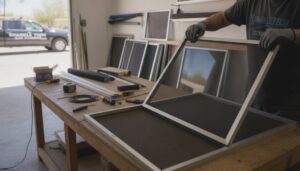
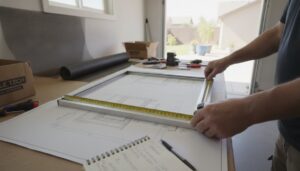
Professional installation ensures custom fit and proper frame construction. Screens that don’t fit tightly allow insects to slip around the edges and reduce the effectiveness of solar heat blocking. SPARKLE TECH SUN SCREENS offers same-week service with custom measurements and professional installation, ensuring your screens fit perfectly and perform as designed.
Durability, Airflow, and Installation Considerations
Durability varies significantly between screen types and materials. Standard fiberglass screens are inexpensive but fragile. In Arizona’s dusty climate with frequent wind, fiberglass screens can deteriorate within a few years.
Solar screen materials like PVC-coated polyester and Textilene are substantially more durable. They resist UV degradation, mildew, and physical damage. A quality solar screen maintains its appearance and function for 10+ years in Arizona’s climate.
Airflow differences are noticeable. Standard insect screens have minimal airflow restriction. Solar screens restrict airflow by 40-60% depending on density. If natural ventilation is important, this is a meaningful trade-off.
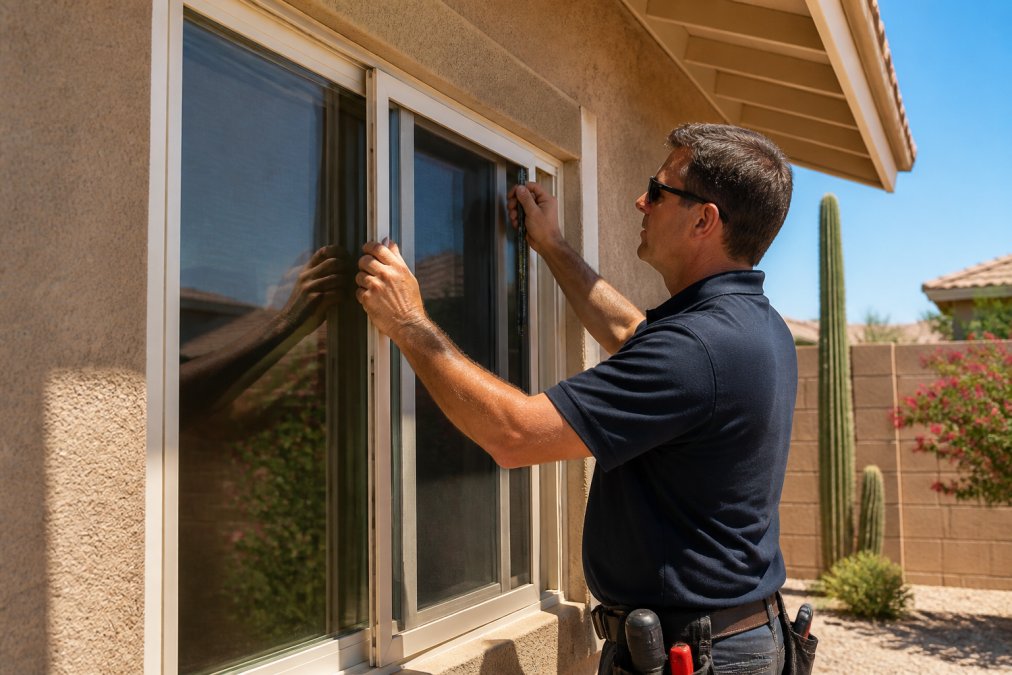
Installation quality directly affects performance and longevity. A poorly fitted screen allows insects to enter around the edges and reduces the effectiveness of solar heat blocking. Professional installation with custom measurements ensures tight fit and proper frame construction.
The frame material matters too. Aluminum frames are standard and durable. The frame should be sturdy enough to hold the mesh tension without sagging.
Maintenance requirements are minimal for both types. Regular cleaning removes dust and debris. Professional rescreening services are available if your existing screens are damaged or worn. SPARKLE TECH SUN SCREENS provides rescreening services with same-week turnaround, allowing you to upgrade to solar screens or replace damaged standard screens quickly.
Choosing between sun screens and standard insect screens is ultimately about what matters most to you: heat reduction and energy savings, or maximum visibility and airflow. For most Phoenix and Scottsdale homeowners, the answer involves both, solar screens on south and west-facing windows where heat gain is severe, and standard screens on other windows where visibility and airflow are priorities. SPARKLE TECH SUN SCREENS can assess your specific situation, provide custom measurements, and install the right combination of screens for your home’s unique needs. Get your free quote today and discover how properly chosen and installed screens can improve your comfort, protect your interior, and reduce your cooling costs year-round.
Frequently Asked Questions
What is the main difference between solar screens and insect screens?
Solar screens feature a tighter weave density (typically 80-90% UV blockage) made from vinyl-coated polyester or PVC materials, designed to reduce heat and glare. Standard insect screens use looser fiberglass or polyester mesh focused on keeping bugs out while maximizing airflow and visibility. Solar screens sacrifice some outward visibility and airflow for significant energy savings and interior protection, while standard screens prioritize unobstructed views and ventilation.
Are solar screens worth the extra cost for home energy efficiency?
In Arizona's climate, solar screens can reduce solar heat gain significantly, lowering cooling costs during peak summer months. The payback period depends on your current energy bills and local utility rates. Professional installation with a lifetime guarantee ensures long-term durability, making the investment worthwhile for homeowners planning to stay in their homes for several years. Contact SPARKLE TECH SUN SCREENS for a free quote to evaluate the potential savings for your specific situation.
Can you see through solar screens as well as standard insect screens?
No. Solar screens with higher UV blockage (80-90%) noticeably reduce outward visibility and natural light compared to standard insect screens. The tighter weave density that blocks heat also creates a slightly darker appearance from inside. However, daytime privacy improves significantly, people outside cannot see in clearly during the day. If maximum visibility is your priority, standard insect screens or improved visibility options like UltraVue mesh offer clearer views with minimal heat reduction.
Do solar screens provide the same level of bug protection as standard screens?
Yes. Both solar screens and standard insect screens use mesh designs that effectively block insects when properly installed. The difference lies in mesh density: solar screens use tighter weaves for heat blocking, which actually provides equal or better insect protection. Standard screens use looser mesh focused purely on insect exclusion. Either type, when custom-fit and professionally installed, delivers reliable protection against Arizona's insects, dust, and debris.
How do I know which screen type is right for my home?
Choose solar screens if your priority is reducing energy costs, protecting interior furnishings from UV fading, and enhancing daytime privacy, especially in south and west-facing windows. Select standard insect screens if you prioritize maximum airflow, natural light, and unobstructed outward visibility. Consider your climate zone, window orientation, and how much time you spend looking out versus how much you value cooling efficiency. SPARKLE TECH SUN SCREENS offers free quotes and custom measurements to help you decide based on your specific needs.
This article was written using GrandRanker