
Table of Contents
- Why Window Screens Matter in Arizona
- Solar Screen Benefits for Arizona Homes
- Screen Material Types: 80% vs 90% Density and Beyond
- Specialty Screens: Pet-Resistant and High-Visibility Options
- Cost of Custom Window Screens in Phoenix
- How to Install Window Sun Screens
- Maintenance and Longevity in Arizona’s Climate
- Conclusion
Last Updated: August 7, 2026
Why Window Screens Matter in Arizona
Arizona’s relentless sun, extreme heat, and dust storms create conditions that standard window treatments can’t handle. Window screens aren’t a luxury, they’re a necessity for maintaining comfort and protecting your home.
Unprotected windows allow solar heat to penetrate your home, forcing air conditioning systems to work harder and driving up energy costs. Arizona’s environmental hazards, blowing dust, debris, and insects, can damage interior furnishings and create health concerns. A properly installed window screen system addresses all of these issues simultaneously.
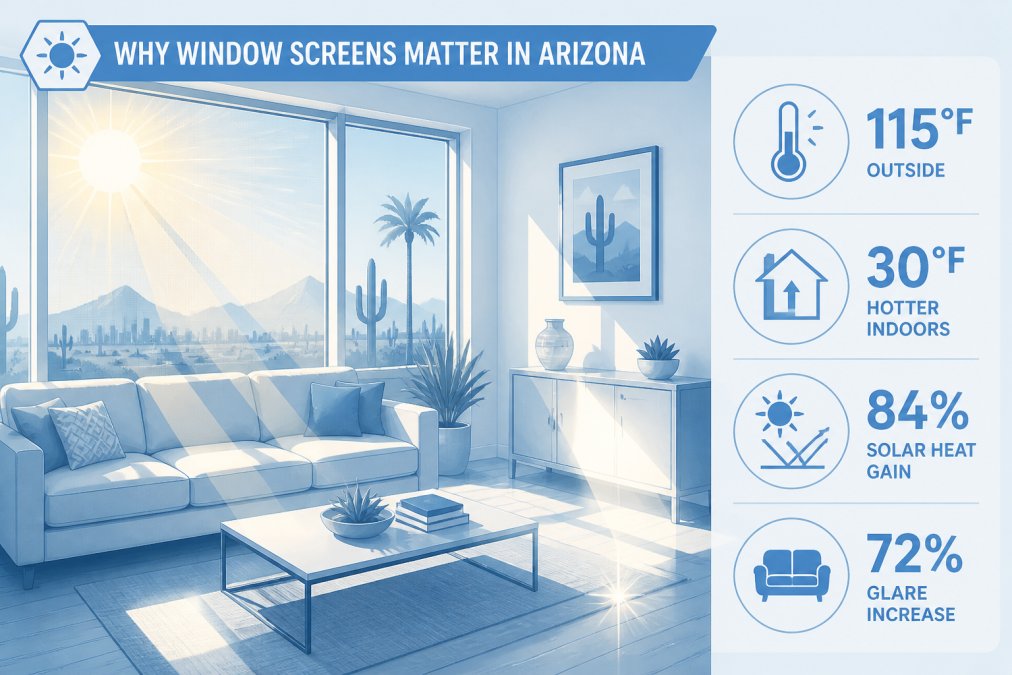
At Sparkle Tech Sun Screens, we’ve worked with homeowners facing these exact challenges. The difference between a standard insect screen and a solar screen designed for Arizona conditions is substantial and shows up directly in your monthly cooling bills and indoor comfort levels.
Window screens serve multiple functions: they block insects and dust while allowing airflow, reduce glare that strains your eyes, minimize UV exposure that fades furniture and flooring, and most importantly, reduce the thermal load on your home by blocking a significant portion of solar radiation before it enters through the glass.
Not all screens are created equal. A standard fiberglass insect screen blocks maybe 10-15% of solar heat. A dedicated solar screen can block 70-95% depending on mesh density. That difference translates to real money saved on cooling costs over time.
Solar Screen Benefits for Arizona Homes
Solar screens work by absorbing and reflecting solar radiation before it reaches your window glass. This simple mechanism delivers measurable improvements across multiple areas of home comfort and efficiency.
The most immediate benefit is reduced interior heat. During peak afternoon hours, rooms with solar screens maintain noticeably lower temperatures without increasing air conditioning runtime. This creates a compounding effect: lower indoor temperatures mean your HVAC system cycles less frequently, consuming less energy and extending equipment lifespan.
Energy cost reduction is the primary driver for most Arizona homeowners. By reducing the thermal load on your home, solar screens decrease cooling demand. Over a full year, this translates to measurable reductions in utility bills. Homeowners consistently report noticeable differences on their energy statements.
UV protection represents another significant benefit. Solar screens block a substantial portion of ultraviolet radiation, preserving interior finishes and extending the lifespan of furnishings. This protection is particularly valuable for homes with large south-facing or west-facing windows.
Glare reduction improves daily comfort substantially. Arizona’s bright sunlight creates harsh glare that makes it difficult to watch television, work on computers, or relax indoors. Solar screens diffuse incoming light, eliminating glare while still allowing you to see outside clearly.
The cumulative benefit of solar screens is improved year-round comfort paired with measurable energy savings. These benefits compound over years of use, with a solar screen installed today continuing to deliver value for a decade or more.
Screen Material Types: 80% vs 90% Density and Beyond
Understanding screen mesh density is essential for choosing the right product. Density percentages refer to how much of the sun’s radiation the screen blocks. Higher density means more heat and light blocked.
80% Density Screens block approximately 80% of solar radiation and provide a good balance between heat reduction and visibility. They’re ideal for homeowners who prioritize maintaining a clear view to the outside while still reducing solar heat gain. Phifer SunTex 80/90 represents this category, a vinyl-coated polyester mesh that’s durable and effective for Arizona’s harsh conditions.
90% Density Screens block approximately 90% of incoming solar radiation and represent the upper range of standard solar screens. They provide maximum heat reduction but sacrifice some outward visibility. For south-facing and west-facing windows that receive intense afternoon sun, the 90% option often delivers superior comfort improvements.
95% Density and Beyond represent specialty options that block nearly all visible light. These are typically used in bedrooms where you want maximum darkness and heat blocking, or commercial spaces where privacy is a priority. For most residential applications in Arizona, 90% density represents the practical maximum before you lose too much visibility benefit.
Phifer SunTex 80/90
Phifer SunTex 80/90 is a widely-used standard in Arizona solar screening. The vinyl-coated polyester construction provides durability against Arizona’s extreme sun exposure, and the 80/90 designation means you can choose the density that matches your specific needs. This mesh is available in multiple colors, Beige, Black, Brown, Grey, Stucco, and Dark Bronze, allowing you to match your home’s aesthetic.
The material is pet-resistant, making it suitable for homes with dogs or cats. The mesh allows adequate airflow while blocking insects and debris, and the polyester construction resists mildew and fading better than fiberglass alternatives. Installation in standard frames is straightforward, and the material is readily available through most professional screen installers in Arizona.
Textilene Solar Screen (80%, 90%, 95%)
Textilene Solar Screen offers the flexibility of choosing your exact blockage percentage, making it ideal for customized installations where different windows have different requirements. The PVC-coated polyester yarn construction provides excellent durability in Arizona’s extreme conditions. Unlike fiberglass alternatives that degrade over time under intense UV exposure, Textilene maintains its integrity and performance characteristics for extended periods.
The flame and fade-resistant properties are particularly valuable in Arizona, where intense sun exposure can degrade materials quickly. The range of available blockage percentages allows you to optimize each window independently based on sun exposure and comfort preferences.
Specialty Screens: Pet-Resistant and High-Visibility Options
Not every window screen needs to prioritize solar heat reduction. Specialty screens address specific needs, whether that’s protecting against pet damage, maximizing visibility, or creating frameless installations.
Phifer PetScreen and TuffScreen
Phifer PetScreen is engineered specifically for homes with pets. The material is seven times stronger than standard insect screening, providing genuine resistance to claws and impact damage. For pet owners in Arizona, PetScreen represents a practical investment, standard screens fail quickly in homes with active dogs or cats, requiring frequent replacement.
Phifer TuffScreen represents a middle ground, three times stronger than standard screening but not quite as heavy-duty as PetScreen. The vinyl-coated polyester construction resists tears and punctures from general wear, weather exposure, and environmental hazards. Both options sacrifice some visibility and airflow compared to lighter-duty screens, but the durability tradeoff makes sense for homes where standard screens fail within one or two seasons.
Phifer UltraVue 2 Invisible Screen
The Phifer UltraVue 2 prioritizes optical clarity over solar heat reduction. This finely-woven black vinyl-coated fiberglass mesh appears nearly invisible from outside, maintaining your home’s curb appeal while still providing insect protection.
Water Shed Technology repels water and resists dirt and grime buildup, keeping the screen cleaner longer. This feature is valuable in Arizona, where dust accumulation can degrade visibility quickly. The GREENGUARD Gold certification indicates the material meets strict environmental and health standards.
UltraVue 2 doesn’t provide significant solar heat reduction compared to dedicated solar screens. It’s ideal for homeowners who prioritize maintaining clear views and curb appeal over maximum cooling performance.
FlexScreen Frameless Option
FlexScreen uses a flexible PVC-coated spring steel frame that bends to fit directly into window tracks, hiding in the window pocket and creating an essentially invisible installation. Installation is remarkably simple, no tools required, just bend and place in the window track.
FlexScreen is available in multiple mesh types, including Standard, FlexView, FlexView Tuff, and FlexView Clean options. The main consideration is that repairing the mesh requires replacing the entire screen rather than just re-screening the frame.
Cost of Custom Window Screens in Phoenix
Pricing for custom window screens in Phoenix varies significantly based on screen material type, window size and quantity, professional installation versus DIY assembly, and specific features selected. The most accurate approach is getting a quote specific to your situation.
Sparkle Tech Sun Screens provides free quotes and same-day pickup options, allowing you to understand your actual costs before committing. Pricing depends on quantity, dates, and delivery. Material costs for solar screens are higher than standard insect screens, but this premium typically pays for itself through energy savings within 2-4 years of use.
Pricing that seems significantly cheaper than professional quotes often reflects lower-quality materials or incomplete installation. Screens that fail prematurely create false economy, you end up paying more over time through repeated replacements.
Your windows may be non-standard sizes or shapes. Professional installers can work with virtually any window configuration, whereas off-the-shelf screens may not fit properly. Custom fabrication ensures proper fit and maximum performance.
How to Install Window Sun Screens
Installing window screens involves several steps, and the approach differs significantly between professional installation and DIY options.
Professional Installation vs. DIY
Professional installation offers several advantages in Arizona’s climate. Expert installers understand local conditions, know which screen types perform best for different window orientations, and have the tools and experience to ensure proper fitting and secure mounting. Professional installation typically includes a warranty.
DIY installation works well for straightforward window configurations. FlexScreen and similar products are specifically designed for DIY installation, they require no tools and no hardware. Standard screens in traditional frames can also be installed DIY if your windows are standard sizes.
Measuring and Ordering Custom Screens
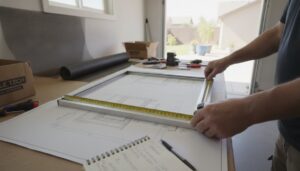
Accurate measurement is critical for custom screen orders. Measure the width and height of your window opening at multiple points (top, middle, bottom for height; left, middle, right for width) to account for slightly out-of-square windows. Arizona’s temperature extremes can cause slight frame expansion and contraction.
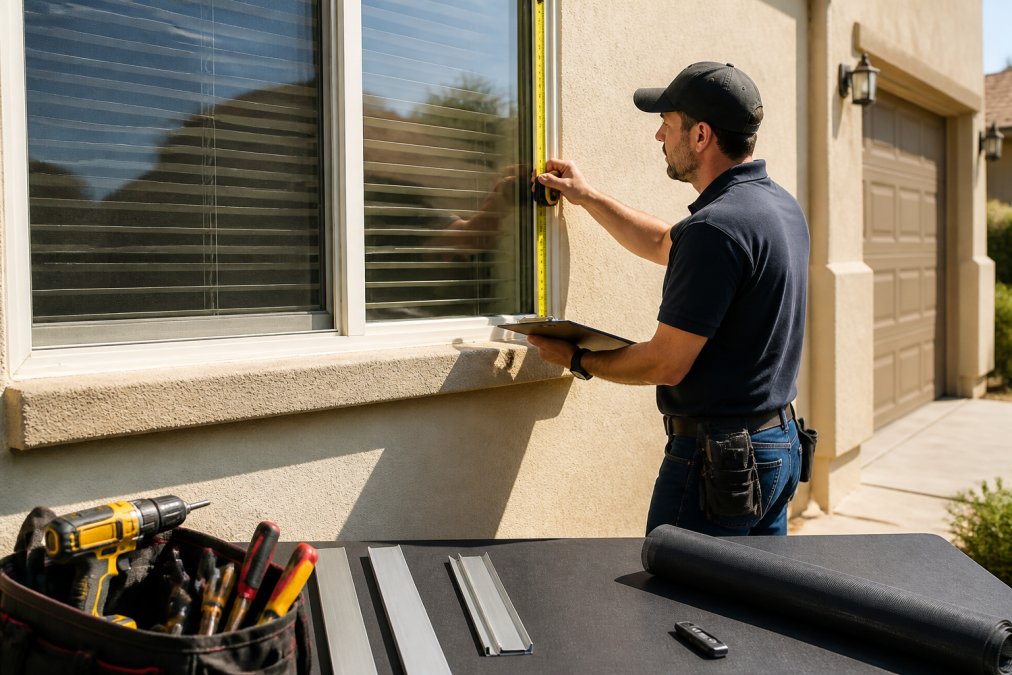
Professional installers typically handle measurements themselves, eliminating the possibility of errors. When ordering, specify your material choice, frame color preferences, and any special features you need. Most professional fabricators can turn around custom orders within days.
Maintenance and Longevity in Arizona’s Climate
Window screens in Arizona face extreme conditions: intense UV exposure, dust and debris accumulation, temperature extremes, and occasional monsoon winds. Understanding how to maintain your screens helps you get maximum value from your investment.
Regular cleaning extends screen lifespan and maintains visibility. Monthly or quarterly cleaning is reasonable depending on your location and surrounding environment. Use a soft brush and mild soap with water; avoid harsh chemicals that can degrade mesh materials.
Material degradation follows predictable patterns in Arizona. Vinyl-coated polyester screens typically maintain performance for 10-15 years under Arizona’s intense sun exposure. Fiberglass screens degrade somewhat faster, with lifespan typically ranging from 8-12 years. Heavy-duty options like PetScreen often exceed 15 years.
UV exposure is the primary degradation factor. Screens on south-facing and west-facing windows degrade faster than those on north or east-facing exposures.
Replacing screens every 10-15 years is typical maintenance in Arizona, not a sign of poor quality. This replacement cycle is far less expensive than dealing with damaged windows or excessive cooling costs from failed screens.
Sparkle Tech Sun Screens provides a lifetime guarantee on qualifying services, reflecting confidence in material quality and installation workmanship. Environmental hazards beyond normal sun exposure, such as monsoon winds or hail, typically aren’t covered under standard warranties.
Conclusion
Choosing the best window screens for Arizona requires balancing multiple factors: heat reduction capability, durability in extreme conditions, visibility preferences, and long-term maintenance expectations. Solar screens deliver measurable improvements in comfort and energy efficiency, while specialty options address specific household needs.
The investment in quality window screens pays dividends through reduced cooling costs, improved comfort, and protection of your home’s interior. Sparkle Tech Sun Screens offers custom fabrication and professional installation with a lifetime guarantee on qualifying services. Get your free quote today and discover how properly installed sun screens can transform your home’s comfort and efficiency.
Frequently Asked Questions
Do sun screens really help keep an Arizona house cool?
Yes, solar screens significantly reduce cooling costs by blocking 70-90% of the sun's heat before it enters your home. Phifer SunTex 80/90 and Textilene solar screens absorb and dissipate solar heat, reducing HVAC load and lowering energy bills. The exact savings depend on window size, orientation, and your current cooling system, but homeowners typically see measurable reductions in summer cooling expenses.
What's the difference between 80% and 90% solar screen density?
An 80% solar screen blocks 80% of the sun's heat and glare, while a 90% screen blocks 90%. The higher percentage provides more heat rejection and UV protection, making it ideal for south and west-facing windows in Arizona. However, 90% screens reduce natural light and outward visibility more than 80% screens. Choose based on your priority: maximum cooling (90%) or better visibility and light (80%).
How much do custom window screens cost in Phoenix?
Custom window screen pricing varies based on size, material type, and installation. Solar screens like Phifer SunTex start around $125 per roll, while specialty options like Phifer PetScreen range higher. Professional installation services in Phoenix offer same-week service with custom fabrication to fit your exact window dimensions. Contact Sparkle Tech Sun Screens for a free quote tailored to your home's specific needs and window configuration.
What type of window screen is most durable for Arizona's harsh climate?
Vinyl-coated polyester screens, such as Phifer TuffScreen and Textilene solar screens, are the most durable for Arizona's extreme heat, dust, and UV exposure. TuffScreen is three times stronger than standard fiberglass and resists tears, punctures, and weather damage. For homes with pets, Phifer PetScreen offers seven times the strength of traditional screening. These materials withstand Arizona's temperature fluctuations and intense sun without degrading as quickly as fiberglass alternatives.
This article was written using GrandRanker