

Table of Contents
- Do Solar Screens Actually Lower Energy Bills?
- How Solar Screens Work: Heat Rejection and SHGC Explained
- Types of Solar Screens and Their Energy Efficiency
- Solar Screen Benefits Beyond Lower Energy Bills
- DIY vs. Professional Solar Screen Installation: Cost and Performance
- Solar Screen Maintenance and Year-Round Performance
- Calculating Your ROI: Will Solar Screens Pay for Themselves?
- Conclusion: Are Solar Screens Worth It for Your Home?
Do Solar Screens Lower Energy Bills? A 2026 Guide
Last Updated: July 30, 2026
Do Solar Screens Actually Lower Energy Bills?
Yes, solar screens lower energy bills by blocking 60-90% of solar radiation before it enters your home, reducing cooling load on your HVAC system. Research from the U.S. Department of Energy confirms that exterior shading devices can reduce solar heat gain by 60-90% depending on type and installation quality. Homeowners consistently report lower utility bills within the first month of installation, with savings increasing during peak heat seasons.
Custom-fit screens matter more than you’d think. Gaps around edges or improper installation can reduce effectiveness by 20-30%. Professional measurement and installation deliver better results than DIY approaches, especially in Arizona’s extreme climate.
How Much Heat Do Solar Screens Block?
Solar screens block between 60% and 90% of solar radiation depending on mesh density and fabric type. Standard solar mesh screens typically reject 70-80% of heat, while premium options reach 85-90%. The solar heat gain coefficient (SHGC) measures this performance, reducing it from approximately 0.80 (unprotected glass) to 0.15-0.25 (with screen installed). Actual heat reduction depends on window orientation, time of day, and seasonal sun angles. East-facing windows benefit most in early morning, while west-facing windows see the greatest benefit in late afternoon when outdoor temperatures peak.
What’s the Real Impact on Monthly Utility Bills?
A typical Arizona home with 200-300 square feet of south and west-facing windows can expect to reduce cooling costs by 10-25% during peak summer months. For a household with a $150 summer electric bill, this translates to $15-37 in monthly savings. Over a cooling season lasting 6-7 months, that’s $90-260 in direct savings. In Phoenix and Scottsdale, where cooling represents 40-50% of annual energy consumption, solar screens typically pay for themselves within 3-5 years. Lower HVAC usage also means reduced wear and tear on your air conditioning system, extending equipment lifespan and reducing maintenance costs.
The real savings calculation includes three components: lower monthly electricity bills, reduced HVAC maintenance costs, and extended equipment lifespan. When combined, these factors create substantial long-term value.
How Solar Screens Work: Heat Rejection and SHGC Explained
Solar screens intercept solar radiation at the window surface before heat transfers into your home. Unlike interior blinds that allow heat to build up between the screen and glass, exterior solar screens stop thermal radiation at the source. The mesh fabric reflects and absorbs infrared radiation, the wavelengths responsible for heat. The solar heat gain coefficient (SHGC) quantifies this performance, ranging from 0 to 1 where lower numbers indicate better heat rejection. Unprotected glass has an SHGC around 0.80; standard solar screens reduce this to 0.15-0.25; premium high-opacity screens achieve SHGC values as low as 0.10-0.15.
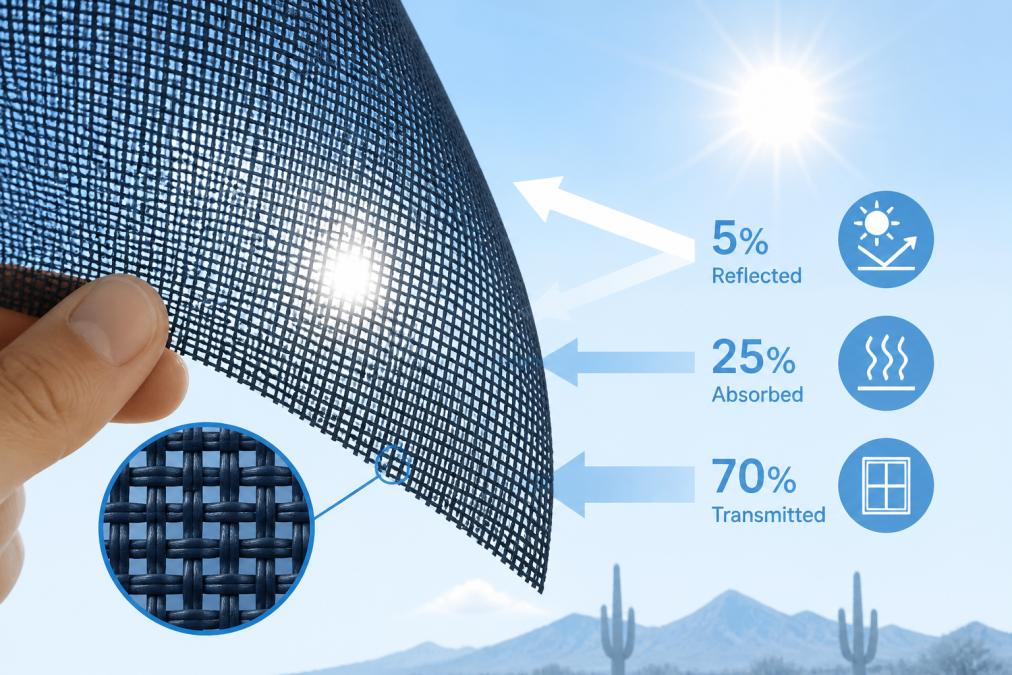
Solar Heat Gain Coefficient (SHGC) and Mesh Density
Mesh density is the primary factor determining SHGC performance. Higher mesh density means tighter weave patterns that block more solar radiation. Standard solar mesh (80% open weave) blocks 70-75% of heat, while premium fabric with 65% open weave blocks 80-90%. The trade-off is visibility and daylighting. Most residential applications use 80% open weave as the standard because it provides excellent heat rejection while maintaining reasonable visibility. Premium materials engineered for desert climates last 10+ years, while lower-quality mesh may degrade within 2-3 years.
Window Orientation and Sun Exposure Impact
Window orientation dramatically affects how much solar screens reduce cooling costs. West-facing windows are particularly problematic in Arizona because they receive intense afternoon sun when outdoor temperatures peak. East-facing windows benefit primarily in early morning hours. North-facing windows receive minimal direct sun year-round and rarely need solar screens for heat control.
Seasonal sun angles change the equation. In winter, the sun angle is lower, and solar screens on south-facing windows block beneficial solar heat that could reduce heating loads. Some homeowners consider seasonal usage or removable screens, though the convenience factor often doesn’t justify the cost and installation hassle.
Types of Solar Screens and Their Energy Efficiency
Standard solar mesh screens represent the most common choice for residential applications, using 80% open weave fabric that blocks 70-80% of solar radiation while maintaining reasonable visibility. Premium solar fabrics with higher opacity block 80-90% of heat but significantly reduce visibility and daylighting. Roller shades with solar fabric offer adjustability, while retractable solar screens combine permanent installation benefits with seasonal adjustability.
| Screen Type | Heat Rejection | Visibility | Best For | Durability |
|---|---|---|---|---|
| Standard Solar Mesh (80% open) | 70-80% | Good | Most homes | 10+ years |
| Premium Solar Mesh (65-75% open) | 80-90% | Fair | Maximum cooling | 10+ years |
| Roller Solar Shades | 75-85% | Adjustable | Seasonal control | 8-10 years |
| Retractable Solar Screens | 70-85% | Adjustable | Maximum flexibility | 10+ years |
Standard Solar Mesh vs. Premium Fabric Options
Standard solar mesh (80% open weave) represents the optimal balance for most residential applications, blocking sufficient heat to reduce cooling costs meaningfully while preserving visibility. Premium fabrics with 65-75% open weave block 85-90% of solar radiation but create noticeably darker rooms and reduced daylighting. Installation quality matters equally to fabric choice, a poorly installed premium screen delivers less benefit than a properly fitted standard screen because gaps and misalignment reduce effectiveness.
Opacity Levels and Thermal Comfort Trade-offs
Opacity directly affects both thermal performance and interior comfort. Higher opacity blocks more heat but reduces natural light and visibility. Standard 80% open weave is the sweet spot for most Arizona homes. Glare reduction is an often-overlooked benefit. The mesh reduces harsh direct sunlight that causes eye strain and forces you to use window coverings anyway.
Extremely high-opacity screens (below 65% open weave) can create interior lighting that requires artificial light during daytime hours, which negates some energy savings. For most homes, this opacity level is overkill and reduces quality of life without proportional energy benefits.
Solar Screen Benefits Beyond Lower Energy Bills
Solar screens block 99% of UV radiation, protecting your interior investments from photodegradation. Over years, UV exposure can significantly devalue interior furnishings and create visible discoloration patterns on flooring. Glare reduction improves daily comfort immediately. Unlike traditional window coverings that seal off windows, solar screens allow air circulation, enabling passive cooling strategies where you open windows during cool evening hours to ventilate your home naturally.
Improved Airflow and Passive Cooling
Passive cooling strategies use natural ventilation to reduce HVAC usage. Solar screens enable this approach by allowing windows to remain open without admitting insects, dust, or excessive heat. During cool evening hours (typically 8 PM to 6 AM in summer), open windows with solar screens installed. Night air flows through your home, cooling interior surfaces and the thermal mass of walls and floors. This approach can reduce daytime cooling loads by 10-20% depending on how effectively you execute nighttime ventilation. Dust and debris protection is critical in Arizona, solar screens with fine mesh density block dust while allowing air circulation.
DIY vs. Professional Solar Screen Installation: Cost and Performance
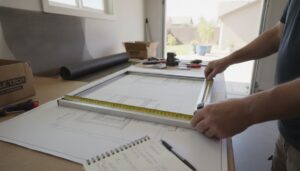
Professional installation includes custom measurement, frame adjustment, and precision fitting that DIY approaches rarely achieve. Measurement accuracy is critical, windows that appear square often have slight irregularities. Professional measurement accounts for these variations and ensures screens fit precisely. DIY measurement often misses these details, resulting in gaps that reduce effectiveness by 20-30%. Frame condition affects installation quality substantially, and professional installers identify and address issues that DIY approaches miss.
Why Custom-Fit Installation Matters for Energy Savings
Custom-fit screens achieve their performance specifications because they seal properly against window frames. Any gap between screen and frame allows solar radiation to bypass the mesh, reducing heat rejection. Professional installation addresses seasonal considerations, Arizona’s extreme temperature swings cause frames to expand and contract. Screens installed with proper tension accommodate this movement without binding or loosening. The warranty difference is significant. Professional installation typically includes guarantees covering both materials and workmanship. SPARKLE TECH SUN SCREENS backs installations with a lifetime guarantee on qualifying services.
Long-Term Durability and Warranty Considerations
Quality solar screen materials last 10-15 years in Arizona’s harsh climate. Premium vinyl mesh engineered for UV resistance maintains performance throughout this period. Aluminum frames are standard in Arizona because they resist corrosion in the desert environment. Warranty coverage should specify what’s included: material warranties cover defects in the mesh or frame; workmanship warranties cover installation quality; performance warranties guarantee that screens will achieve specified SHGC ratings. A lifetime guarantee on qualifying services indicates confidence in product quality and installation workmanship.
Solar Screen Maintenance and Year-Round Performance
Maintenance requirements are minimal but important. Dust accumulation reduces transparency and can trap moisture that accelerates material degradation. Rinse screens with a hose 2-3 times yearly, using gentle water pressure to avoid damage. Winter performance differs from summer performance. Lower sun angles mean solar screens block less beneficial solar heat. However, the convenience of permanent installation usually justifies accepting slightly higher winter heating loads.
Winter Performance and Seasonal Energy Efficiency
Solar screens reduce winter solar heat gain, which increases heating loads during Arizona’s mild winters. However, this effect is modest because winter sun angles are lower and heating season is short. The heating penalty of year-round solar screens typically ranges from 5-15% increased heating costs during winter. For a home saving $25 monthly during 6-month cooling season ($150 total) against roughly $7.50 winter heating increase, the net annual benefit is approximately $142.50.
Calculating Your ROI: Will Solar Screens Pay for Themselves?
A typical Arizona home with 250 square feet of south and west-facing windows might save $15-40 monthly during summer cooling season. Over a 6-month cooling season, this translates to $90-240 annual savings. Installation costs from professional providers typically range from $800-2,500 depending on window area and screen type, making payback periods of 3-6 years realistic for most homes. Extended equipment lifespan adds significant value, an air conditioning system lasting 15 years instead of 12 years saves thousands in replacement costs.
Calculate your personal ROI by multiplying your summer electric bill by 0.15 (conservative 15% cooling reduction estimate), then multiplying by 6 months. Divide installation cost by annual savings to determine payback period. Most Arizona homeowners see payback within 4-5 years.
Energy Star Eligibility and Tax Credit Opportunities
Some premium solar screens may qualify for Energy Star designation. Federal tax credits for energy-efficient home improvements have fluctuated over recent years, and some states and utilities offer rebate programs for energy-efficient window treatments. Arizona utility companies occasionally provide rebates for solar screens, such as the SRP shade screen rebate program which runs through April 30, 2027.
Conclusion: Are Solar Screens Worth It for Your Home?
Solar screens effectively reduce energy bills for Arizona homeowners, with typical savings of 15-25% during summer cooling season. Beyond direct energy savings, these installations provide UV protection, glare reduction, improved natural ventilation, and extended HVAC equipment lifespan. For homeowners in Phoenix and Scottsdale with significant south or west-facing window exposure, solar screens represent one of the highest-ROI home efficiency improvements available. SPARKLE TECH SUN SCREENS delivers custom-fit installations engineered for Arizona’s extreme climate, backed by a lifetime guarantee on qualifying services. Professional measurement and installation ensure screens achieve their performance specifications, maximizing your energy savings and comfort improvements.
Frequently Asked Questions
How much can solar screens reduce energy bills in Arizona?
Solar screens can reduce cooling load and HVAC energy consumption by blocking infrared radiation and solar heat gain. The exact reduction depends on window orientation, climate zone, mesh density, and SHGC rating. South and west-facing windows typically see the greatest impact on monthly utility bills. Results vary by home size, existing insulation, and cooling system efficiency, but homeowners often report noticeable savings during peak summer months when cooling demand is highest.
What's the difference between solar screen types in terms of energy savings?
Different types of solar screens vary in mesh opacity and solar fabric composition, affecting their heat rejection rates. Higher mesh density screens block more infrared radiation and reduce solar heat gain coefficient (SHGC) more effectively, but may also reduce daylighting and natural light. Standard solar mesh offers moderate heat rejection, while premium fabric options provide superior thermal comfort and energy efficiency. Your choice depends on balancing energy savings with interior brightness preferences and passive cooling needs.
Do solar screens work in winter, or should I remove them seasonally?
Solar screens can remain installed year-round in Arizona's mild winters without significantly reducing heating benefits. In winter, they allow lower-angle sunlight to enter while still blocking some UV radiation. However, if your home relies on passive solar heating during colder months, you may want to consider removable screens or lighter mesh options. Professional installation with custom-fit screens ensures optimal performance across all seasons and simplifies seasonal adjustments if needed.
Are solar screens eligible for Energy Star tax credits or rebates?
Solar screens themselves are not typically listed under federal Energy Star certification for window treatments, but they may qualify for state or local energy efficiency rebates in Arizona. Some utility companies offer incentives for exterior shading improvements that reduce cooling load. Check with your local utility provider and state energy office for current rebate programs. Professional installation documentation can help verify eligibility for any available tax credits or energy efficiency incentives in your area.
Ready to reduce your cooling costs and protect your home from Arizona’s intense solar radiation? SPARKLE TECH SUN SCREENS provides same-week service with custom measurements, professional installation, and weather-resistant materials built to last. Get your free quote today and discover how much you can save on your energy bills.
This article was written using GrandRanker