

Ever walked into a room that feels like a greenhouse because the sun is just blazing through your windows? Yeah, we have all been there. The good news is that window sun shades exist to solve exactly that problem, and there are more options than you might think.
Whether you are trying to cut down on your energy bills, protect your furniture from fading, or just make your living room feel less like a sauna, the right window shade can make a huge difference. But with so many types available, it can feel overwhelming trying to figure out which one actually works best for your home.
In this post, we are breaking down 7 common types of window sun shades so you can understand exactly what each one does and how it works. We will also explain why exterior solar screens tend to come out on top for most homeowners. By the end, you will have a clear picture of your options and feel confident about making the right choice for your space. Let’s dive in!
What Are Window Sun Shades?
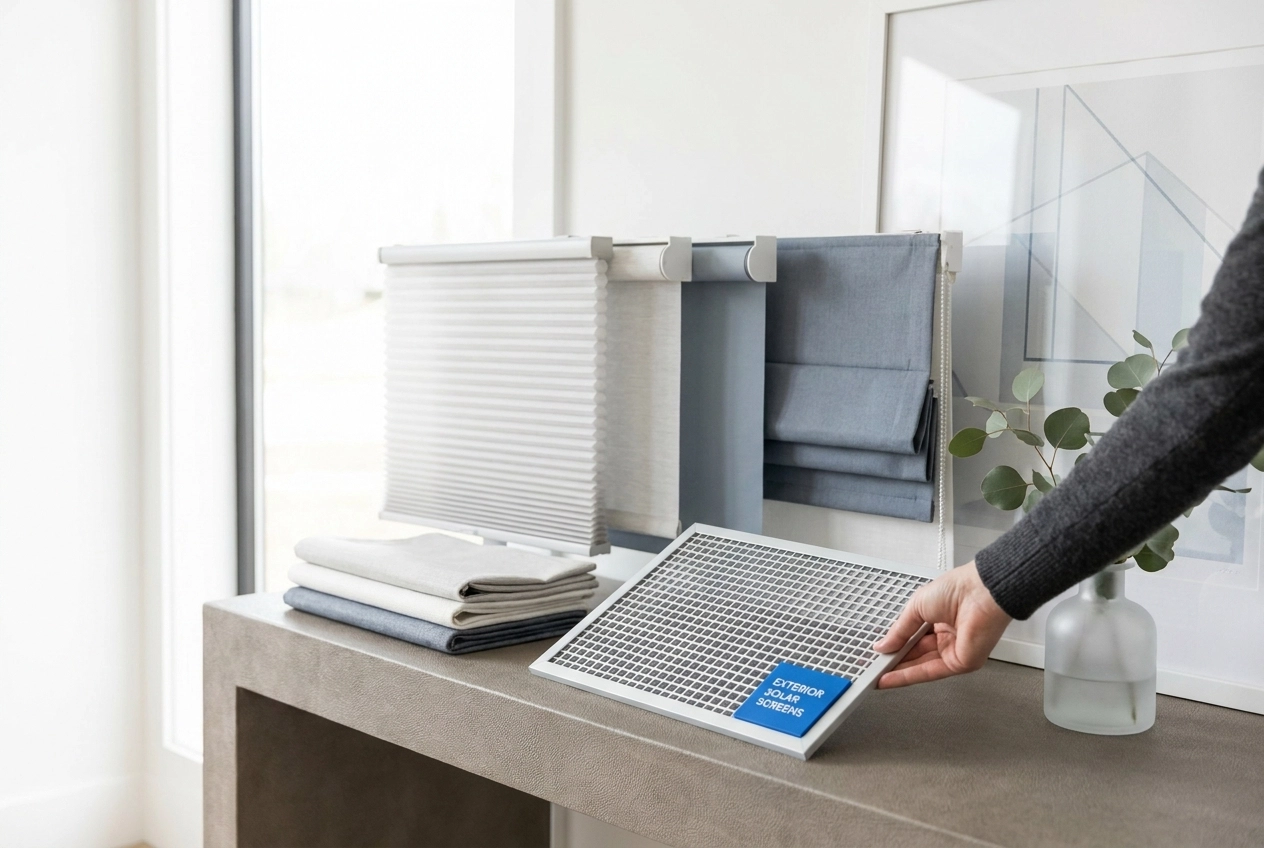
If you’ve ever searched “window sun shades” and ended up more confused than when you started, you’re not alone. The term actually covers a pretty wide range of products, from fabric roller shades you hang inside your living room to heavy-duty mesh screens mounted on the outside of your home. Knowing the difference before you buy can save you a lot of money and frustration.
Here’s the core distinction that most shoppers miss: interior shades manage light after it has already passed through your glass and warmed up the room, while exterior solar screens stop solar energy before it ever reaches the window. Think of it like sunscreen versus a hat. One protects your skin after you’re in the sun; the other keeps the sun off you entirely. According to how solar screen shades work, exterior placement is simply the more effective position for blocking heat at the source.
To compare products, it helps to understand one key measurement: Solar Heat Gain Coefficient, or SHGC. It’s just a number between 0 and 1 that tells you how much solar heat a product lets through. Lower is better for hot climates. Understanding window efficiency ratings explains this clearly for beginners. Exterior screens can achieve SHGCs as low as 0.12, while interior shades typically land between 0.44 and 0.61, a meaningful gap when your cooling bill arrives.
Many people searching for window sun shades don’t even know exterior solar screens exist as a separate product category. That’s exactly why this guide walks through both interior and exterior options so you can match the right solution to your home, your climate, and your budget.
1. Exterior Solar Screens
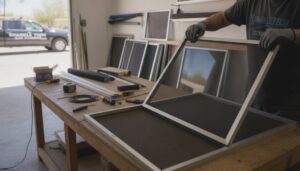
If you want the most effective window sun shade option available, exterior solar screens are hard to beat. These are woven mesh panels that mount directly onto the outside of your window frames, and that placement is the key to everything. Because they intercept solar radiation before it ever touches the glass, they stop heat at the source rather than trying to deal with it after it has already entered your home. Think of it like wearing sunscreen versus trying to cool a sunburn after the fact. Interior blinds and shades only react once heat has already passed through the glass; exterior solar screens are a preventive solution from the start.
According to the Efficient Window Coverings resource on exterior solar screens, exterior installations produce shading coefficients of 0.14 to 0.33, compared to 0.50 to 0.70 for interior options. That means exterior screens can be two to three times more effective at reducing solar heat gain. The U.S. Department of Energy recognizes exterior shading as one of the most effective strategies for reducing solar heat gain, with potential reductions reaching up to 65% to 77%. For most homeowners, that translates directly into lower summer cooling bills.
When you shop for exterior solar screens, you will quickly run into opacity levels. Here is a simple breakdown:
- 80% opacity: Blocks 80% of heat and glare while preserving the most outward visibility
- 90% opacity: A popular middle-ground option balancing solid heat rejection with reasonable view-through
- 95% opacity: Maximum heat and glare blocking, with the most noticeable reduction in visibility
As Phifer’s solar screen guide notes, options typically range from 65% to 97% heat blocking, so there is genuinely a fit for every situation.
One benefit that makes exterior solar screens stand out from every other option on this list is their dual function. They block solar radiation and insects at the same time, essentially serving as a bug screen and a sun shade in a single panel. You do not need to layer separate products on your windows to get both benefits.
If you are ready to explore this option, SparkletechSunscreens.com specializes in exterior solar screen installation and offers same-week service availability, making it easy to get started without a long wait.
2. Interior Roller Solar Shades
Interior roller solar shades are fabric panels mounted inside your window frame that roll up and down along a single tube mechanism. You’ve probably seen these in homes, offices, and apartments everywhere. They come in varying openness factors, typically ranging from 1% to 10%, which simply refers to how tightly the fabric is woven. A 1% openness factor means a very tight weave that blocks most light, while a 10% openness factor lets in more natural light while still filtering glare and UV rays. Think of it like choosing between sunglasses with different tint levels.
Here’s the biggest catch with interior roller shades: because they sit on the inside of your glass, solar heat has already passed through the window before the shade can do anything about it. The sun’s energy converts to heat the moment it hits the glass, and that heat is now in your room. Research shows interior shades reduce heat gain by around 40%, compared to up to 80% for exterior options. It’s still helpful, but not quite as powerful as stopping the heat before it enters.
That said, interior roller solar shades have some real strengths worth noting. Installation is genuinely DIY-friendly since no exterior hardware, ladders, or structural work is required. They come in a wide variety of colors and textures, and they typically cost less upfront than exterior systems. Lighter fabric colors also reflect more thermal energy back toward the window, which helps boost their efficiency a bit.
One thing buyers often miss: interior roller shades offer zero bug protection. They sit behind the glass rather than covering the opening, so if you raise your window for a breeze, insects come right in. You would need a separate traditional bug screen installed at the window to handle that function.
Interior roller shades are a smart choice for renters, apartment dwellers, or homeowners dealing with exterior architectural constraints like HOA restrictions or historic preservation rules that prevent outside installations. Check out this helpful solar shade openness guide if you want to dig deeper into choosing the right fabric density for your space.
3. Cellular (Honeycomb) Shades
Cellular shades take a completely different approach to window sun shades compared to the previous two options. Instead of blocking solar energy, they work by trapping air inside a series of hexagonal honeycomb-shaped cells. That trapped air creates an insulating barrier between the cold (or hot) window glass and your living space, slowing heat transfer significantly. Think of it like wearing a puffy jacket, where the air pockets are doing the real work.
Here’s the key thing to understand: cellular shades are primarily an insulation product, not a solar-blocking product. They shine brightest in winter by keeping warm air inside your home. Research published in Building and Environment found heating energy savings of 17% to 36% compared to bare windows during heating seasons. Cooling benefits exist, but they’re secondary.
You’ll find three configurations available. Single-cell is the most affordable with basic insulation, double-cell adds a second honeycomb layer for improved performance, and triple-cell delivers the highest insulation value for extreme climates. Cost and R-value both climb with each additional layer, typically ranging from R-2.0 to over R-5.0.
Keep in mind that cellular shades are interior-only products. They offer no bug protection whatsoever, and their light-filtering fabric softly diffuses sunlight rather than eliminating glare the way exterior solar screens do. If bugs or intense glare are your main concerns, they won’t solve those problems.
Cellular shades are best suited for cold-winter climates where retaining heat is the top priority, alongside homeowners who prefer gentle, softened natural light indoors.
4. Roman Shades with Solar Fabric
Roman shades are soft fabric panels that, when raised, stack into neat horizontal pleats at the top of your window. They have a classic, tailored look that works beautifully in living rooms and dining spaces. When made with solar-grade mesh fabric instead of traditional woven textiles, they pick up some light-filtering ability on top of that elegant silhouette.
The solar fabric used in Roman shades typically has a 3 to 5% openness factor, meaning roughly 3 to 5% of the weave is open space. That delivers modest glare reduction and partial UV protection for your furniture and floors, but it is not going to make a serious dent in heat buildup the way an exterior solution would.
Here is the honest truth about Roman shades: they are a decorative product first and a sun-control product second. The pleated style, the rich fabric options, the elevated visual character; these are what you are really paying for. If pure sun blocking is your goal, a flat roller solar shade with identical fabric will perform the same at a lower price point.
Like all interior shades, Roman shades sit inside the glass, so solar heat has already entered your window before the fabric intercepts it. This limits any real energy savings compared to exterior options. You can learn more about energy-efficient window treatments to compare performance across different shade types.
Two practical drawbacks are worth knowing upfront. First, the pleated fabric construction requires professional cleaning or very careful hand washing; machine washing will damage the folds and any lining. Second, because Roman shades mount inside the window frame and cover the full opening, they are not compatible with window bug screens. You cannot run both at the same time, which means giving up insect protection whenever the shade is deployed.
5. Motorized and Smart Shades
Motorized and smart shades are window coverings, either interior or exterior, built around an electric motor that raises and lowers the shade fabric automatically. The “smart” part comes from wireless connectivity: app control from your phone, voice assistant integration with Alexa or Google Home, automated scheduling, and IoT features that let you set triggers like “close all south-facing shades at noon.” It sounds pretty cool, and honestly, it is.
This category is growing fast. The smart window shade market is forecasted to expand at a 10.5% CAGR between 2026 and 2033, which tells you consumer interest here is very real. The core appeal is consistency: a smart shade closes your west-facing windows every afternoon at 2pm whether you remember to or not. That kind of reliable, automatic light and temperature regulation genuinely reduces heating and cooling costs over time.
Here is the honest part, though. Motorized smart shades typically cost significantly more than comparable manual options, and that gap widens once you factor in professional wiring or ongoing battery maintenance. Some systems also require dedicated hubs, and occasional app glitches or connection drops add a layer of complexity that not everyone wants to deal with.
If your goal is simply reducing solar heat gain and lowering energy bills, exterior solar screens accomplish the same thing passively. No app, no motor, no subscription, no battery charging. They intercept heat before it ever reaches the glass, and according to experts who review the best smart shades, even sophisticated automated systems are ultimately trying to solve the same basic sun control problem that a good exterior screen handles quietly and affordably from day one.
6. Reflective Window Film
Reflective window film is a thin polyester or metalized layer applied directly to your glass surface. It works by reflecting solar radiation away from the window before it ever enters your home, which helps reduce glare and lower indoor temperatures. Unlike everything else on this list, there’s no fabric, no mechanism, and no installation on your wall or frame. The film bonds straight to the glass, giving it a very low-profile look from the inside.
Here’s the big trade-off, though: window film is a permanent or semi-permanent solution. You can’t roll it up in winter or adjust it based on the season. Whatever solar rejection and light-reduction properties the film has, those are working around the clock, every single day of the year. That’s a meaningful difference compared to exterior solar screens or roller shades, which you can open, close, or even remove entirely.
There’s also a compatibility concern worth knowing about before you commit. Many modern double-pane windows already have Low-E coatings built into the glass. Adding film on top of a Low-E surface can create uneven heat distribution across the pane, which may cause stress fractures over time. According to this glass compatibility guide, certain film-and-glass combinations require manufacturer approval, and misapplication can void your window warranty. For a deeper look at how film interacts with insulated glass across seasons, this Low-E window film performance guide is a helpful resource.
Film also won’t give you ventilation or any protection from insects. And the mirror-like exterior finish that many reflective films create can actually be restricted by HOAs or local municipalities, so it’s worth checking your community rules before installing. Film works best on commercial buildings or older single-pane windows where a simple, always-on heat-rejection solution makes sense and appearance is less of a priority.
7. Screen Door Sun Shades
Screen door sun shades are solar mesh panels that get integrated directly into your screen door frame, or layered onto an existing door setup, to block direct sun and UV rays while still letting fresh air flow through. Think of them as the door-sized version of the window solar screens covered earlier in this list. They do double duty by keeping insects out and filtering harsh sunlight at the same time, which makes them especially practical at busy entryways where you want the door open without baking in the afternoon heat.
The big difference from a standard fiberglass screen door is the mesh itself. Regular insect screens are designed to keep bugs out, but they let most solar radiation pass straight through. Solar-grade mesh is engineered to actually filter UV rays and reduce heat gain. According to research on how to protect your home from UV damage with retractable screens, sun control mesh can block 90 to 99 percent of sunlight, compared to the much lower UV-blocking performance of standard insect mesh. That difference matters a lot when you have a glass sliding door that gets direct afternoon sun beating through it for hours.
Screen door sun shades also work as a natural companion to window solar screens. When you add them together, you get a cohesive whole-home system that covers every sun-exposed opening, not just the windows. Solar-grade mesh options are specifically designed to combine insect blocking with solar filtration, making them suitable for exactly this kind of whole-home approach.
SparkletechSunscreens.com handles screen door services right alongside window solar screens, covering installation, rescreening, and repair so you have one local contact for both. This setup is ideal for homes with sliding glass doors, patio access doors, or front entry screen doors that catch heavy direct sun exposure throughout the day.
Why Exterior Solar Screens Win on Energy Savings
Here is why exterior solar screens consistently outperform every other option on this list when it comes to actual energy savings, and the physics behind it are pretty straightforward once you break it down.
When sunlight hits your window, the glass absorbs that radiation and converts it to heat, which then radiates into your room. Interior shades, roller blinds, and films are dealing with heat that has already crossed the glass barrier. Exterior solar screens intercept solar radiation before it ever contacts the glass, stopping the warming process at the source. According to U.S. Department of Energy data, up to 76% of the sunlight striking standard double-pane windows is absorbed as heat inside the home. Exterior screens can block up to 97% of that solar heat depending on screen density, and rooms with properly installed exterior screens can feel 5 to 15 degrees Fahrenheit cooler. That is a difference you will notice on your energy bill, not just on a spec sheet.
The performance numbers back this up clearly. Shading coefficient measurements show exterior screens scoring between 0.14 and 0.33, compared to 0.50 to 0.70 for interior installations using similar materials. Lower numbers mean less heat getting through, so exterior screens are delivering roughly twice the heat rejection of their indoor counterparts.
Choosing your opacity level matters here. A 90% screen uses a denser weave with roughly 10% open space, blocking more solar radiation but reducing your outward view and visible light. An 80% screen has a slightly more open weave, preserving more of your view while still delivering meaningful heat control. Darker screen colors also absorb more solar energy and are approximately 10% more effective against heat gain than lighter colors of the same weave density.
The market momentum behind exterior sun control reflects how quickly homeowners are catching on. The solar-powered window shades market reached USD 1.72 billion in 2024 and is forecast to grow at a 13.1% CAGR through 2033. Zooming out further, the global window coverings market is projected to climb from USD 18.9 billion in 2026 to USD 36.9 billion by 2035, driven in significant part by energy efficiency mandates that specifically favor exterior shading solutions. Exterior solar screens are a no-tech, budget-friendly way to tap into that same energy-saving performance without the smart home price tag.
The Benefit Nobody Talks About: Bug Protection
Here is a benefit that almost never comes up in conversations about window sun shades, and it just might be the most practical one of all: bug protection.
Every other shade type covered in this list, including interior roller shades, cellular shades, Roman shades, smart shades, and window film, sits inside your home or directly on your glass. That means insects can still fly straight through any open window. You would need a completely separate bug screen to handle pest control, which adds a second product, a second installation visit, and a second thing to maintain or replace down the road.
Exterior solar screens work differently. Because they mount directly onto the outside of your window frame, they physically cover the opening the same way a standard fiberglass bug screen does. The tightly woven solar mesh used in screens with 80 to 95 percent opacity creates gaps small enough to stop mosquitoes, flies, and similar insects from getting through. You are essentially getting a bug screen and a sun shade built into one installed unit.
Think about the cost efficiency here. Instead of paying for an interior shade plus a separate exterior bug screen, you cover both problems with a single product and a single installation. That adds up quickly across multiple windows.
And when that mesh eventually gets a tear or starts to degrade, both your sun protection and your insect barrier are compromised at the same time. That is where rescreening and screen repair services from SparkletechSunscreens.com come in. A single repair visit restores both protections at once, keeping the dual-purpose value working for you without a full replacement.
How to Choose the Right Window Sun Shade for Your Home
Now that you’ve explored all the main types of window sun shades, the next step is figuring out which one actually fits your home. A few key factors will point you in the right direction pretty quickly.
Start with your climate and window orientation. If you live in a heat-dominated climate like the Sun Belt or Southwest, your biggest enemy is solar heat gain, and blocking it before it hits the glass is your top priority. In colder climates, the focus shifts more toward retaining indoor heat during winter months. Window direction matters just as much. South and west-facing windows take the hardest hit from the sun, especially in the afternoon when west-facing glass bakes in direct sunlight for hours. Those exposures almost always need stronger protection than north or east-facing windows.
Then match your material to your needs. For exterior solar screens specifically, fiberglass mesh is the most popular choice for residential use because it is flexible, rust-resistant, and holds up well across seasons. Aluminum mesh is more rigid and better suited for commercial applications where durability under heavy use is critical. Polyester blends sit somewhere in the middle, offering a decent balance of flexibility and strength for everyday home use.
Opacity is your next decision. An 80% opacity screen gives you a good balance between outward visibility and sun control, which works well for most windows. West-facing or high-heat exposures benefit from 90% opacity. If privacy and maximum sun blocking are your goals on a particularly vulnerable window, 95% is the right call.
Match the product to your situation. Exterior solar screens are the strongest choice for energy savings and bug protection combined. Interior roller shades work well for renters or anyone prioritizing aesthetics. Smart shades make sense if you have the budget and want automated control.
Finally, before you order anything, think about whole-home consistency. Matching mesh color and opacity across all your windows creates a clean, unified look from the street. If your neighborhood has an HOA, check their guidelines on approved frame colors and mesh materials before you commit to a style.
Same-Week Installation vs. Waiting Months for Delivery
When you order custom window shades from a national brand, you are typically looking at a 3 to 6 week wait from consultation to installation. Custom-cut interior shades and motorized systems go through manufacturer production queues, warehouse storage, and multi-step shipping pipelines before anyone shows up at your door. That timeline might feel manageable in October, but in the middle of a July heat wave, it means weeks of sweltering rooms and elevated air conditioning bills before you see any relief.
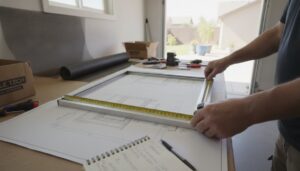
That is the core difference with SparkletechSunscreens.com. Because solar screens are fabricated locally rather than shipped from overseas manufacturing facilities, the team can measure your windows, cut the screens to fit, and complete installation within the same week. There is no waiting on a factory across the country or a shipping container crossing an ocean. The product gets made close to home and goes up fast, which is exactly what you need when summer heat peaks and every day without sun protection costs you real money on your cooling bill.
The speed advantage is just one part of the picture, though. Local solar screen specialists offer hands-on services that national brands simply cannot match. SparkletechSunscreens.com can rescreen your existing frames instead of forcing a full replacement, repair screens that have been torn or bent, and swap out damaged screen doors entirely. These are real-world maintenance needs that no online retailer can handle for you.
Screen cleaning is another service worth highlighting. Over time, dust and pollen build up in solar screen mesh, quietly reducing its ability to block heat and keep bugs out. SparkletechSunscreens.com offers professional screen cleaning to keep your installed screens performing like new, protecting your original investment across multiple seasons.
The Right Shade Makes All the Difference
After working through all seven shade types, the answer is pretty clear: exterior solar screens are in a category of their own. They are the only window sun shade option that stops heat before it ever touches your glass, doubles as bug protection, and delivers up to 80% heat reduction without a single app, subscription, or smart home hub. No other option on this list comes close to that combination.
When you are ready to choose, keep the decision simple. Match your opacity level to your window orientation, with west, south, and east-facing windows getting 90% or higher coverage. Prioritize durable, PVC-coated materials if you live in a hot or humid climate. And go exterior over interior whenever possible, because the physics are firmly on your side.
The best part? You do not have to wait weeks to feel the difference. SparkletechSunscreens.com offers same-week installation, so you can have screens up before the hottest stretch of the year hits, not after it.
Reach out to SparkletechSunscreens.com today for a free consultation or quote. With local expertise, fast turnaround, and proven results, this is one home upgrade you will notice the same day it goes in.
Conclusion
Choosing the right window sun shade does not have to be complicated. To recap the key takeaways: not all shades are created equal, interior options offer style and convenience, but exterior solar screens deliver superior heat blocking, glare reduction, and energy savings before sunlight even enters your home. They protect your furniture, lower your cooling costs, and keep your space comfortable year-round.
Now that you understand your options, the next step is simple. Take a walk through your home, identify the windows causing the most heat and glare problems, and consider whether an exterior solar screen solution makes sense for your situation.
Ready to make a change? Start with one room and see the difference for yourself. Once you feel how much cooler and more comfortable your space becomes, you will wonder why you waited so long.