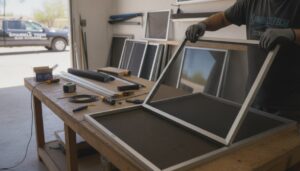

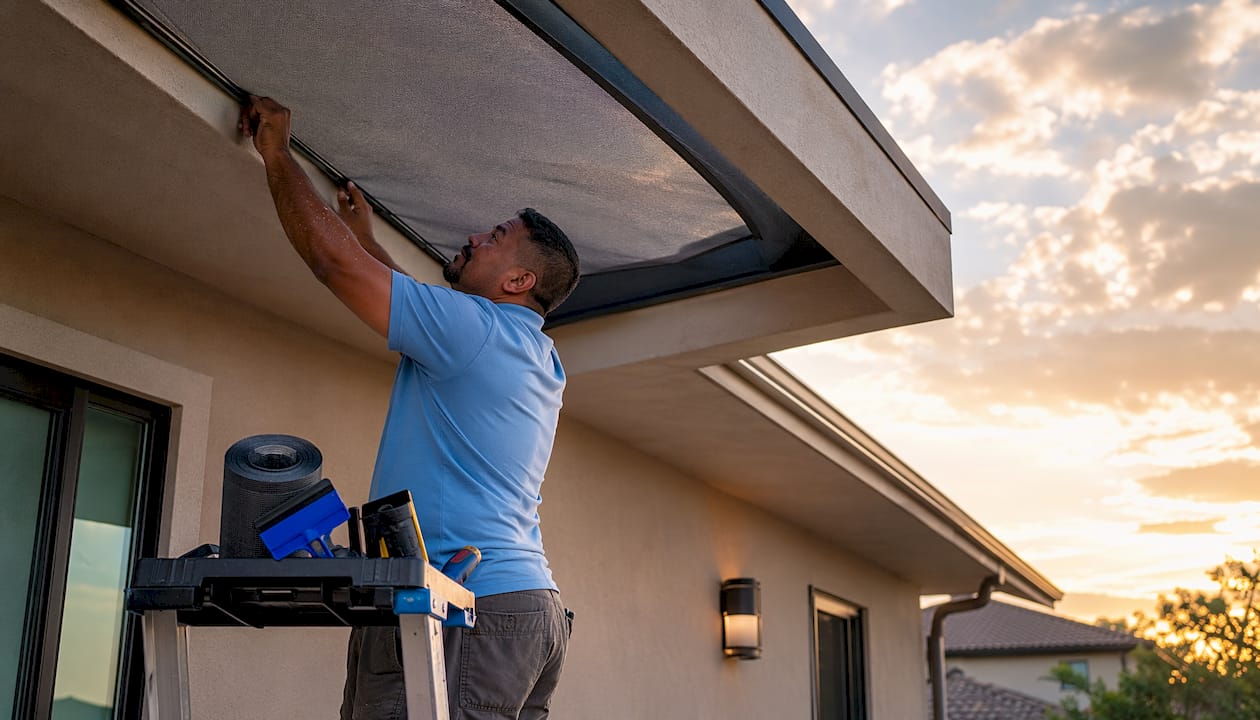

Exterior-mounted skylight solar screens are the fastest, most effective way to cut heat, glare, and UV through overhead glass. Specifically, look for an exterior mesh or reflective panel that drops the combined skylight-plus-screen Solar Heat Gain Coefficient (SHGC) as low as possible. The U.S. Department of Energy consistently identifies exterior shading as more effective than interior shading because it intercepts solar radiation before it ever hits the glass. For Arizona homeowners, Sparkletechsunscreens is the local custom installer to call first.
Quick action checklist before you request a quote:
- Identify which direction your skylight faces (south and west are the highest-heat orientations)
- Measure the exterior flange dimensions and note the skylight shape (rectangular, dome, bubble, or trapezoid)
- Request an exterior-screen quote and ask for the assembly SHGC number in writing
- Confirm the installer offers on-site templating and a written warranty
Table of Contents
- What do skylight solar screens actually do for your home?
- Exterior vs. interior mounting: which setup works for your skylight?
- What materials and specs should you ask for in a quote?
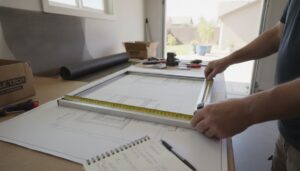
- How to measure your skylight for a custom screen
- What does professional installation actually include?
- What does a skylight solar screen cost, and when does it pay off?
- How to vet an installer and spot red flags
- Why Sparkletechsunscreens is the right call for Arizona skylights
- Key Takeaways
- The case for going exterior, every time
- Get a free custom skylight screen estimate from Sparkletechsunscreens
- Useful sources for verifying skylight shading performance
What do skylight solar screens actually do for your home?
The short answer: they stop heat before it becomes your problem. A solar screen intercepts solar radiation at the glass surface rather than letting it convert to trapped heat inside your home. The practical results show up fast.
Core benefits at a glance:
- Heat reduction: Quality skylight shades reduce solar heat gain by 40–70%, with high-reflectance exterior products reaching the upper end of that range
- Glare control: Mesh fabrics diffuse direct sunlight without blacking out the sky view
- UV protection: Exterior solar screens block up to 95% of UV rays, protecting floors, furniture, and artwork from fading
- Lower AC runtime: Less heat entering the building means your cooling system runs less, which translates directly to lower electricity bills
- Daylight retention: Unlike blackout shades, exterior mesh preserves a filtered sky view while doing the heavy lifting on heat
Stat to know: South-facing skylights can account for 30–50% of a zone’s peak cooling load. That single overhead pane may impact your cooling bill more than every window on that wall combined.
Exterior screens also outperform interior shades by a meaningful margin. Exterior-mounted screens provide noticeably greater heat gain reduction than interior shades in summer, because they stop radiation before the glass converts it to long-wave heat trapped inside the building envelope.
Exterior vs. interior mounting: which setup works for your skylight?

Most homeowners assume any shade will do the job. The placement decision matters more than the fabric choice.

| Mounting Type | Heat Rejection | Installation Complexity | Best For |
|---|---|---|---|
| Exterior fixed panel | Highest (intercepts radiation before glass) | Moderate; requires weatherproof hardware | South/west skylights in hot climates |
| Exterior retractable/motorized | Highest; adjustable | Higher; wiring or solar motor needed | Homeowners wanting seasonal or automated control |
| Interior fixed shade | Moderate (radiation already inside envelope) | Simpler; no weather exposure | North-facing or mild-climate skylights |
| Interior cellular/hybrid | Moderate + insulation benefit | Simple | Mixed climates; winter heat retention a priority |
Exterior screens are the industry-recommended solution for aggressive heat rejection because they prevent solar radiation from entering the building envelope entirely. Interior shades manage heat that has already passed through the glass.
Fixed panels are the low-maintenance workhorse. They use spring-tension rods at the top and bottom of the shade panel, and they can be removed seasonally if you want winter solar gain. For larger openings, intermediate tension rods prevent sagging over time.
Retractable and motorized systems cost more upfront but integrate with smart-home schedules and solar-monitoring apps. If your skylight faces west and you want the screen to deploy automatically at 2 PM, a motorized system earns its price.
Pro Tip: For south- and west-facing skylights in Arizona, never settle for interior-only shading. The glass overhead converts incoming radiation to trapped heat in seconds. An exterior screen stops that process at the source. If budget limits you to one exterior screen, put it on the south or west skylight first.
What materials and specs should you ask for in a quote?
The number that predicts real-world performance is the SHGC (Solar Heat Gain Coefficient) for the combined skylight-plus-screen assembly. A lower SHGC means less heat entering the room. Combined assemblies can achieve SHGC values below 0.15, which represents strong heat rejection. Ask every installer for this figure in writing.

Beyond SHGC, request the shading factor (percent solar blocked) and, for cellular or hybrid products, the R-value contribution.
| Material Category | Typical Solar Blocked | SHGC Reduction | Best Climate Use | Durability Notes |
|---|---|---|---|---|
| Vinyl-coated polyester exterior mesh | High solar blocking | Significant | Hot, dry climates | High; UV-stable |
| Vinyl-coated polyester exterior mesh | Very high solar blocking | Highest | South/west in hot climates | High; UV-stable |
| PVC-coated fiberglass exterior screen | Up to 95% UV blocked | High | General exterior use | High; rust-resistant hardware |
| Cellular/reflective hybrid (interior) | Moderate solar blocking | Moderate | Mixed/mild climates | Moderate; fabric-dependent |
| Dark fabric, no reflective backing | Variable | Low to negative | Not recommended overhead | Risk of re-radiation |
That last row deserves emphasis. A dark-colored fabric without a reflective backing absorbs heat and re-radiates it into the room, making the space hotter than no shade at all. For overhead skylights, always specify a light-colored or reflective-backed material.
Stat to know: Phifer SunTex vinyl-coated polyester mesh blocks a high percentage of solar heat and UV and is widely regarded as the industry standard for exterior solar screens in hot climates.
Cellular-reflective hybrids are worth considering in mixed climates. They combine a reflective surface with honeycomb insulation to improve both SHGC reduction and R-value across seasons, which means they help in winter too.
How to measure your skylight for a custom screen
Skylights come in more shapes than most homeowners expect, and each shape has its own measurement trap.
Common skylight shapes and what to measure:
- Rectangular/square: Width and length of the interior frame opening, plus exterior flange dimensions
- Dome: Diameter at the base plus dome height; note whether the base is round or oval
- Bubble: Same as dome, but confirm whether the bubble has a flat base ring that accepts a frame
- Trapezoid: Both parallel sides, the non-parallel sides, and the diagonal measurement to confirm square
Step-by-step measurement sequence:
- Measure the interior frame opening (width × length) at three points each direction; use the smallest dimension
- Measure the exterior flange or curb dimensions separately
- Note the glass-only dimensions (inside the frame seal)
- Record the pitch or angle of the skylight if it is not flat
- Photograph the skylight from inside and outside, including the frame and any curb height
- Note any obstructions: vents, hardware, or trim that would interfere with a frame or tension rod
Include with your quote request:
- All three measurement sets (interior frame, exterior flange, glass only)
- Pitch/angle notes for angled or sloped installations
- Photos from both sides
- Shape description and any irregular features
You can follow Sparkletechsunscreens’s step-by-step measurement guide before your appointment to speed up the templating process.
What does professional installation actually include?
Skylights are not standard windows. The overhead angle, weather exposure, and structural complexity make professional installation worth the cost for most homeowners.
What a professional install typically covers:
- On-site templating or recorded measurements for a precise custom fit
- Reinforced hem bars or tension rods sized to the opening
- Weatherproof fasteners and seals for exterior-mounted panels
- Intermediate tension rods for large or long-span openings to prevent sagging
- Motorized control wiring or solar-motor integration if applicable
- Final fit check and adjustment before the installer leaves
Maintenance checklist (do this seasonally):
- Inspect tension rods and bungee cords for wear or slack
- Clean mesh with mild soap and water; rinse thoroughly
- Check weatherproof seals around exterior frames
- Replace any corroded fasteners before they stain the frame
- Remove fixed panels in winter if you want solar heat gain during cold months
Pro Tip: Ask your installer whether the warranty covers both materials and workmanship separately. A material warranty without a workmanship guarantee leaves you exposed if the installation itself fails. Sparkletechsunscreens backs its work with a lifetime guarantee, which covers both.
When vetting installers, the guide to hiring professional screen installers walks through exactly what to confirm before signing anything.
What does a skylight solar screen cost, and when does it pay off?
Cost ranges vary by product type, skylight size, and whether installation is included.
Typical cost bands:
- DIY mesh kits (cut-to-fit rolls, no custom frame): Lower upfront cost, but fit quality depends entirely on your measuring accuracy
- Custom fixed exterior mesh panels (professional templating + install): Mid-range investment; best value for most Arizona homeowners
- Motorized retractable systems (custom + wiring): Higher upfront; justified for large or multiple skylights with automation needs
For a detailed breakdown by project type, Sparkletechsunscreens publishes a custom screen pricing guide with cost factors specific to Arizona installations.
ROI example: A south-facing skylight contributing a substantial portion of a room’s peak cooling load, screened with a high-reflectance exterior panel that substantially reduces heat gain, can cut that room’s cooling cost meaningfully each summer. In Arizona’s long cooling season, professional installers report that a properly specified exterior skylight shade can pay for itself within a single high-use cooling season.
The payback math works fastest in hot climates with long summers, which is exactly why exterior solar screens are standard practice in the Phoenix metro area rather than an upgrade.
How to vet an installer and spot red flags
Not every quote is equal. These are the specification items to request in writing before you commit.
Checklist of items every quote should include:
- Assembly SHGC for the combined skylight-plus-screen system
- Material type, brand, and openness factor (or shading factor percentage)
- Mounting method and hardware specifications
- Measurement and templating method (on-site vs. homeowner-supplied dimensions)
- Labor warranty and material warranty, stated separately
- Maintenance terms and what voids the warranty
Questions worth asking every installer:
- “Can you provide the measured SHGC for my specific skylight with this screen installed?”
- “Do you do on-site templating, or do I supply the measurements?”
- “What does your labor warranty cover, and for how long?”
- “What happens if the screen sags or the hardware fails in year two?”
Red flags that should end the conversation:
- “Blocks heat” claims with no percentage or SHGC figure attached
- No on-site templating offered for a non-rectangular skylight
- No written warranty on labor
- Recommending a dark, unbacked fabric for an overhead skylight application
- Pressure to decide before seeing a written spec sheet
Why Sparkletechsunscreens is the right call for Arizona skylights
Sparkletechsunscreens builds custom solar screens specifically for Arizona’s climate, where a south-facing skylight is not a design feature but a heat source that runs from March through October.
What Sparkletechsunscreens delivers on every skylight job:
- Custom templating for rectangular, dome, bubble, and trapezoid skylights
- Arizona-grade materials rated for UV stability and high-heat durability
- Professional installation with weatherproof hardware and proper tension-rod sizing
- Free estimates with no obligation
- Lifetime guarantee on materials and workmanship
Pro Tip: Request your free estimate before summer peaks. Installers in Scottsdale book up fast once temperatures climb past 100°F, and a properly template exterior screen takes time to fabricate correctly.
Sparkletechsunscreens serves Scottsdale and the surrounding Phoenix metro area. Visit sparkletechsunscreens.com to see service details and request a quote.
Key Takeaways
Exterior-mounted solar screens with a low assembly SHGC are the single most effective upgrade for skylight heat control, and in Arizona’s climate, payback within one cooling season is realistic.
| Point | Details |
|---|---|
| Exterior placement wins | Exterior screens intercept radiation before the glass, providing significantly more heat reduction than interior shades. |
| SHGC is the number that matters | Ask for the combined assembly SHGC in writing; values below 0.15 are achievable with the right product. |
| South/west skylights need the highest-rated fabric | These orientations can drive a substantial portion of a zone’s peak cooling load and require high shading-factor mesh. |
| Avoid dark unbacked fabrics overhead | Dark fabric without reflective backing re-radiates heat into the room, making conditions worse. |
| Sparkletechsunscreens | Offers custom templating, Arizona-grade materials, professional installation, and a lifetime guarantee with free estimates. |
The case for going exterior, every time
Here is what most homeowners underestimate: the difference between an exterior and interior skylight shade is not a minor performance gap. It is the difference between stopping heat at the source and managing heat that has already entered your home. Interior shades, no matter how well-made, are working with heat that the glass has already converted and trapped. An exterior screen never lets that conversion happen.
In Arizona, where a skylight can push a room’s peak cooling load up by 30–50%, that distinction shows up directly on your electricity bill. The homeowners who call us after trying interior cellular shades first almost always say the same thing: “I wish I’d done the exterior screen from the start.” The exterior solution costs more upfront in some cases, but it does the job the interior shade was only approximating.
On-site templating matters just as much as the product choice. A dome or bubble skylight measured incorrectly produces a screen that gaps at the edges, and a gap defeats the entire purpose. The spec sheet, the material, the SHGC number, the warranty, and the templating method all have to be right together.
Get a free custom skylight screen estimate from Sparkletechsunscreens
Cutting skylight heat in Arizona is not a DIY guessing game. Sparkletechsunscreens handles the templating, fabricates screens from Arizona-grade materials, and installs them with weatherproof hardware that holds up through the harshest summers in the Phoenix metro area.

The lifetime guarantee covers both materials and workmanship, and the free estimate means you know exactly what you’re getting before any money changes hands. Sparkletechsunscreens serves Scottsdale and surrounding Arizona communities.
Request your free estimate today, or browse the installer hiring guide to understand exactly what a professional skylight screen installation should include before you call.
Useful sources for verifying skylight shading performance
These are the authoritative references used throughout this article. When evaluating installer quotes, cross-check their SHGC and shading-factor claims against these sources.
- Skylight Shade Buyer’s Guide (JMB IPV Tech): Verifies heat-reduction ranges (40–70%), south-facing cooling load data (30–50% of peak), and cellular-reflective hybrid performance
- Skylight Blinds Heat Reduction Guide (BlindShades.pro): Confirms exterior vs. interior effectiveness gap (15–25%), dark-fabric re-radiation risk, and exterior placement as the industry-recommended approach
- SunSquare Skylights — Solar Heat Gain for Skylights: Documents achievable SHGC values below 0.15 for combined skylight-plus-shade assemblies
- ShadeSkylight.com — Exterior Skylight Shades: Source for single-season payback reporting from professional installers in hot climates
- Innovative Openings — Fixed Solar Screen Shades: Details spring-tension rod installation methods and intermediate rod requirements for large or angled skylights
Ask every installer: Request the assembly SHGC and shading factor percentage as part of your written quote. If an installer cannot provide those numbers, that alone is a reason to keep looking.