

Picture this: it’s a beautiful summer evening, you’ve thrown open the windows to let in the breeze, and then you notice it. A torn, sagging, or completely missing window screen. Suddenly, your relaxing night is interrupted by mosquitoes, flies, and all sorts of uninvited guests making themselves at home.
If this sounds familiar, you’re definitely not alone. Screen damage is one of the most common household issues homeowners face, yet most people have no idea where to start when it comes to fixing it. Should you DIY it? Call a professional? Replace the whole window? The options can feel overwhelming, especially if you’ve never dealt with screen repair before.
That’s exactly why we put together this beginner-friendly guide. Whether you’re dealing with a small hole, a bent frame, or a screen that’s completely given up, we’re breaking down everything you need to know about screen repair services. From spotting the signs that your screens need attention to finding the right help, this list has you covered from start to finish.
Types of Screen Repair We Handle
Not every screen problem looks the same, and that is exactly why a one-size-fits-all fix rarely works. Here is a rundown of the main types of screen repair we handle, so you know exactly what to expect before we show up.
Bug Screen Repair
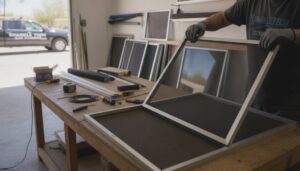
This is the most common call we get. Standard window and door mesh tears, sags, or pulls away from the frame over time, especially after a rough storm or a curious pet. If your frame is still in good shape, a rescreen is usually all you need. That means swapping out the old mesh and replacing the spline, which is the rubber cord that locks the mesh into the frame channel. Most individual windows wrap up in about 15 to 30 minutes on-site, so it is a quick turnaround with no hauling anything to a shop.
Solar Screen Repair and Installation
Solar screens are a different animal from standard bug screens. They use a tighter, denser mesh that blocks 70 to 90 percent of UV rays before they ever hit your glass, which keeps indoor temperatures lower and protects your furniture from fading. With energy costs climbing in 2026, we are seeing a real surge in solar screen requests, especially for west-facing and south-facing windows that take the most sun. Solar-grade mesh also lasts 15 to 20 years with proper care, compared to 5 to 10 years for standard fiberglass, so it is genuinely a smart long-term investment.
Screen Door Repair
Sliding and hinged screen doors take a beating every single day. Repeated opening, closing, and the occasional hard shove means rollers wear out, frames get knocked out of alignment, and mesh tears faster than on a window screen. We handle realigning tracks, replacing worn hardware, and rescreening the door mesh all in one visit.
Full Rescreening
If several windows across your home need attention, batching them into one full rescreening visit is almost always more cost-effective than calling us out for each one separately. Older fiberglass mesh, even when it looks okay visually, becomes brittle around the 10 to 15 year mark. A whole-home rescreen catches those hidden weak spots before they become bigger problems. This repair-over-replace approach is also better for your budget and better for the environment, since you are extending the life of your existing frames rather than tossing them.
Patch Repairs
Not every fix needs a full rescreen. Small tears, minor punctures, and simple hardware swaps like a pull tab or handle replacement are quick, targeted fixes when the rest of the screen is still in solid condition. Patch repairs are the right call when the frame is sound and the damage is isolated. If the mesh is sagging or the damage covers a large area, though, a full rescreen will hold up better over time.
Screen Cleaning as an Add-On
We also offer professional screen cleaning during the same visit. Debris and dust build up in the mesh over time, and on solar screens that buildup actually reduces how well the screen blocks UV rays. A good cleaning restores performance and extends the life of the mesh, so pairing it with a repair is an easy way to get more out of a single service call. Think of it as a small maintenance step that saves you from a bigger repair down the road, which fits right in with the growing trend of preventive home care that more homeowners are embracing heading into 2026.
Rescreening vs. Screen Repair: Which One Do You Need?
These two terms get used interchangeably all the time, but they actually describe two very different services. Knowing which one applies to your situation can save you real money.
Screen repair is a targeted fix. Think re-securing a loose corner, pressing new spline back into a small section where it has popped out, or patching a single clean tear. The rest of the mesh stays exactly where it is. This approach works well when the damage is isolated and the surrounding material is still tight, flat, and holding its shape properly.
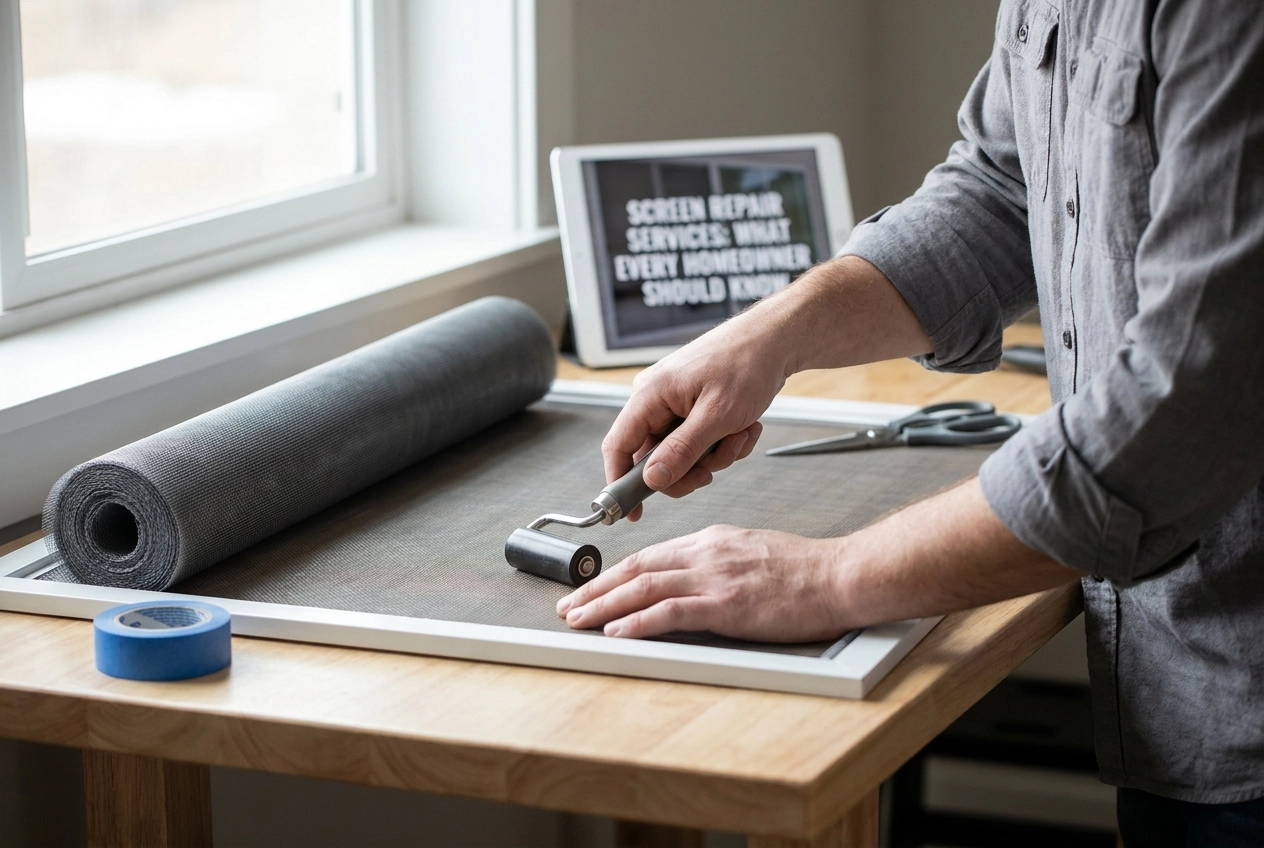
Rescreening is a fresh start for the mesh itself. The old material gets removed completely, and new mesh is stretched across the existing frame and locked in with fresh spline. The frame stays put; only the mesh changes. This is the right call when damage has spread across the screen, when the mesh feels brittle or crumbly to the touch, or when you have multiple holes and tears that no single patch is going to solve long-term.
A handy rule of thumb: if more than one-third of the mesh surface is damaged, sagging, or compromised, go ahead and rescreen the whole thing. Patching over widespread damage just delays the inevitable, and those patches rarely hold evenly. You can learn more about when repair crosses the line into replacement to get a clearer picture before calling anyone.
One detail that trips up a lot of homeowners is mesh material. Solar screen mesh and standard fiberglass mesh are not interchangeable. Solar mesh is a denser, darker weave designed to block heat and glare, not just bugs. If your existing screen is solar mesh and a technician replaces it with standard fiberglass, you lose that sun-blocking benefit entirely. Identifying what you currently have before any work starts directly affects both the repair approach and the final cost.
The good news is that a local specialist can look at both options during the same visit and give you an honest recommendation based on actual damage, not just default to the pricier service.
Why Repair Instead of Replace the Whole Screen Frame
Here is a simple truth most homeowners do not realize until they get a quote: you almost never need to replace the whole frame. The frame is almost always fine. It is the mesh that takes the beating.
According to Window Screen Replacement and Repair Cost Guide 2026, professional rescreening runs about $25 to $75 per screen, while a full replacement with a new frame installed costs $75 to $300 per screen. On a whole-house project with 10 to 15 screens, that difference adds up to hundreds or even thousands of dollars. For most homeowners, repair is simply the smarter financial choice, not because it cuts corners, but because the frame does not need replacing in the first place.
Aluminum and vinyl frames are genuinely built to last for decades. The mesh, however, faces constant exposure to UV rays, pets, and everyday wear. In one real-world scenario detailed at myhomescore.app, 17 out of 20 aluminum frames on a 25-year-old home were found to be in perfectly repairable condition. Only 3 frames were too bent to save. That is an 85 percent survival rate on screens that were well over two decades old.
Beyond the cost savings, there is a growing awareness around waste. When you toss a functional aluminum frame just to replace the mesh, that metal ends up in a landfill unnecessarily. More homeowners in 2026 are making repair-first decisions not only to save money but because it aligns with how they want to spend their resources.
And then there is the timeline. A full window or door unit replacement involves contractor scheduling, fabrication, and installation that can stretch out for weeks. A rescreen? We can often have it handled for you the same week you call.
Solar Screens: A Repair and Upgrade Worth Knowing About
Solar screens are not your average bug screen. They use a much denser mesh that is specifically designed to intercept sunlight before it ever passes through your window glass. Because the screen catches solar energy on the outside, heat never makes it into your home in the first place. This is very different from interior blinds, which let heat through the glass first and then try to deal with it after the fact. The result is a genuinely passive way to keep indoor temperatures lower without touching your thermostat.
Here is why timely repair matters more with solar screens than with standard ones. A small tear or a popped spline in a regular bug screen mostly just lets in mosquitoes. A damaged solar screen, though, loses a real portion of its heat-blocking ability right away. You are not just looking at a cosmetic problem; you are looking at reduced energy performance until the screen gets fixed.
When solar screen mesh is repaired or replaced, matching the original density rating matters a lot. Most residential solar screens run at either 80% or 90% blockage ratings, and those numbers are not interchangeable. Solar screen mesh products like this Phifer 80% roll illustrate exactly how specific those density ratings are. Installing a lower-density mesh during repair means the window loses a chunk of its original sun-blocking performance, even if the screen looks fine visually.
If your home has south-facing or west-facing windows, those spots take the most direct afternoon sun during summer. Keeping solar screens on those windows in good shape tends to have the most noticeable effect on your cooling costs from June through September.
Finally, if you currently have standard bug screens, a repair visit is a great time to ask about upgrading a few select windows to solar mesh. You can explore options at Solar Screen Outlet to get a sense of what is available. It does not have to be every window at once; even upgrading your sunniest windows can make a noticeable difference in glare and heat.
Screen Cleaning as Preventive Care
Most homeowners think a quick spray with the garden hose is enough to keep their screens in good shape. It is not, and here is why that matters more than you might expect.
Dust, pollen, cobwebs, and airborne grime work their way into screen mesh every single day. Over time, that buildup puts real physical stress on the weave and restricts airflow through your windows. For solar screens especially, clogged mesh is a bigger problem because the weave is tighter by design. When particles fill those tiny openings, the screen loses its ability to block UV light effectively, meaning you end up with a sun-blocking screen that is not actually blocking much sun anymore.
A garden hose can rinse off surface-level dirt, but it often pushes finer particles deeper into the weave rather than clearing them out. Using too much pressure can even cause small tears. Professional cleaning during a repair visit uses the right technique and handling to actually clear embedded buildup, particularly in dense solar mesh where a casual rinse just does not cut it.
The smartest part of bundling cleaning with a repair or rescreen visit is the efficiency. The screens are already removed from the frames, the technician is already on-site, and adding a cleaning step requires very little extra time. That combination keeps the cost per screen low compared to scheduling a separate service call later.
Homeowners in 2026 are increasingly embracing the idea that preventive screen maintenance costs less than reactive repairs. A cleaning visit before visible damage appears is almost always cheaper than waiting until the mesh separates or fails entirely. Scheduling both services together is simply the most cost-effective move you can make.
What Does Screen Repair Cost?
Pricing for screen repair is more straightforward than most people expect, and the good news is that most jobs are far more affordable than you might assume before picking up the phone.
Standard patch work and single-screen repairs sit at the lower end of the cost range. A professional rescreen of one standard window, including both new mesh material and labor, typically runs in the range of $45 to $85 per screen. If the damage is a small tear or a single hole, a simple patch job will cost less than a full rescreen since you are not replacing the entire sheet of mesh across the frame.
Solar screen repairs cost a bit more than standard mesh work, mostly because the UV-blocking material itself carries a higher price tag. That said, solar mesh typically lasts 15 to 20 years and can help reduce cooling costs over several summers, so the slightly higher repair price tends to pay for itself relatively quickly. You can find a helpful breakdown of current pricing estimates at Angi’s 2026 window screen cost guide.
Screen door repairs involve more variables. The cost depends on whether you are dealing with mesh only, a frame alignment issue, or hardware like rollers, closers, or handles. Each of those is a separate repair category, so the price shifts accordingly.
Multi-screen projects tend to cost less per screen overall. When a technician handles several windows in one visit, the per-unit price often comes out better than booking separate appointments across multiple days.
The most reliable number you can get is a direct quote. Frame size, mesh type, and screen count all affect the final price, and a local specialist can assess everything in one same-week visit rather than leaving you guessing from a generic estimate.
Why a Local Screen Specialist Beats a Generalist Contractor
If you have ever called a general handyman for a screen job, you may have heard something like “I can get to that in a few weeks” or “I will need to order that mesh.” A dedicated screen specialist skips both of those headaches entirely, and here is exactly why that matters.
Specialists stock what you actually need. Bug screen, solar mesh, pet-resistant fabric, standard fiberglass, aluminum mesh for high-wind areas; a screen-focused company keeps all of it on the truck or in the shop. A generalist handyman typically stocks none of it, because screens are just one small item on a very long list of unrelated jobs. That means back-ordering, waiting, and a repair that drags out over days or weeks for no good reason.
You get the right diagnosis on visit one. As we covered earlier, the difference between a patch, a full rescreen, and a solar mesh upgrade is not always obvious at first glance. A specialist has seen every variation and can tell you on the spot which approach actually fits your situation. A generalist often arrives with one solution in mind and applies it regardless of whether it is the best fit.
Same-week service is a reasonable expectation, not a luxury. Research into how consumers choose local contractors confirms that homeowners searching for repair help are often ready to hire within hours, and they expect fast availability. A screen company built around this single trade has the scheduling flexibility to meet that expectation. A general contractor who treats screen work as a low-priority add-on simply does not.
Local accountability changes the quality equation. A neighborhood screen specialist lives and works by the reputation they build in your area. That accountability is personal in a way that a large generalist chain cannot replicate on a small service call. As industry analysts note, generalists run every job off the same broad template regardless of the trade, while specialists calibrate every decision to the specific work in front of them. For something as detail-dependent as screen repair, that difference shows up directly in the finished result.
Get Your Screens Fixed This Week
The bottom line is simple: screen repair is faster, cheaper, and better for the environment than replacing the whole frame, and that holds true in the vast majority of cases. Most damage is just torn mesh sitting inside a perfectly good frame, which means you likely qualify for a straightforward repair rather than a costly full replacement.
Same-week service is available, so there is no reason to leave a torn screen sitting there letting bugs in all week. Before you call, take two minutes to do a quick walkthrough. Note whether you have standard bug screens, solar screens, or both. Check your screen doors for torn mesh, broken hardware, or a frame that feels off-track. That little bit of prep helps the technician arrive ready to work and keeps your visit efficient.
While your screens are being repaired, ask about adding a professional screen cleaning. It protects your newly repaired mesh from debris buildup that wears it down faster, and it takes almost no extra time since the technician is already on-site.
Ready to get it done? Contact Sparkle Tech Sunscreens for a same-week repair quote. Share what type of screens you have and what the damage looks like, and the team will take it from there.
Conclusion
Keeping your window screens in good shape is one of the simplest ways to protect your home’s comfort, air quality, and pest defense. Remember the key takeaways: catch damage early before small tears become bigger problems, know when a DIY fix is enough versus when a professional is the smarter call, and never underestimate how much a proper screen repair improves your everyday quality of life.
Your home deserves to feel like a sanctuary, and something as straightforward as a well-maintained screen can make a surprisingly big difference.
Ready to get started? Take a walk around your home today and inspect every screen for tears, bent frames, or loose edges. If you spot something that needs attention, reach out to a trusted local screen repair service and get it handled before summer arrives in full force.