
Table of Contents
- Preparation and Safety Precautions
- Tools for Cleaning Outdoor Sun Screens
- How Often to Clean Exterior Window Screens
- Step-by-Step Process for Cleaning Exterior Sun Screens
- How to Remove Oxidation from Sun Screens
- Choosing the Right Cleaning Solution
- Maintenance Tips to Prevent Damage and Extend Screen Life
- Troubleshooting Common Screen Damage
Last Updated: August 6, 2026
Preparation and Safety Precautions
Choose a dry, overcast day to prevent cleaning solutions from drying too quickly and leaving streaks. Avoid windy conditions that make screens difficult to handle. Wear gloves and safety glasses to protect against cleaning solutions and debris. Use a stable ladder with a spotter for upper-story screens, and never overreach.
Gather all materials before starting to avoid leaving screens unattended. Clear your work area of obstacles. Test any cleaning solution on a small, inconspicuous area first, some chemicals can fade mesh fabric or damage frames, especially on older screens.
Never use pressure washing on exterior [sun screens](/do-sun-screens-block-uv-rays/). High-pressure water can tear the mesh fabric, damage the frame, and force water behind the screen seal.
Tools for Cleaning Outdoor Sun Screens
Essential tools:
- Soft-bristled brush (old toothbrushes work well for detail areas)
- Microfiber cloth or soft cotton towels
- Bucket for water and cleaning solution
- Hose with a gentle spray nozzle (not a pressure washer)
- Sponge or soft cloth for scrubbing
- Squeegee or rubber-edged tool for water removal
Optional but helpful:
- Step ladder for reaching upper screens
- Garden sprayer for applying mild cleaning solutions
- Huck towels for drying (highly absorbent and lint-free)
- Soft-bristled deck brush for larger screens
Quality tools matter. Microfiber cloths remove more debris and dry faster than cotton towels. Soft-bristled brushes prevent scratching the mesh fabric. Avoid wire brushes and abrasive scouring pads that damage screen material. Having duplicate tools speeds the process when cleaning multiple screens.
How Often to Clean Exterior Window Screens
In Phoenix and Scottsdale, clean exterior sun screens every 3-4 months during heavy dust seasons. Spring and fall bring the most debris, so plan extra cleaning during those periods. If you live near construction sites or unpaved roads, increase cleaning to monthly or every 6 weeks.
Winter typically requires quarterly cleaning. Summer dust storms clog screens faster, especially on south and west-facing sides. Watch for visible signs that cleaning is needed: dust blocking your view, reduced airflow, or discolored mesh fabric.
Mark your calendar for seasonal cleaning. Set reminders in March, June, September, and December to inspect your screens. This prevents forgetting and extends screen life by preventing long-term debris damage.
Step-by-Step Process for Cleaning Exterior Sun Screens
Removing Screens from Frames
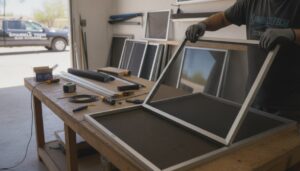
Most modern screens slide out of frames easily, allowing thorough cleaning on both sides. Locate the small tabs or clips holding the screen in the frame, usually on the sides or top. Press or slide the tabs to release the screen and gently pull it toward you while supporting the frame. Lay the screen flat on a clean, soft surface like a towel.
If your screens are permanently mounted, clean them in place and work carefully to avoid pushing debris behind the frame seal. Mark your screens with painter’s tape if you have multiple windows to track which screen came from which location.
Rinsing and Debris Removal
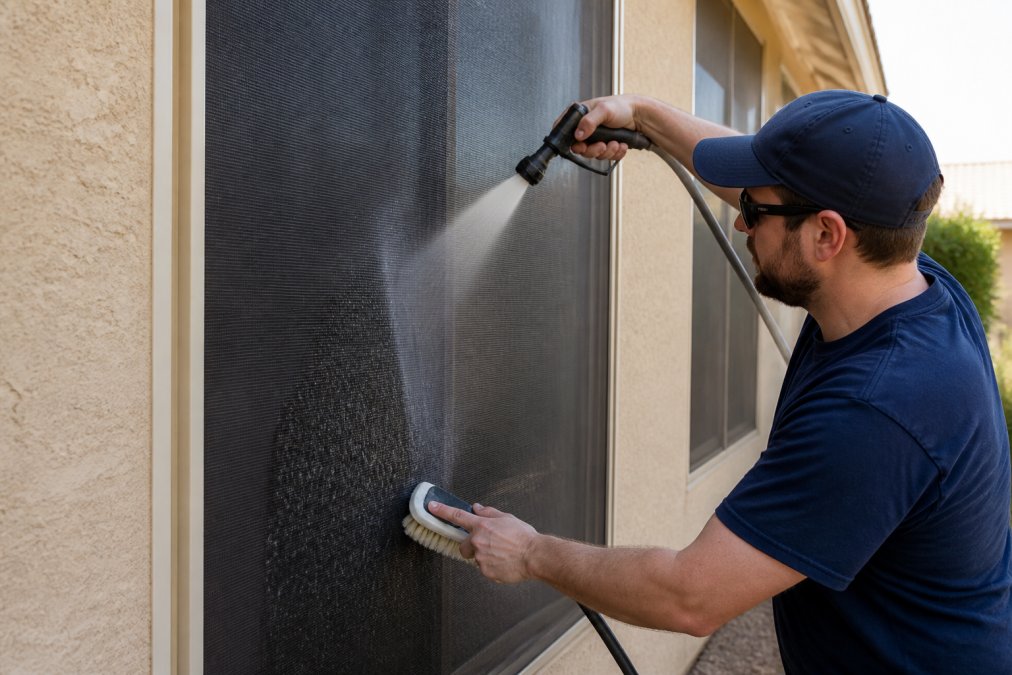
Use a gentle spray from your hose, not a pressure washer. Hold the nozzle about 12-18 inches from the screen and spray at a shallow angle, moving from top to bottom. Spray both sides thoroughly, the front collects most visible dust, while the back traps finer particles.
For stubborn debris, use a soft-bristled brush to gently dislodge particles while rinsing. Brush in the direction of the mesh weave. Pay special attention to frame edges and corners where debris accumulates.
Scrubbing and Spot Cleaning
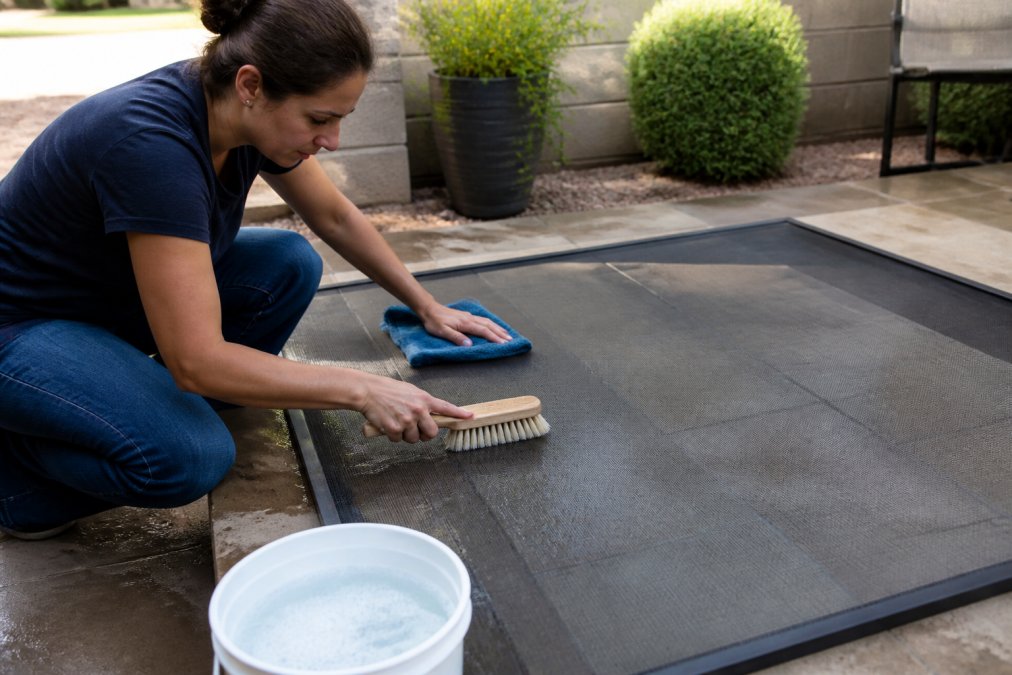
Mix lukewarm water with mild dish detergent, roughly one tablespoon per gallon of water. Dip your soft-bristled brush into the solution and scrub gently using circular motions. Work systematically from top to bottom, covering the entire surface.
For oxidation or stubborn residue, let the soapy water sit for 5-10 minutes before scrubbing. Use a microfiber cloth dampened with cleaning solution to target individual problem areas.
Drying Techniques
After rinsing away the cleaning solution, use a squeegee or rubber-edged tool to remove excess water, working from top to bottom. Follow with a microfiber cloth or huck towel to absorb remaining moisture. Gently press the cloth against the mesh rather than rubbing.
Allow screens to air dry completely before reinstalling. Lay them flat in a shaded area where air can circulate on both sides. This typically takes 30-60 minutes. Never reinstall screens while damp, as trapped moisture can cause mold growth or frame damage.
How to Remove Oxidation from Sun Screens
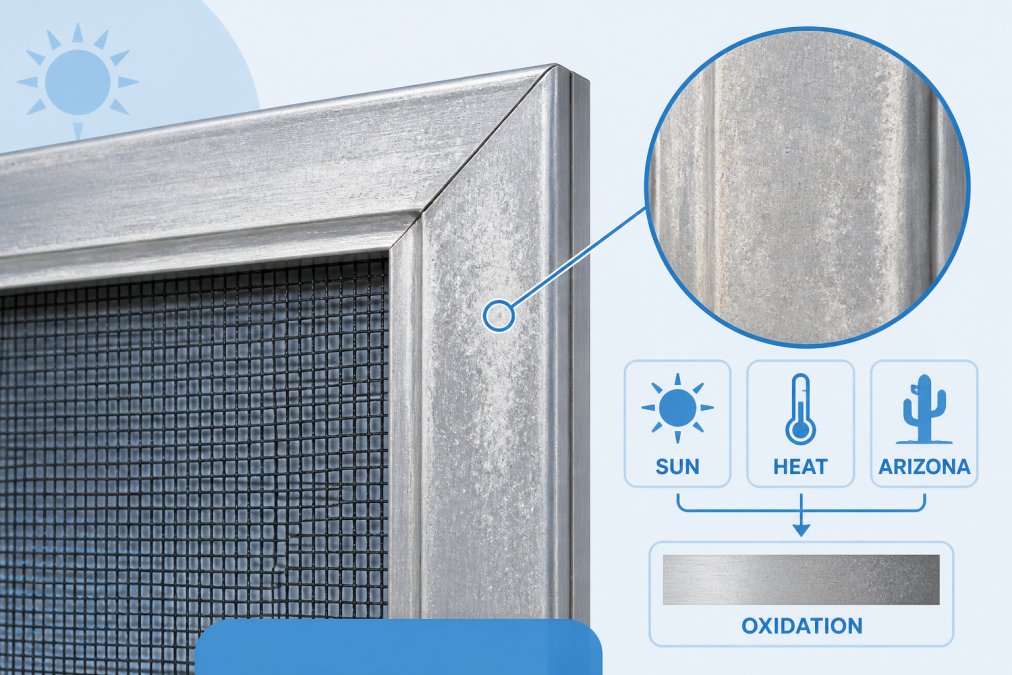
Oxidation appears as a white or gray powdery coating on aluminum screen frames. While it doesn’t harm function, it indicates the protective coating is breaking down.
Mild dish detergent and a soft-bristled brush often remove light oxidation. For moderate oxidation, let the soapy water sit for 10 minutes before scrubbing. For heavy buildup, use white vinegar mixed with equal parts water. The mild acidity dissolves the oxidized coating without damaging the underlying aluminum. Soak a cloth in the solution, apply it to the oxidized area, let it sit 5-10 minutes, then scrub gently.
Never use steel wool, wire brushes, or abrasive cleaners. These scratch the protective coating and accelerate future corrosion. After removing oxidation, rinse thoroughly and dry completely. Consider applying a protective coating designed for aluminum to slow future oxidation.
Address light oxidation early to prevent heavy buildup that’s harder to clean and indicates more serious frame deterioration.
Choosing the Right Cleaning Solution
Mild dish detergent mixed with lukewarm water is the safest choice for most screens. One tablespoon of detergent per gallon of water provides enough cleaning power without excessive suds.
Avoid bleach, ammonia-based cleaners, and harsh chemical degreasers. These can discolor mesh fabric, damage aluminum frames through accelerated corrosion, or leave chemical residue that attracts dust.
For stubborn stains or oxidation, white vinegar offers a gentler alternative. Mix equal parts vinegar and water, apply with a cloth, and let it sit briefly before rinsing.
Test any new cleaning solution on a small, hidden area first. Apply it to a corner or bottom edge, wait 5-10 minutes, and rinse. If the test area shows no damage, the solution is safe for the rest of your screens.
Maintenance Tips to Prevent Damage and Extend Screen Life
Clean your screens quarterly, or more frequently in dusty environments. Regular cleaning prevents debris buildup that traps moisture and causes frame rot or mesh deterioration.
Inspect screens seasonally for damage. Look for tears in the mesh fabric, bent frames, or separation between the mesh and frame. Small damage is easy to repair; ignoring problems allows them to worsen.
Trim vegetation near your screens, maintaining at least 12 inches of clearance between landscaping and screens. Keep window tracks and frames clean monthly using a soft brush and mild detergent.
Avoid leaning on screens or allowing children to play against them. Check the seal between the mesh and frame annually. If separating, water can get behind the frame and cause rot. In Arizona’s harsh climate, ask about replacement screens with enhanced UV protection to extend lifespan.
Troubleshooting Common Screen Damage
Tears in the mesh fabric are the most common issue. Small tears (less than 1 inch) can be patched using a screen repair kit from hardware stores. For larger tears, professional rescreening is the most reliable solution.
Sagging screens indicate the frame is losing shape or the mesh has lost tension. Minor sagging doesn’t affect function but looks poor. Professional rescreening restores proper tension and appearance.
Bent or warped frames result from impact, pressure, or extreme heat. Aluminum frames can sometimes be straightened, but plastic frames usually can’t be repaired. Replacement is the best option for severely warped frames.
Separation between mesh and frame allows debris and insects to enter between layers. The mesh needs to be re-secured or the entire screen replaced.
Discoloration or fading happens naturally from sun exposure. While this doesn’t affect function, it impacts curb appeal. Professional rescreening restores appearance.
Difficulty sliding screens usually means debris in the tracks or bent frame edges. Clean the tracks thoroughly with a soft brush. If sliding is still difficult, the frame may be bent and need professional attention.
At SPARKLE TECH SUN SCREENS, we understand that Arizona’s climate is harsh on outdoor screens. Our weather-resistant materials and custom-fit installation are designed to handle extreme sun, wind, and dust while maintaining durability and appearance. When DIY cleaning and maintenance aren’t enough, professional rescreening restores your screens to optimal condition.
Regular cleaning and maintenance keep your exterior sun screens functioning properly and looking great. By following these steps, you’ll extend the lifespan of your screens and maintain the comfort and protection they provide for your Phoenix or Scottsdale home. For screens that need professional attention or replacement, SPARKLE TECH SUN SCREENS offers same-week service with custom measurements and a lifetime guarantee on qualifying installations. Get your free quote today and discover why local homeowners trust our dependable workmanship and exceptional service.
Frequently Asked Questions
Can you pressure wash exterior sun screens?
No. High-pressure water can damage the mesh fabric and compromise screen integrity. Instead, use lukewarm water from a garden hose on low pressure combined with gentle hand scrubbing. Pressure washing risks tearing the mesh and pushing debris into the frame, causing long-term damage that shortens the screen's lifespan.
How often should you clean exterior sun screens?
In Arizona's desert climate, clean your sun screens every 2-3 months due to dust accumulation and debris buildup. High-wind seasons and monsoon periods may require monthly cleaning. Regular maintenance prevents oxidation, faded fabric appearance, and maintains UV protection effectiveness. Spot cleaning between deep cleanings extends the time between full washes.
What is the best cleaning solution for solar screens?
A simple mixture of mild dish detergent and lukewarm water works best for most sun screens. Avoid harsh chemical cleaners that can degrade the mesh fabric and protective coating. For stubborn residue, use a non-abrasive solution specifically designed for outdoor screens. Always test any cleaner on a small, inconspicuous area first to ensure it won't cause sun damage or discoloration.
Will cleaning sun screens remove oxidation?
Regular cleaning removes surface dust and debris that accelerates oxidation, but established oxidation requires gentle treatment. Use a soft-bristled brush with mild soap solution and gentle agitation to lift oxidation stains. For heavy oxidation, specialized outdoor screen cleaners may help, but avoid abrasive scrubbing that damages the mesh. Professional restoration services can address severe cases while preserving screen integrity.
This article was written using GrandRanker